
Contents
Overview
Prenatal diagnosis encompasses a suite of medical procedures designed to identify potential health issues, genetic abnormalities, and birth defects in a fetus before birth. These techniques range from non-invasive screening tests that estimate risk, such as ultrasound and maternal serum screening, to more definitive diagnostic procedures like amniocentesis and chorionic villus sampling (CVS). The goal is to provide expectant parents with crucial information, enabling informed decisions about pregnancy management, potential interventions, and preparation for a child with specific needs. While offering significant benefits, prenatal diagnosis also navigates complex ethical considerations regarding selective termination and the psychological impact of results, making it a dynamic and often debated field within obstetrics and genetics. The field has seen rapid advancements, particularly with the advent of non-invasive prenatal testing (NIPT), which analyzes fetal DNA circulating in the mother's blood.
🎵 Origins & History
The quest to understand the health of an unborn child stretches back centuries, with early attempts often relying on rudimentary physical examination and maternal observation. The integration of cytogenetics and later molecular genetics allowed for the detection of specific chromosomal and genetic disorders, transforming prenatal care from mere observation to active investigation.
⚙️ How It Works
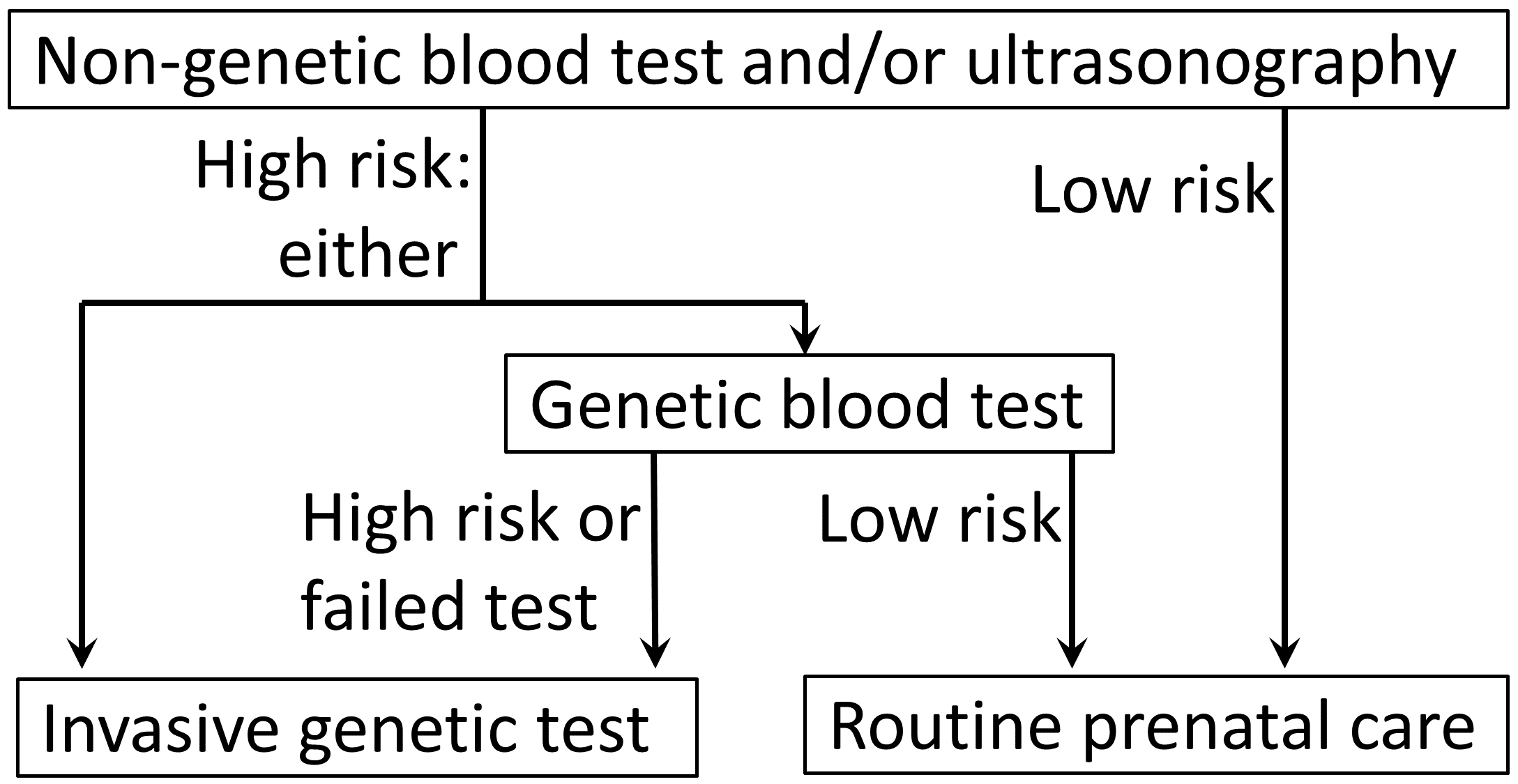
Prenatal diagnosis operates through a tiered approach, beginning with screening tests that assess the probability of a fetus having a particular condition. Ultrasound imaging, utilizing sound waves, provides visual information about fetal anatomy, growth, and development, often used to detect structural anomalies like spina bifida or congenital heart disease. Maternal serum screening analyzes specific biochemical markers in the mother's blood, such as alpha-fetoprotein (AFP), human chorionic gonadotropin (hCG), and estriol, to estimate the risk of conditions like Down syndrome and neural tube defects. When screening tests indicate an elevated risk, diagnostic procedures are employed. Amniocentesis involves inserting a needle through the mother's abdomen into the amniotic sac to collect fluid containing fetal cells for chromosomal analysis (karyotyping) or genetic testing. Chorionic villus sampling (CVS) samples placental tissue, typically between 10-13 weeks of gestation, also allowing for genetic analysis. Percutaneous umbilical blood sampling (PUBS), or cordocentesis, is a more invasive procedure used later in pregnancy to directly sample fetal blood for rapid genetic analysis or to assess fetal anemia.
📊 Key Facts & Numbers
The market for prenatal screening and diagnostic tests is substantial, driven by advancements in non-invasive prenatal testing (NIPT). NIPT, which analyzes cell-free fetal DNA (cfDNA) in maternal blood, boasts detection rates for Trisomy 21 exceeding 99% with a false-positive rate below 1%. The uptake of NIPT has surged, with studies indicating that over 50% of pregnant individuals in some high-income countries opt for this screening method.
👥 Key People & Organizations
Pioneering figures in prenatal diagnosis include Fritz Fuchs, who contributed to the early development of amniocentesis for genetic studies, and Henry Robinson Schulman, who played a role in establishing its clinical utility. Mary-Claire King, a renowned geneticist, has made significant contributions to understanding human genetics, including hereditary breast cancer, and her work underpins many genetic diagnostic principles. Organizations like the American College of Obstetricians and Gynecologists (ACOG) and the Society for Maternal-Fetal Medicine (SMFM) provide crucial guidelines and recommendations for prenatal screening and diagnosis. Major diagnostic companies such as Sequenom Laboratories (now part of Labcorp) and Verinata Health (acquired by Illumina) have been instrumental in developing and commercializing NIPT technologies. Research institutions like the National Institutes of Health (NIH) and various university medical centers globally continue to drive innovation in the field.
🌍 Cultural Impact & Influence
Prenatal diagnosis has profoundly reshaped societal perceptions of pregnancy and disability. It has shifted the focus from reactive care after birth to proactive assessment during gestation, empowering parents with knowledge and enabling earlier interventions. This has led to a decrease in the incidence of certain genetic disorders through informed reproductive choices, a trend that has sparked considerable ethical debate. The availability of prenatal testing has also influenced the discourse around disability, raising questions about societal acceptance and the definition of a 'quality of life.' Culturally, the ability to 'see' the fetus before birth, facilitated by ultrasound and diagnostic tests, has fostered a stronger emotional connection for many expectant parents, transforming the prenatal period into a more tangible experience. The rise of non-invasive prenatal testing (NIPT) has further democratized access to genetic information, making it a standard part of care in many regions.
⚡ Current State & Latest Developments
The landscape of prenatal diagnosis is rapidly evolving, driven by technological advancements and a growing understanding of fetal genomics. Non-invasive prenatal testing (NIPT) is increasingly becoming the first-line screening method for chromosomal abnormalities, with ongoing research expanding its scope to detect a wider range of genetic conditions, including microdeletions and single-gene disorders. Whole-exome sequencing and whole-genome sequencing are being explored for diagnostic purposes in cases of unexplained fetal anomalies. Furthermore, liquid biopsy techniques are being refined to detect fetal DNA with greater accuracy and at earlier gestational ages. The integration of artificial intelligence and machine learning is also showing promise in improving the interpretation of ultrasound images and genetic data, potentially leading to more accurate and efficient diagnoses. The development of fetal medicine interventions, such as in-utero surgery for conditions like spina bifida, is also increasing the demand for precise prenatal diagnostic information.
🤔 Controversies & Debates
Prenatal diagnosis is fraught with ethical and societal controversies. A central debate revolves around selective termination of pregnancies based on diagnostic findings, raising profound questions about the value of life and the definition of disability. Critics argue that widespread prenatal screening can foster a societal bias against individuals with disabilities, potentially leading to a reduction in their birth rates and impacting disability rights movements. The accuracy of screening tests, particularly the possibility of false positives and false negatives, also presents a significant challenge, leading to undue anxiety for some parents and missed diagnoses for others. Informed consent is paramount, yet ensuring that expectant parents fully understand the implications, limitations, and potential outcomes of testing can be complex. The increasing availabil
Key Facts
- Category
- science
- Type
- topic