
Contents
Overview
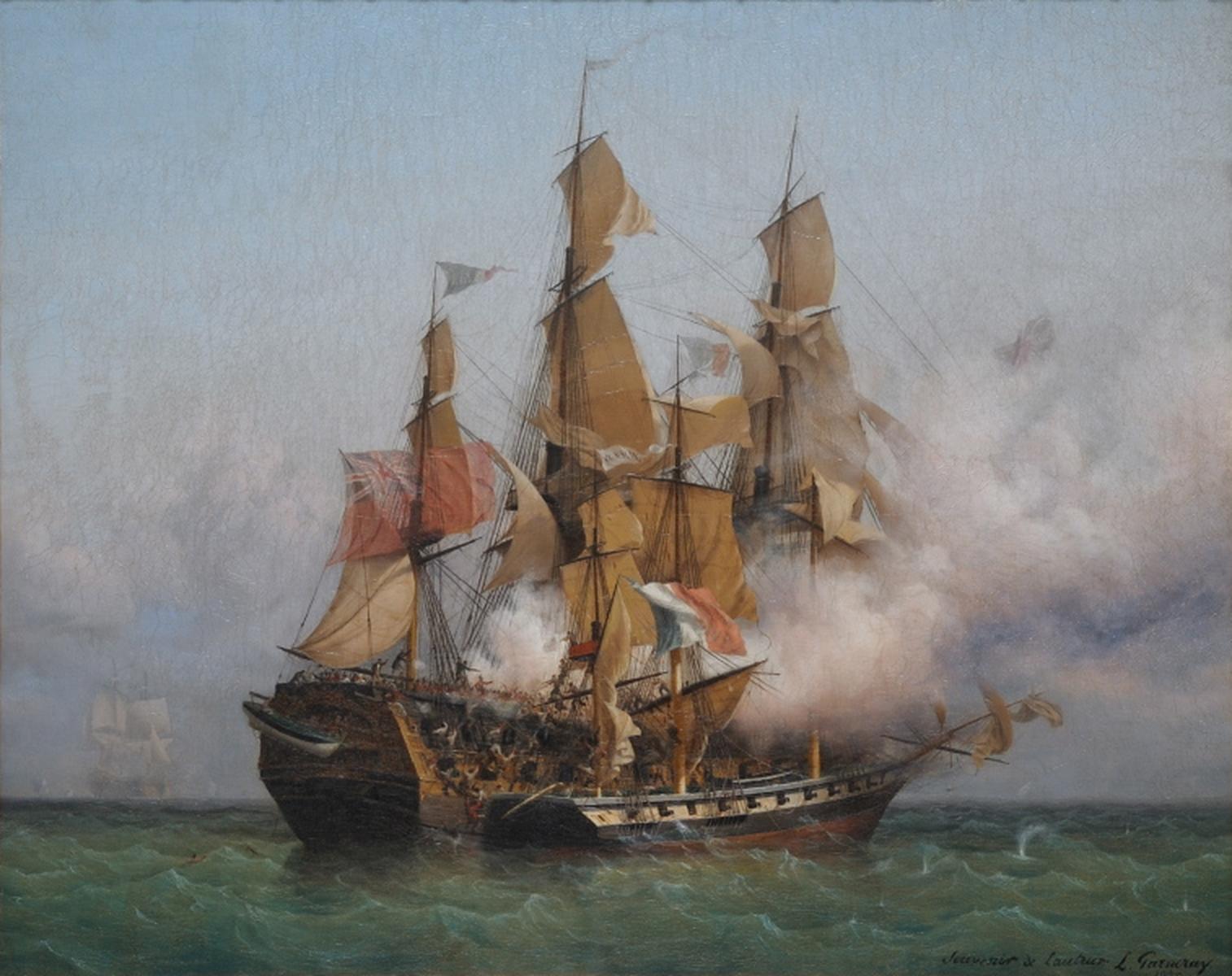
The formalization of privateering began in the 13th century as a method of 'reprisal,' allowing merchants to recover losses from foreign shippers. By the time of the Hundred Years' War, European monarchs realized they could expand their fleets by commissioning private citizens to harass enemy trade routes. The practice exploded during the 16th century as England used 'Sea Dogs' to dismantle the Spanish Empire's monopoly on New World gold. This era saw the rise of the Dutch West India Company, which utilized privateering as a core business model to fund colonial expansion. The transition from medieval reprisal to state-sanctioned commerce raiding reached its zenith during the Napoleonic Wars, where thousands of ships were captured under the guise of national interest.
⚙️ How It Works
Privateering functioned through a rigorous legal framework centered on the Letter of Marque and Reprisal. This document transformed a civilian vessel into a quasi-naval ship, granting the crew the right to seize enemy property without being hanged as pirates. Once a ship was captured, it was brought to an Admiralty Court, where a judge determined if the seizure was 'lawful prize' according to the Law of Nations. If condemned, the ship and cargo were sold at auction, with proceeds distributed among the ship's owners, the captain, and the crew. This incentive structure ensured that privateers were often more aggressive and efficient than the Royal Navy, as their livelihood depended entirely on successful captures.
📊 Key Facts & Numbers
The scale of privateering was staggering; during the American Revolutionary War, the Continental Congress commissioned over 1,700 privateers who captured approximately 2,283 British ships. These captures were valued at roughly $18 million in 18th-century currency, a massive blow to the East India Company. In the War of 1812, American privateers like the Chasseur captured or destroyed 1,345 British vessels. On the French side, the port of Saint-Malo alone produced privateers who seized over 4,000 ships between 1681 and 1815. The financial risk was high, with nearly 25% of privateering ventures resulting in total loss due to shipwreck or capture by the enemy.
👥 Key People & Organizations
The most famous privateer in history was Sir Francis Drake, whose circumnavigation of the globe was essentially a massive looting expedition backed by Queen Elizabeth I. Another titan of the trade was Sir Henry Morgan, who operated out of Port Royal and became the Lieutenant Governor of Jamaica despite his brutal tactics. In France, René Duguay-Trouin achieved legendary status by capturing Rio de Janeiro in 1711 for the French Crown. The United States also had its heroes, such as Stephen Decatur, who navigated the blurry lines between naval officer and prize-seeker. These individuals were often shareholders in their own voyages, blending the roles of entrepreneur and warrior.
🌍 Cultural Impact & Influence
Privateering deeply influenced the development of Maritime Law and the global insurance industry, specifically Lloyd's of London. The romanticized image of the 'gentleman pirate' stems from privateers who maintained a veneer of legality and social standing. In popular culture, the concept has been immortalized by Robert Louis Stevenson and later by the Pirates of the Caribbean franchise, though these often conflate privateers with lawless brigands. Even the music world pays homage, as seen in Mark Knopfler's 2012 album Privateering, which explores the grit and gamble of the trade. The concept of the 'Letter of Marque' remains a potent metaphor for any state-sanctioned activity that skirts the edges of traditional morality.
⚡ Current State & Latest Developments
While privateering was officially banned by the Declaration of Paris in 1856, the U.S. Constitution still explicitly grants Congress the power to issue Letters of Marque under Article I, Section 8. In 2022, following the invasion of Ukraine, U.S. Representative Curtis专用 introduced the 'Liberty for Ukraine Act' to authorize Letters of Marque against Russian assets. Similarly, modern cyber-warfare is often described as 'digital privateering,' where states like Russia or North Korea allow independent hacker collectives to attack foreign targets. These groups, such as REvil or Lazarus Group, operate with the same plausible deniability that 17th-century monarchs enjoyed. The rise of Private Military Companies like the Wagner Group further blurs the line between state and private violence.
🤔 Controversies & Debates
The central controversy of privateering is the 'pirate-patriot' dichotomy: one nation's hero is another's common criminal. Critics argue that the profit motive encourages atrocities, as seen in the career of Captain Kidd, who began as a privateer but was hanged for piracy when his targets became politically inconvenient. Proponents of the system, including Adam Smith, noted its economic efficiency in mobilizing resources that a state could not otherwise afford. There is also a long-standing legal debate over whether the Declaration of Paris is truly binding on non-signatories like the United States. The ethical tension remains: can a government outsource the 'monopoly on violence' to private actors without losing its moral authority?
🔮 Future Outlook & Predictions
Looking ahead, the concept of privateering is likely to migrate into Space Exploration and the Deep Sea Mining sectors. As corporations like SpaceX and Blue Origin venture into territories beyond national jurisdiction, the need for 'protection' and 'enforcement' may lead to new forms of commissioned security. Some futurists predict that Blockchain and Smart Contracts could be used to automate prize-sharing in future resource conflicts. The Pentagon has already explored the use of private contractors for maritime security in the South China Sea, suggesting a return to decentralized naval power. If global tensions continue to rise, the 'Letter of Marque' may transition from a historical curiosity to a vital tool of Asymmetric Warfare.
💡 Practical Applications
In practical terms, privateering was the ultimate high-risk, high-reward investment strategy for the Mercantilist era. It allowed small nations to punch above their weight; for instance, the Dutch Republic used privateers to cripple the Spanish Armada's supply lines. Today, the principles of privateering are applied in Bug Bounty programs, where companies like Google or Apple pay 'ethical hackers' to find vulnerabilities. This 'crowdsourced defense' mirrors the way 18th-century governments crowdsourced their naval defense. Even in the legal field, Litigation Funding operates on a similar 'share of the prize' model, where investors fund lawsuits in exchange for a portion of the settlement.
Key Facts
- Category
- history
- Type
- topic