
Contents
Overview
The impulse to quantify achievements has roots stretching back to early forms of record-keeping and accounting. Ancient civilizations meticulously tracked harvests, trade surpluses, and military victories, laying the groundwork for systematic measurement. In the scientific revolution, figures like Isaac Newton emphasized empirical observation and mathematical formulation, implicitly demanding that discoveries be demonstrable through quantifiable evidence. The Industrial Revolution further accelerated this trend, with factory owners like Henry Ford implementing standardized production quotas and efficiency metrics to measure output. The 20th century saw the formalization of management techniques, such as scientific management by Frederick Winslow Taylor, which broke down tasks into measurable components to optimize performance. Simultaneously, the rise of statistics as a discipline provided the tools to analyze and interpret these measurements, transforming subjective assessments into objective evaluations.
⚙️ How It Works
This involves defining clear, actionable metrics that directly reflect desired outcomes. This begins with establishing specific goals, which are then broken down into measurable components. For instance, a sales team's achievement might be quantified by the number of new clients acquired. In software development, success can be measured by bug resolution rates. The process requires careful selection of metrics that are relevant, reliable, and actionable, avoiding vanity metrics that inflate perceived success without reflecting true progress. Tools ranging from simple spreadsheets to sophisticated business intelligence platforms are employed to collect, analyze, and visualize this data, enabling stakeholders to track progress against benchmarks and make informed adjustments.
📊 Key Facts & Numbers
In the realm of venture capital, startup funding rounds are often justified by metrics showing significant year-over-year growth in user acquisition or revenue. Professional athletes in leagues like the NBA have their performance meticulously logged. Even in academia, research impact is increasingly quantified through metrics like citation counts.
👥 Key People & Organizations
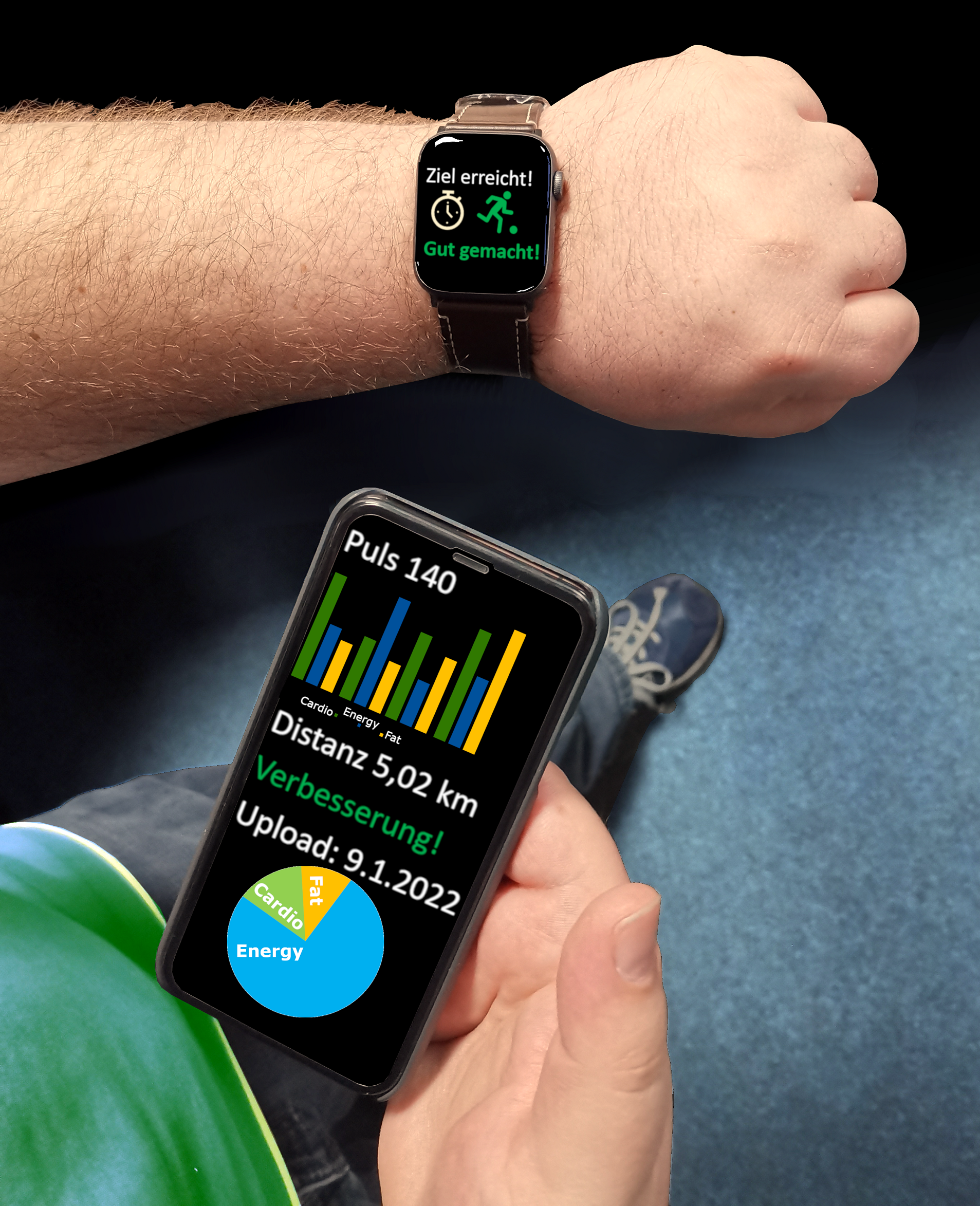
Key figures in the quantification of achievement include Peter Drucker, who popularized the concept of Management by Objectives (MBO), emphasizing that 'what gets measured gets managed.' W. Edwards Deming, a pioneer of quality control, championed data-driven decision-making and continuous improvement through statistical process control. In the tech sector, companies like Salesforce have built empires on providing platforms for quantifying sales achievements, while HubSpot offers tools for marketing and customer service metrics. The Quantified Self movement, popularized by early adopters and advocates like Gary Wolf, brought the concept of self-tracking and personal achievement measurement to the individual level, often utilizing devices like Fitbit and Apple Watch.
🌍 Cultural Impact & Influence
The widespread adoption of quantifiable metrics has profoundly reshaped professional and personal landscapes. In business, it has driven a culture of accountability and performance optimization, leading to increased efficiency and profitability for many organizations. The rise of Big Data analytics has further amplified this trend, allowing for more granular and sophisticated measurement of success. In sports, the use of advanced analytics, popularized by teams like the Oakland Athletics (as chronicled in Moneyball), has revolutionized player evaluation and game strategy. On a personal level, the Quantified Self movement has empowered individuals to take control of their health, fitness, and productivity by tracking personal data, fostering a more self-aware and goal-oriented approach to life.
⚡ Current State & Latest Developments
The current landscape of quantifying achievements is enhanced by the integration of AI and machine learning into analytics platforms. AI is enabling more predictive and prescriptive insights, moving beyond simply measuring past performance to forecasting future outcomes and recommending actions. Tools like Tableau and Microsoft Power BI are continuously enhancing their AI capabilities for data visualization and analysis. Furthermore, the proliferation of IoT devices, from smart wearables to industrial sensors, is generating unprecedented volumes of real-time data, creating new frontiers for achievement measurement across all sectors. The focus is shifting towards measuring not just outputs, but also the quality of those outputs and their long-term impact.
🤔 Controversies & Debates
A significant controversy surrounding the quantification of achievements lies in the potential for metrics to be gamed or to incentivize the wrong behaviors. Critics argue that an overemphasis on easily quantifiable metrics can lead to a neglect of qualitative aspects, such as creativity, collaboration, and ethical conduct, which are harder to measure. The Quantified Self movement has also faced scrutiny regarding data privacy and the potential for obsessive self-monitoring to negatively impact mental well-being. Furthermore, the selection of metrics can be biased, reflecting the priorities of those in power rather than genuine progress, leading to situations where 'success' is defined by numbers that don't align with broader societal or organizational values. The debate continues on how to balance objective measurement with subjective judgment and qualitative assessment.
🔮 Future Outlook & Predictions
The future of quantifying achievements will likely involve even deeper integration of AI, leading to hyper-personalized performance tracking and predictive analytics. We can expect to see more sophisticated models that can account for complex contextual factors, providing a more nuanced understanding of success. The concept of 'achievement' itself may evolve, with a greater emphasis on measuring impact on sustainability, social equity, and human well-being, moving beyond purely economic or output-based metrics. The development of blockchain technology could also play a role in ensuring the integrity and transparency of achievement data. Ultimately, the goal will be to create measurement systems that are not only accurate but also ethically sound and conducive to genuine human flourishing.
💡 Practical Applications
Quantifying achievements has myriad practical applications across virtually every domain. In business, it's essential for performance management, strategic planning, and investor relations, using metrics like CAC, CLV, and ROI. In education, it informs curriculum development and student assessment through standardized tests and graduation rates. Scientific research relies on quantifiable results from experiments, peer review metrics, and publication impact factors. For individuals, it's used in fitness tracking (e.g., calories burned, distance run), personal finance (e.g., savings rates, debt reduction), and skill development (e.g., coding speed, language fluency). Even creative fields are increasingly adopting quantitative measures, such as song streams, book sales, and film box office revenue.
Key Facts
- Category
- concepts
- Type
- topic