
Contents
Overview
The genesis of Red Square can be traced back to the late 15th century, when Ivan III of Russia ordered the clearing of wooden structures between the Kremlin and the Kitai-gorod district to create a firebreak and a marketplace. Initially known as Torg (Market) or Troitskaya Square, it gradually evolved into a central hub for commerce and public life. The name 'Krasnaya,' meaning 'red' in Russian, was first recorded in the 17th century, though its association with the color red is debated; it may have referred to the red brick of the Kremlin walls or simply meant 'beautiful' (as 'krasny' also meant beautiful in Old Russian). Over centuries, it transformed from a bustling trading ground into a ceremonial space, witnessing coronations, religious processions, and, by the Soviet era, massive military parades showcasing the might of the Soviet Union. The moat that once separated it from the Kremlin was filled in during the 19th century, further integrating the space into the urban fabric.
⚙️ Architectural Ensemble
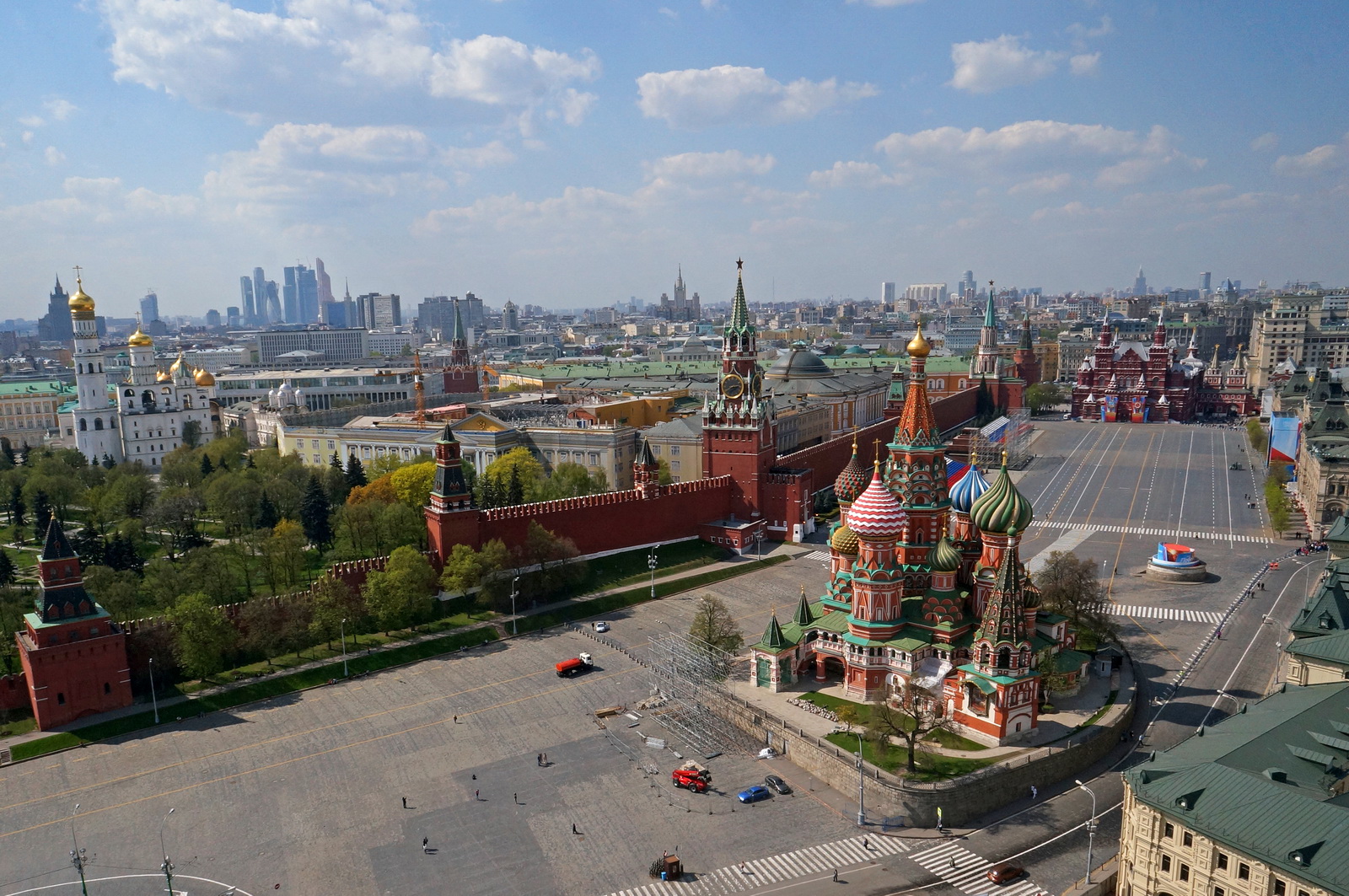
Red Square is defined by its monumental architectural ensemble, each structure contributing to its historical gravitas. Dominating the southern end is the Saint Basil's Cathedral, commissioned by Ivan the Terrible in the 1550s to commemorate the capture of Kazan. Its iconic onion domes and vibrant colors make it a globally recognized symbol of Russia. To the north stands the imposing State Historical Museum, built in the distinctive Russian Revival style between 1875 and 1883, housing vast collections spanning Russian history. Along the eastern side, the sprawling GUM department store (initially Upper Trading Rows) presents a stunning example of 19th-century eclecticism, while the western edge is defined by the formidable red brick walls of the Kremlin itself, punctuated by its iconic towers, including the Spasskaya Tower with its famous clock. At the square's center, the Lenin's Mausoleum, designed by Alexey Shchusev, houses the embalmed body of Vladimir Lenin, a potent symbol of the Soviet past.
📊 Key Facts & Numbers
Red Square covers an impressive 73,000 square meters (approximately 800,000 square feet), making it one of the largest urban squares globally. It is estimated that over 40 million tourists visit Moscow annually, with Red Square being a primary destination for a significant portion of them. The Spasskaya Tower, the main gate of the Kremlin facing Red Square, stands at 71 meters (233 feet) tall. The State Historical Museum boasts a collection of over 4.5 million artifacts. The GUM department store alone spans over 80,000 square meters of retail space. Since 1990, Red Square, along with the Kremlin, has been recognized as a UNESCO World Heritage Site.
👥 Key Figures & Institutions
The historical narrative of Red Square is inextricably linked to key figures and institutions that shaped Russia. Ivan III, often called 'the Great,' initiated its creation as a marketplace and firebreak. Ivan the Terrible commissioned the iconic Saint Basil's Cathedral in the mid-16th century. Peter the Great, though he moved the capital to St. Petersburg, still recognized the square's importance. During the Soviet era, Vladimir Lenin became central to its symbolism with the construction of his Mausoleum. Joseph Stalin utilized the square for massive military parades, cementing its image as a display of Soviet power. The Kremlin itself, as the seat of Russian government for centuries, is Red Square's most significant institutional neighbor. The Russian government continues to manage and utilize the square for official events and celebrations.
🌍 Cultural Impact & Influence
Red Square is more than just a physical space; it's a cultural touchstone that has profoundly influenced global perceptions of Russia. It has served as the ultimate stage for national identity, from Tsarist coronations to Soviet May Day parades, shaping the visual language of Russian power and resilience. The image of Saint Basil's Cathedral against the backdrop of the Kremlin walls is one of the most enduring visual symbols of Russia worldwide, frequently appearing in literature, film, and art. The square's role as a site of both celebration and repression—from public executions in earlier centuries to the massive military displays of the Soviet era—contributes to its complex and often intimidating aura. Its designation as a UNESCO World Heritage Site underscores its universal cultural significance, drawing millions to experience its historical weight firsthand. The very name 'Red Square' has become synonymous with Moscow and, by extension, Russia itself on the global stage.
⚡ Current State & Latest Developments
In contemporary times, Red Square remains a vibrant and dynamic public space, though its primary functions have shifted. While still a site for major national celebrations, such as the annual Victory Day Parade on May 9th, its role as a daily marketplace has largely diminished. The GUM department store continues to operate as a high-end retail destination, and the State Historical Museum and Lenin's Mausoleum remain key tourist attractions. In recent years, the square has also hosted cultural events, concerts, and temporary exhibitions, demonstrating its adaptability. Security measures have been significantly enhanced, particularly following various geopolitical events, with increased police presence and controlled access during major gatherings. The debate over the future of Lenin's Mausoleum continues intermittently, reflecting ongoing discussions about Russia's historical memory and its relationship with the Soviet past. The square is meticulously maintained, with ongoing preservation efforts for its historic buildings and cobblestone surface.
🤔 Controversies & Debates
The very existence and symbolism of Red Square are subjects of ongoing debate and scrutiny. The most persistent controversy revolves around Lenin's Mausoleum. While it remains a significant draw for tourists and a symbol of the Soviet era for some, many Russians, including prominent political figures and cultural commentators, view it as an anachronism and a symbol of a dark past, advocating for its removal or re-contextualization. The square's historical use for public executions and political repression also casts a long shadow, prompting discussions about how to reconcile its celebratory and its punitive history. Furthermore, the increasing commercialization and securitization of the space raise questions about its accessibility and its role as a truly public forum versus a curated tourist attraction. The sheer weight of history, encompassing both imperial grandeur and totalitarian control, makes Red Square a site of constant historical and ideological negotiation.
🔮 Future Outlook & Predictions
The future of Red Square will likely involve a continued balancing act between preserving its historical integrity and adapting to contemporary needs. Proposals for the removal or relocation of Lenin's Mausoleum resurface periodically, driven by a desire to move beyond the Soviet legacy, though no definitive action has been taken. Efforts will undoubtedly continue to maintain the square's status as a UNESCO World Heritage Site, requiring ongoing restoration and preservation of its architectural treasures like Saint Basil's Cathedral and the Kremlin. Its role as a venue for major national events, particularly the Victory Day Parade, is expected to persist, though the scale and nature of these events may evolve with geopolitical shifts. There's also potential for increased integration of digital technologies for visitor experiences, such as augmented reality tours of the square's history. The fundamental tension between its pa
Key Facts
- Category
- place
- Type
- topic