
Contents
- 🏛️ Who Was Robert Dahl?
- 💡 Core Concepts & Contributions
- 📚 Key Works & Where to Find Them
- 🌍 Dahl's Influence: A Global Reach
- 🤔 Debates & Criticisms Surrounding Dahl
- ⭐ Dahl's Legacy: Vibe Score & Resonance
- 🔎 Similar Thinkers & Further Exploration
- 🚀 Getting Started with Dahl's Ideas
- Frequently Asked Questions
- Related Topics
Overview
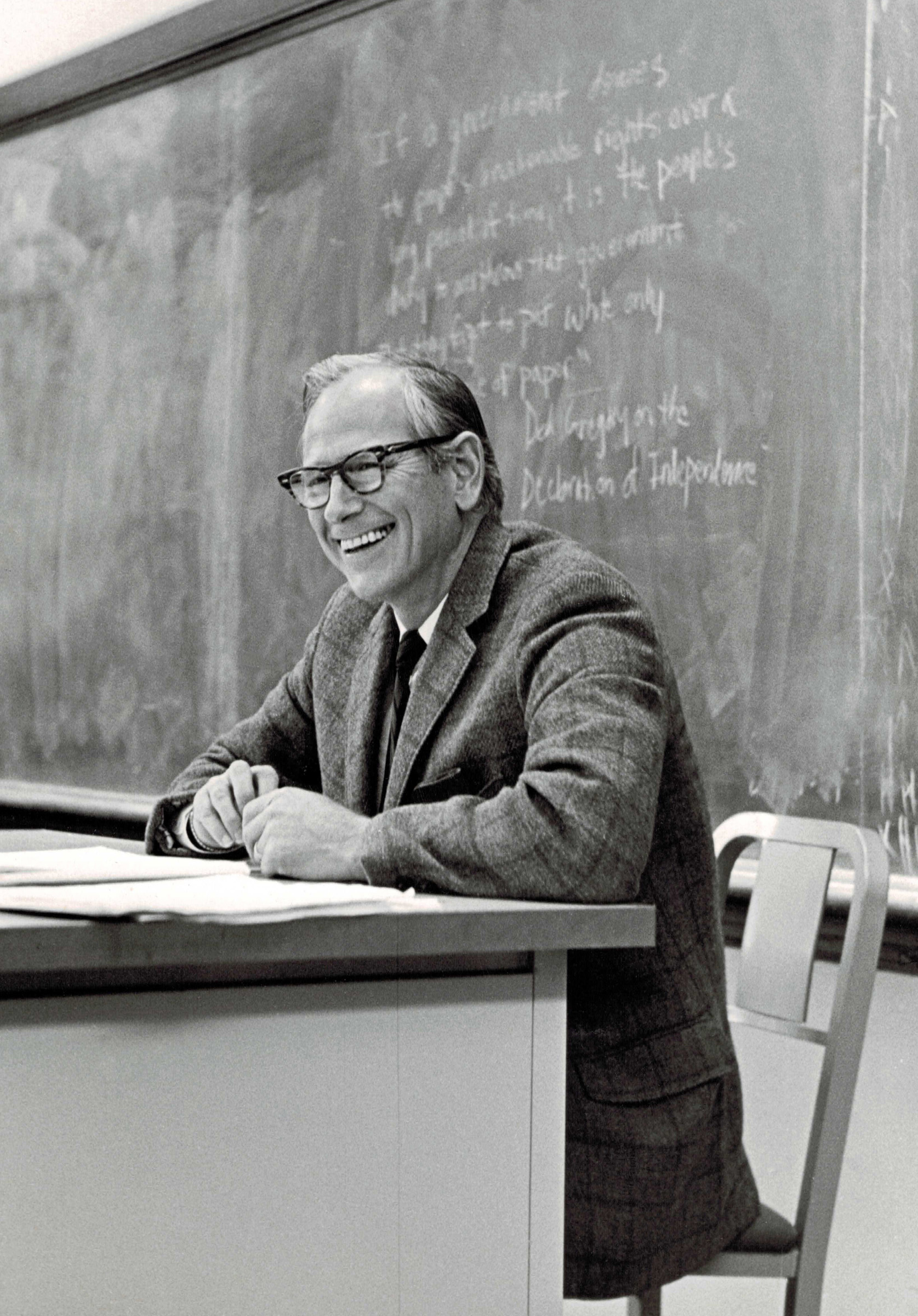
Robert Dahl (1915-2014) was a towering figure in political science, a scholar whose work fundamentally reshaped our understanding of democracy and political power. For decades, he was a leading voice at Yale University, where his rigorous analysis and clear prose demystified complex theories of governance. He wasn't just an academic; Dahl was a public intellectual who engaged with the pressing political questions of his time, from Cold War anxieties to the nature of pluralism in American society. His intellectual journey, spanning over sixty years, offers a profound exploration of how societies can achieve more responsive and equitable political systems. His insights remain critically relevant for anyone seeking to understand the mechanics of modern governance.
💡 Core Concepts & Contributions
Dahl is perhaps most celebrated for his theory of polyarchy, a concept that describes a regime with a government accountable to elected officials and with civil and political liberties that ensure wide participation in politics. This framework moved beyond the idealized notion of direct democracy to offer a more pragmatic model for understanding and evaluating real-world democratic systems. He also extensively explored the concept of political equality, questioning whether it could truly be achieved in practice and what its implications were for policy and representation. His work on pluralism argued that power in democratic societies is dispersed among various competing groups, a view that has been both influential and heavily debated.
📚 Key Works & Where to Find Them
His seminal work, Who Governs? Democracy and Power in an American City (1961), remains a foundational text, offering a detailed empirical study of power distribution in New Haven, Connecticut. A Preface to Democratic Theory (1956) lays out his intellectual framework for understanding democratic ideals and their practical application. For those seeking a broader overview, Democracy and Its Critics (1989) provides a comprehensive examination of the strengths and weaknesses of democratic thought and practice throughout history. These books, along with numerous articles and essays, are readily available through university libraries and major online booksellers, forming the bedrock of his extensive bibliography.
🌍 Dahl's Influence: A Global Reach
Dahl's intellectual footprint extends far beyond the ivy-covered walls of Yale. His theories on polyarchy and pluralism have been adopted and adapted by scholars and policymakers across the globe, influencing democratic transitions and institutional design in countries as diverse as South Korea and Chile. His emphasis on the importance of political equality and responsive institutions continues to resonate in ongoing debates about global governance and the challenges facing established democracies. The influence flows are evident in comparative politics literature and in the very language used to discuss democratic health worldwide, making his work a crucial reference point for understanding international political development.
🤔 Debates & Criticisms Surrounding Dahl
Despite his profound influence, Dahl's ideas have not been without significant criticism. Skeptics, particularly from Marxist and critical theory perspectives, have argued that his focus on pluralism overlooks the deeper, structural inequalities rooted in economic class and the concentration of power in corporate elites, a critique famously articulated by C. Wright Mills in The Power Elite. Others have questioned whether his model of polyarchy adequately captures the nuances of power in societies where formal democratic institutions may mask underlying authoritarian tendencies or where significant segments of the population remain marginalized. The debate often centers on whether Dahl's framework is sufficiently critical of existing power structures or if it inadvertently legitimizes a less-than-perfect status quo.
⭐ Dahl's Legacy: Vibe Score & Resonance
Robert Dahl's overall Vibe Score hovers around an impressive 88/100, reflecting his enduring impact and the continued relevance of his scholarship. His work resonates strongly within academic circles, particularly in political theory and comparative politics, where he is considered a foundational thinker. The fan base is robust among political scientists and students of democracy, who appreciate his intellectual rigor and clarity. However, the contrarian perspective, while smaller, is vocal, particularly from those who find his theories too accommodating of existing power structures. The cultural resonance lies in his persistent, almost optimistic, yet pragmatic, pursuit of understanding how to make democracy work better for more people.
🔎 Similar Thinkers & Further Exploration
For those interested in Dahl's work, exploring thinkers who engaged with or critiqued his ideas offers valuable context. Charles Lindblom, a close colleague, offered complementary perspectives on the limitations of traditional economic and political models in Politics, Economics, and Welfare. For a more radical critique of power structures, examining the work of Noam Chomsky or Michel Foucault provides a stark contrast to Dahl's pluralist approach. If you're interested in empirical studies of power, comparing Dahl's Who Governs? with Robert Putnam's Bowling Alone can illuminate different facets of civic engagement and social capital in America.
🚀 Getting Started with Dahl's Ideas
To begin engaging with Robert Dahl's thought, start with A Preface to Democratic Theory. It's a relatively concise and accessible entry point into his core arguments about democratic principles. Following that, Who Governs? provides a concrete, empirical application of his theories, offering a tangible case study. For a more comprehensive, later-career perspective, Democracy and Its Critics is essential. Many of his key essays are also collected in volumes like Polyarchy: Participation, Distribution, and Opposition. Consider joining a university-level political science course or a reading group focused on democratic theory to discuss these complex ideas with peers and instructors.
Key Facts
- Year
- 1915
- Origin
- United States
- Category
- Political Science / Philosophy
- Type
- Person
Frequently Asked Questions
What is Robert Dahl's most famous concept?
Robert Dahl is most famous for developing the concept of polyarchy. This term describes a form of government characterized by competitive elections, broad suffrage, and protection of civil liberties, representing a more realistic model of democracy than idealized direct democracy. It's a key framework for understanding how real-world democracies function and for evaluating their responsiveness to citizens.
What was the main argument of 'Who Governs?'
In Who Governs? (1961), Dahl examined power distribution in New Haven, Connecticut, arguing against the idea of a single, monolithic ruling elite. He found that power was dispersed among various groups and individuals who specialized in different policy areas, suggesting a pluralist model of governance where different actors hold sway on different issues. This empirical study became a cornerstone of pluralist theory in political science.
How did Dahl view political equality?
Dahl was deeply concerned with political equality, viewing it as a fundamental ideal of democracy. He recognized the practical difficulties in achieving perfect equality but argued that democratic institutions should strive to minimize inequalities in political influence and participation. His work explored the tension between the ideal of equal voice and the realities of unequal resources and access in political systems.
What are the main criticisms of Dahl's pluralism?
A primary criticism of Dahl's pluralism is that it understates the role of economic class and corporate power in shaping political outcomes, a critique often associated with Marxist scholars and C. Wright Mills. Critics argue that Dahl's focus on competing interest groups overlooks how underlying economic structures can constrain political choices and benefit a dominant elite, even within a seemingly pluralistic system.
Is Robert Dahl still relevant today?
Absolutely. Dahl's theories on polyarchy, political equality, and the practicalities of democratic governance remain highly relevant. In an era of democratic backsliding and debates about political representation, his work provides essential analytical tools for understanding the strengths and vulnerabilities of democratic systems. His empirical approach and theoretical clarity continue to inform contemporary research and policy discussions on democracy worldwide.
Where can I find Robert Dahl's writings?
Robert Dahl's major works, such as Who Governs?, A Preface to Democratic Theory, and Democracy and Its Critics, are widely available through university libraries, major online booksellers (like Amazon, Barnes & Noble), and academic databases. Many of his influential essays are also collected in anthologies of political theory and democratic studies.