
Contents
Overview
Romano-British culture represents the syncretic civilization that flourished in Britain and its debated persistence thereafter. It was a dynamic amalgamation of imported Roman governance, infrastructure, language, and social customs, interwoven with the existing Celtic traditions, beliefs, and artistic expressions of the indigenous Britons. This fusion manifested in everything from urban planning and villa architecture to religious practices and personal adornment, creating a unique provincial identity. While Roman legions departed, scholars like Christopher Snyder argue for a resilient sub-Roman culture in southern Britain, characterized by vernacular Latin use and resistance to Anglo-Saxon incursions, a claim that remains a significant point of academic debate. The legacy of Romano-British culture is etched into the landscape, visible in ruins like Hadrian's Wall and the remains of Roman towns such as Aquae Sulis and Verulamium, and continues to inform our understanding of Britain's transition from antiquity to the early medieval period.
🎵 Origins & History
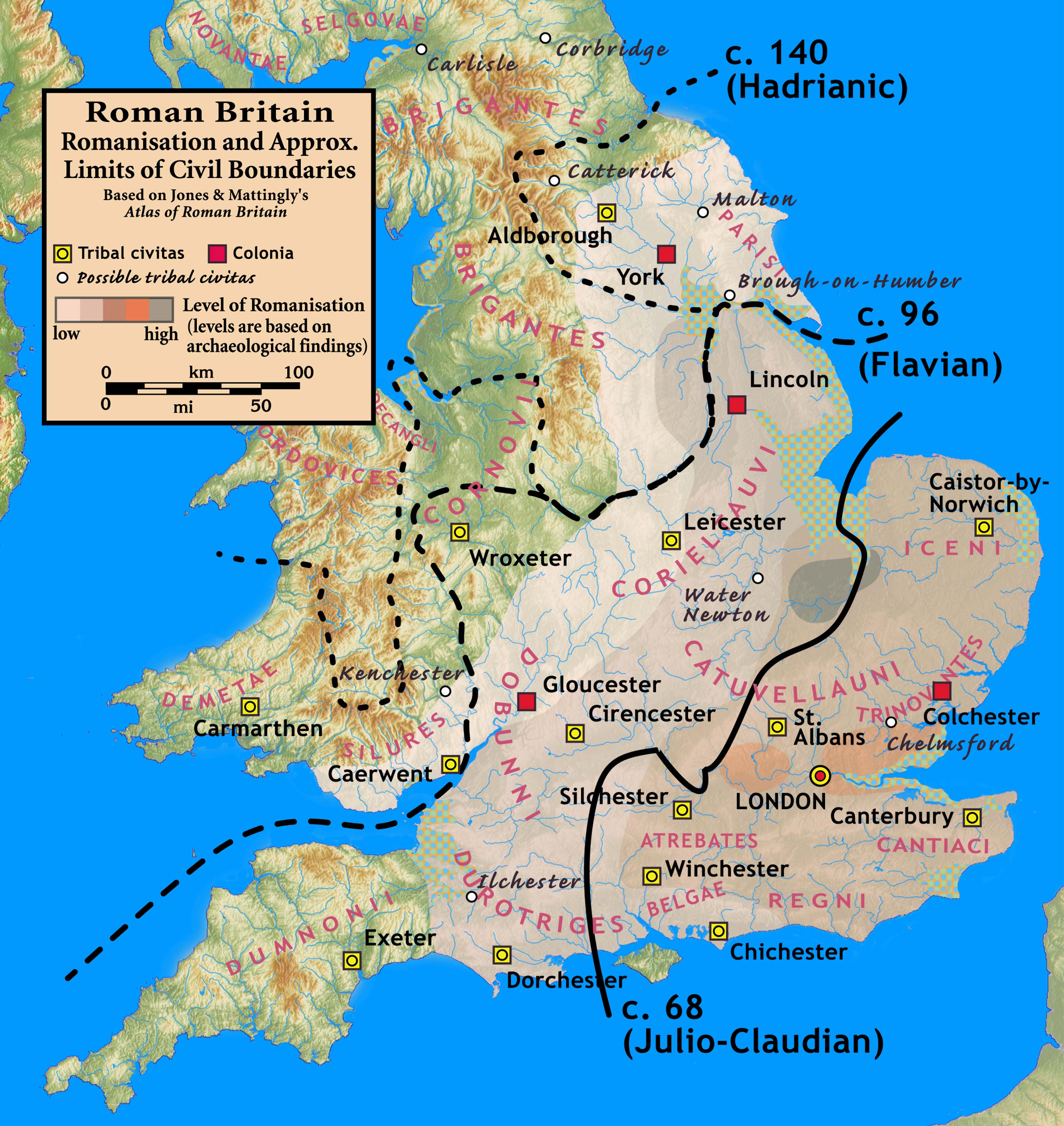
The genesis of Romano-British culture lies in the Roman invasion of Britain. Prior to this, Britain was inhabited by various Celtic tribes, each with distinct customs and social structures. The Roman conquest initiated a process of Romanization, wherein Roman administrative systems, military presence, and urban planning were imposed across the province of Britannia. This wasn't merely a military occupation; it was a cultural imposition that gradually integrated with indigenous practices. The construction of roads, public baths, and villas, alongside the introduction of Latin and Roman deities, began to reshape the British landscape and society. This period saw the emergence of a hybrid culture, where Celtic elites often adopted Roman lifestyles to maintain or enhance their status, a phenomenon observed across many Roman provinces. The process was uneven, with greater Romanization in the south and east, closer to the administrative centers and ports, and less so in the more remote western and northern regions, such as Cambria and Cumbria.
⚙️ How It Works
Romano-British culture functioned through a complex interplay of Roman governance and indigenous social structures. At its apex was the Roman provincial administration, headed by a governor, supported by a military hierarchy and a burgeoning civilian bureaucracy. Urban centers like Londinium, Eboracum, and Glevum served as hubs for trade, administration, and cultural dissemination, featuring typical Roman amenities such as forums, temples, and amphitheatres. Rural life, particularly in the south and east, was dominated by villas – large agricultural estates owned by wealthy Romano-Britons or Roman officials, often adorned with mosaic floors and hypocaust heating systems, reflecting Roman domestic architecture and luxury. Religious life saw the syncretism of Roman deities (like Jupiter and Mars) with Celtic gods (such as Sulis Minerva at Aquae Sulis), and the eventual introduction and spread of Christianity. The economy was integrated into the wider Roman imperial system, with Britain exporting goods like grain, tin, and slaves, while importing wine, pottery, and manufactured goods from across the empire, facilitated by the extensive Roman road network.
📊 Key Facts & Numbers
The scale of Roman influence in Britain is quantifiable. By the 4th century, Christianity was prevalent, with estimates suggesting up to 10% of the population may have been Christian, a figure that rose significantly by the end of Roman rule. The economic output of Britannia contributed significantly to the Roman Empire's coffers, with taxes and trade generating substantial revenue.
👥 Key People & Organizations
Key figures in Romano-British culture include Roman governors like Gnaeus Julius Agricola, who expanded Roman territory and influence in the late 1st century AD, and emperors such as Hadrian, who commissioned the iconic Hadrian's Wall to demarcate the northern frontier. Prominent Romano-Britons, though often lacking surviving individual biographies, were the landowners and local elites who adopted Roman customs, as evidenced by inscriptions and burial goods. The historian Tacitus provided early accounts of Roman Britain. In the post-Roman period, scholars like Christopher Snyder have championed the idea of a persistent sub-Roman culture, while archaeologists like Miles Russell continue to excavate and interpret Romano-British sites. Organizations such as English Heritage and the National Trust are crucial in preserving and interpreting the physical remains of this era, while academic institutions like the University of Oxford and the University of Cambridge host leading researchers in Roman Britain.
🌍 Cultural Impact & Influence
Romano-British culture left an indelible mark on Britain's identity and landscape. The Roman road network, such as Watling Street and Fosse Way, formed the backbone of later medieval and modern road systems, with many routes still traceable today. Roman urban planning influenced the layout of many historic British towns, with cities like Isca Dumnoniorum and Venta Belgarum retaining elements of their Roman street grids. Architectural innovations, including the use of fired brick, mortar, and the hypocaust heating system, were introduced and sometimes adapted. The Latin language, though largely replaced by Germanic tongues after the Anglo-Saxon invasions, left a significant substratum of vocabulary in Old English and influenced the development of later English. Religious practices saw the introduction of Christianity, which, despite pagan revivals and the eventual dominance of Anglo-Saxon paganism, would re-emerge as the dominant faith in the 7th century, largely through the efforts of missionaries like St Augustine of Canterbury. The very concept of a unified 'Britain' was significantly shaped by the Roman administrative province of Britannia.
⚡ Current State & Latest Developments
The study of Romano-British culture is a continuously evolving field. Recent archaeological discoveries, particularly through advancements in geophysical survey techniques and LiDAR scanning, are revealing previously unknown settlements, villas, and industrial sites across Britain, offering new insights into the scale and nature of Romanization. Ongoing excavations at sites like Vindolanda continue to yield remarkable artifacts, including the famous Vindolanda tablets, which provide unparalleled glimpses into daily life on the frontier. Debates surrounding the extent and nature of the sub-Roman period (roughly AD 410-600) remain active, with new interpretations of archaeological evidence challenging older narratives of a complete societal collapse following the Roman withdrawal. The impact of climate change and environmental factors on Roman agricultural practices and settlement patterns is also a growing area of research, as is the study of Romano-British art and its unique blend of styles. The ongoing digital revolution is also transforming access to information, with numerous online databases and virtual reconstructions of Roman sites becoming available.
🤔 Controversies & Debates
The primary controversy surrounding Romano-British culture centers on the nature and duration of its survival after the Roman withdrawal around AD 410. Some scholars, notably Christopher Snyder, argue for a robust 'sub-Roman' period, where a distinct Romano-British identity, language (vernacular Latin), and political structures persisted, particularly in southern Britain, actively resisting and influencing the incoming Anglo-Saxon settlers. This perspective posits that the Anglo-Saxon arrival was more of a gradual assimilation and conquest rather than an immediate replacement of a vanished culture. Conversely, traditional views, often supported by archaeological evidence of settlement shifts and the linguistic dominance of Old English, suggest a more abrupt decline and cultural discontinuity, with the Anglo-Saxons establishing their own distinct societies. Another debate concerns the extent of Romanization itself: was it a superficial veneer adopted by elites, or a deep-seated cultural transformation affecting broader segments of the population? The interpretation of archaeological findings, such as the distribution of Roman-style pottery and the presence of Latin inscriptions, continues to fuel these discussions.
🔮 Future Outlook & Predictions
The future of Romano-British culture as
Key Facts
- Category
- culture
- Type
- topic