
Contents
Overview
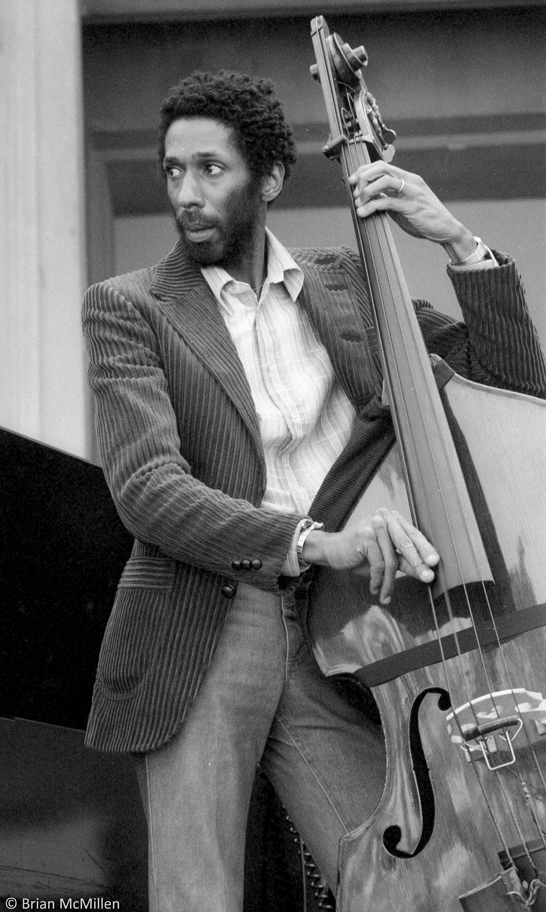
Ron Carter, born May 4, 1937, is an American jazz double bassist and composer. Widely regarded as one of the most prolific and influential bassists in jazz history, Carter has recorded over 2,200 albums across his career, a number that dwarfs most musicians, living or dead. His distinctive sound and innovative approach to the instrument have shaped generations of bassists and contributed immeasurably to the evolution of jazz, particularly through his work with the Miles Davis Second Great Quintet in the 1960s. Beyond his instrumental prowess, Carter is also a respected composer and educator, having taught at The Juilliard School and Mercer University.
Carter's career spans an astonishing breadth of jazz styles, from hard bop and modal jazz to avant-garde and fusion. His technical mastery is matched by his deep musicality, characterized by a melodic sensibility and a rhythmic precision that anchors any ensemble. Whether laying down a solid foundation or engaging in intricate melodic dialogues, Carter's presence is consistently transformative. His extensive discography includes seminal albums such as Miles Smiles, Nefertiti, and Sorcerer with Davis, as well as hundreds of recordings as a leader and sideman with artists like Thelonious Monk, Herbie Hancock, and Dizzy Gillespie.
His influence is not merely confined to the jazz world; Carter's work has also touched upon R&B, soul, and even hip-hop. His ability to adapt and innovate across diverse musical landscapes speaks to a profound understanding of rhythm and harmony. Despite his legendary status, Carter remains an active performer and recording artist, continuously pushing creative boundaries and mentoring emerging talent. His legacy is a testament to dedication, versatility, and an unparalleled contribution to the rhythmic and harmonic underpinnings of modern music.
From Michigan to Miles
Ron Carter's journey began in Muskegon, Michigan, but his career truly took flight in New York City, where he quickly established himself as a formidable force. His early work in the late 1950s and early 1960s saw him collaborating with a who's who of jazz giants, including Cannonball Adderley and Eric Dolphy. However, it was his tenure with Miles Davis from 1963 to 1968 that cemented his place in jazz history. As part of Davis's second great quintet, alongside Wayne Shorter, Herbie Hancock, and Tony Williams, Carter provided the essential harmonic and rhythmic anchor for some of the most groundbreaking recordings of the era, pushing the boundaries of modal jazz and improvisational structures.
A Discography Like No Other
Carter's prolific output as a leader and sideman is staggering. He has released over 100 albums under his own name, exploring various configurations from trios to larger ensembles. His compositional style often features sophisticated melodies and intricate rhythmic patterns, reflecting his deep understanding of musical architecture. Albums like All Blues (1973) and Piccolo Blue (1987) showcase his versatility as a composer and bandleader. His collaborations extend beyond jazz, having worked with artists such as Paul Simon and appearing on soundtracks for films like The Cotton Club.
Critical Acclaim and Honors
The critical reception of Ron Carter's work has been overwhelmingly positive throughout his career. He has received numerous awards and honors, including multiple Grammy Awards, a DownBeat Magazine Readers Poll Lifetime Achievement Award, and an honorary doctorate from The New England Conservatory. Critics consistently praise his impeccable technique, his lyrical improvisational style, and his unparalleled ability to serve the music. His influence is so pervasive that it's difficult to find a contemporary jazz bassist who hasn't been touched by his innovations.
The Enduring Influence
Ron Carter's legacy is that of a foundational figure whose work continues to resonate. His approach to the bass—emphasizing melodicism, rhythmic clarity, and harmonic sophistication—has become a benchmark for aspiring bassists. His extensive discography serves as a living encyclopedia of modern jazz, illustrating the instrument's evolving role. Furthermore, his commitment to education through institutions like The Juilliard School ensures that his wisdom and technique are passed down to future generations. Artists across genres, from Robert Glasper to Kendrick Lamar, have cited Carter as an influence, demonstrating the enduring reach of his musical genius.
Key Facts
- Year
- 1937-present
- Origin
- USA
- Category
- videos
- Type
- youtube-creator
Frequently Asked Questions
What is Ron Carter most famous for?
He is most famous for his extensive work as a double bassist in jazz, particularly his time with the Miles Davis Quintet, and for his incredibly prolific recording career, having played on over 2,200 albums.
What instrument does Ron Carter play?
Ron Carter primarily plays the double bass, also known as the upright bass or contrabass.
How many albums has Ron Carter recorded?
It is widely reported that Ron Carter has recorded over 2,200 albums, making him one of the most recorded musicians in history.
Who did Ron Carter play with?
He has played with an extensive list of legendary musicians, including Miles Davis, Herbie Hancock, Wayne Shorter, Tony Williams, Thelonious Monk, and many others across various genres.
What is Ron Carter's impact on jazz?
Carter revolutionized the role of the bass in jazz, emphasizing melodicism, rhythmic precision, and harmonic depth, influencing generations of bassists and shaping the sound of modern jazz.