
Contents
Overview
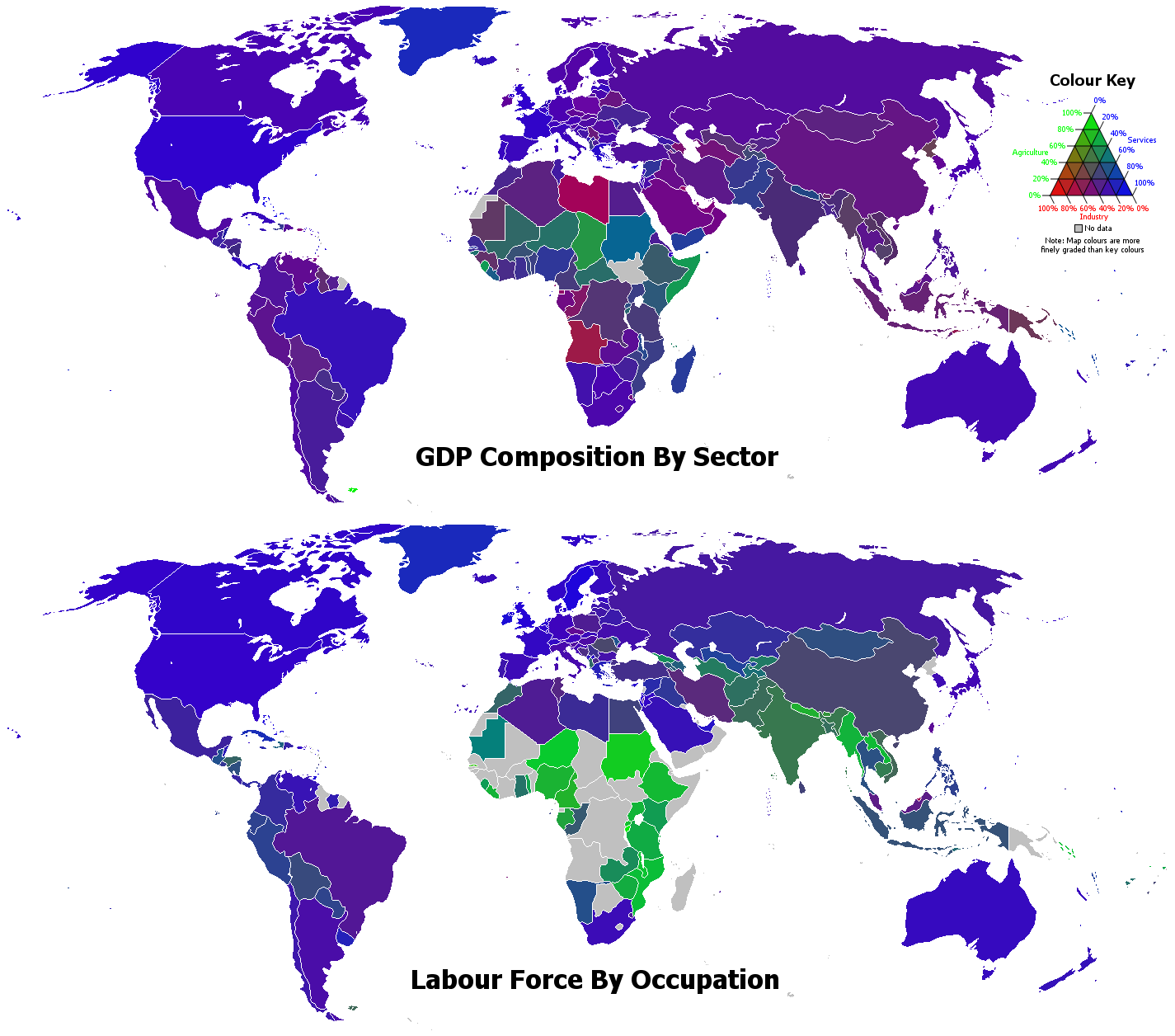
The service economy signifies a profound transformation in economic structures, characterized by the dominance of the service sector over manufacturing and agriculture. This shift is evident in industrialized nations where services now constitute the largest share of GDP and employment, a trend exemplified by the increasing presence of service-oriented companies like IBM and Accenture on lists like the Fortune 500. Beyond sectorial dominance, the concept also describes the 'servitization' of products, where services become integral to the value proposition of tangible goods, blurring the lines between product and service into a continuum. This evolution, driven by technological advancements and changing consumer demands, has reshaped global commerce, with developing economies increasingly focusing on sectors such as finance, IT, and education. The service economy is not merely about selling services; it's about delivering experiences, expertise, and ongoing value, fundamentally altering how businesses operate and how economies are measured.
🎵 Origins & History
The concept of a service economy didn't emerge overnight; it's the culmination of decades of economic evolution, tracing its roots back to post-industrial theories. As early as the 1960s, economists like Daniel Bell began theorizing about the 'post-industrial society,' where theoretical knowledge and services would supplant manufacturing as the primary drivers of economic growth. This transition was fueled by technological advancements, particularly in information technology and communication, which reduced the cost and increased the efficiency of delivering services. The decline of traditional manufacturing in developed nations, often termed 'deindustrialization,' further accelerated this shift, pushing labor and capital towards sectors like finance, healthcare, and education.
⚙️ How It Works
At its core, the service economy operates on the exchange of intangible value. Unlike manufacturing, which produces tangible goods, service-based businesses deliver expertise, labor, advice, or access. This can range from highly specialized professional services like legal counsel and management consulting provided by firms like McKinsey & Company, to more generalized consumer services such as retail, hospitality, and transportation. The 'servitization' of products is a key mechanism, where companies add service components to their offerings. For instance, a software company might offer cloud-based access and ongoing support (a service) rather than just selling a physical disc (a product). This creates a continuous revenue stream and a deeper customer relationship, often managed through CRM systems.
📊 Key Facts & Numbers
The scale of the service economy is staggering. The digital services market, encompassing everything from streaming services like Netflix to cloud computing giants like Amazon Web Services (AWS), is projected to exceed $2 trillion by 2025. This growth is further evidenced by the fact that 85 of the top 100 companies on the 2023 Fortune 500 list were primarily service-based.
👥 Key People & Organizations
Several key figures and organizations have shaped our understanding of the service economy. Theodore Levitt, a Harvard Business School professor, is credited with popularizing the term 'servitization' in his 1981 Harvard Business Review article, arguing that even manufacturers must think of themselves as service providers. Peter Drucker, a prolific management theorist, foresaw the rise of knowledge workers and the service sector's increasing importance in the latter half of the 20th century. Organizations like the World Trade Organization (WTO) actively regulate and promote trade in services globally, recognizing its critical role in international commerce. Major consulting firms such as Boston Consulting Group (BCG) and Deloitte continuously publish research on service sector trends and strategies.
🌍 Cultural Impact & Influence
The cultural impact of the service economy is pervasive. It has fostered a shift in consumer expectations, prioritizing convenience, experience, and personalization. The rise of the 'gig economy,' facilitated by platforms like Uber and DoorDash, exemplifies this, offering flexible work arrangements and on-demand services. This has also led to a cultural emphasis on 'experiences' over material possessions, influencing industries from tourism and entertainment to dining and wellness. The digital transformation inherent in the service economy has also reshaped social interactions, with online platforms and social media becoming conduits for service delivery and consumption, impacting everything from dating via apps like Tinder to learning through online courses on Coursera.
⚡ Current State & Latest Developments
The service economy is currently experiencing rapid evolution, driven by artificial intelligence and automation. AI is transforming customer service through chatbots and personalized recommendations, while automation is streamlining operations in logistics and finance. The 'subscription economy' continues its robust growth, with consumers increasingly opting for recurring access to software, media, and even physical goods. Furthermore, the COVID-19 pandemic accelerated the adoption of remote work and digital service delivery models, permanently altering how many services are consumed. Companies are also increasingly focused on building 'product-service systems' (PSS), integrating tangible products with a suite of associated services to create holistic solutions, a strategy championed by tech giants like Apple with its ecosystem of devices and services.
🤔 Controversies & Debates
The service economy is not without its controversies. Critics argue that the shift away from manufacturing has led to job losses in higher-paying industrial sectors and a proliferation of lower-wage, precarious service jobs, contributing to income inequality. The rise of the gig economy, while offering flexibility, often lacks the benefits and security of traditional employment, raising concerns about worker rights and exploitation, a debate frequently seen on platforms like Reddit. There are also debates surrounding data privacy and security, as service-based businesses often collect vast amounts of personal information. The environmental impact of the service sector, particularly in areas like data centers and transportation, is also a growing concern, despite its generally lower direct footprint compared to heavy industry.
🔮 Future Outlook & Predictions
The future of the service economy is likely to be defined by deeper integration of AI and automation, leading to hyper-personalized services and more efficient operations. We can expect a continued blurring of the lines between physical and digital services, with augmented reality (AR) and virtual reality (VR) playing larger roles in service delivery, particularly in fields like education and remote assistance. The 'as-a-service' model will likely expand into new domains, potentially encompassing infrastructure and even governance. Furthermore, a growing emphasis on sustainability and ethical practices will shape service design and delivery, pushing businesses towards more circular and socially responsible models. The ongoing development of blockchain technology may also introduce new decentralized service platforms.
💡 Practical Applications
Practical applications of the service economy are ubiquitous. In healthcare, telemedicine platforms connect patients with doctors remotely, improving access to care. In education, online learning platforms provide flexible and accessible educational opportunities to millions worldwide. The financial sector leverages technology for digital banking, investment services, and payment processing. The entertainment industry relies heavily on streaming services, while the transportation sector is increasingly dominated by ride-sharing and logistics platforms. Even traditional manufacturing companies now offer maintenance, repair, and operational support services, turning their products into integrated solutions. For consumers, this translates into greater convenience, wider choices, and often, more tailored experiences.
Key Facts
- Category
- economics
- Type
- topic