
Contents
Overview
Born Seymour Aubrey Papert on February 29, 1928, in Pretoria, South Africa, his intellectual journey began far from the silicon valleys of today. He earned his undergraduate degree from the University of the Witwatersrand in 1949, followed by a Ph.D. in mathematics from Cambridge University in 1952. His early work was steeped in mathematical logic and cybernetics, influenced by thinkers like Norbert Wiener. Papert's initial foray into computing was at the University of Geneva, where he worked with Jean Piaget, developing theories on how children think and learn. This foundational experience in developmental psychology would profoundly shape his later educational theories, leading him to question traditional pedagogical methods and seek more empowering ways for children to engage with knowledge. His move to the MIT in 1963 marked the beginning of his most impactful period, where he would help define the fields of artificial intelligence and educational technology.
⚙️ How It Works
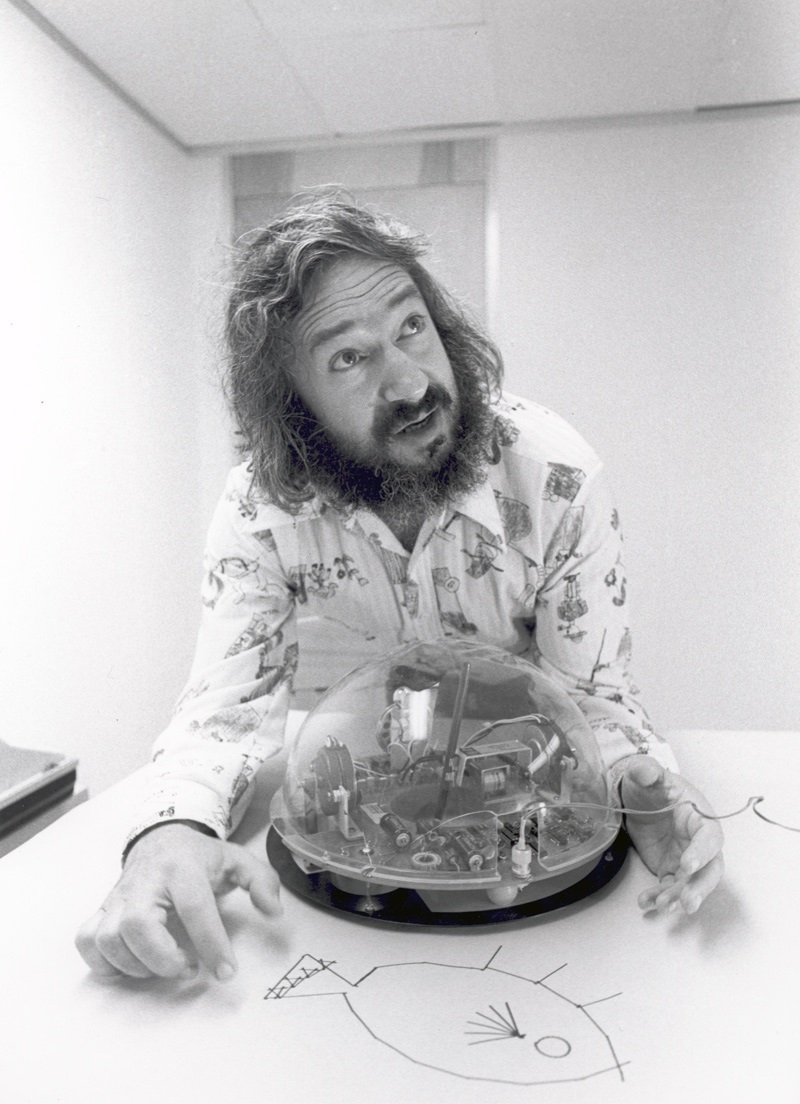
Papert's most tangible contribution to educational technology is the Logo programming language, developed with Wally Feurzeig and Cynthia Solomon in the late 1960s. Logo was designed to be accessible to children, moving away from complex syntax towards intuitive commands. Its signature feature, 'turtle graphics,' allowed users to command a virtual 'turtle' to draw shapes on screen by giving it simple instructions like 'forward' and 'turn.' This embodied approach meant children could 'see' the results of their code immediately, fostering a concrete understanding of geometric concepts and computational thinking. The underlying philosophy was 'constructionism,' which posits that learning happens best when individuals are actively engaged in constructing a meaningful artifact, whether it's a piece of code, a robot, or a story. Papert believed that computers, far from being just calculators, could serve as powerful tools for this construction process, enabling children to explore complex ideas in their own way.
📊 Key Facts & Numbers
Papert's influence is quantifiable: the Logo programming language has been implemented on hundreds of platforms and translated into dozens of languages since its inception in 1967. His seminal book, Mindstorms: Children, Computers, and Powerful Ideas, published in 1980, sold over 100,000 copies and has been translated into more than 15 languages, reaching an estimated audience of millions. By the mid-1980s, Logo was being used in an estimated 10,000 schools worldwide, impacting the educational approaches of countless students and teachers. His work at the MIT Media Lab, which he co-founded in 1985, attracted significant funding, with initial budgets exceeding $10 million annually, fostering an environment for groundbreaking research in interactive technologies. Papert's career spanned over five decades, during which he published more than 150 papers and several influential books, solidifying his status as a leading figure in computational learning.
👥 Key People & Organizations
Seymour Papert's intellectual network was vast and influential. He worked closely with Wally Feurzeig and Cynthia Solomon in the development of the Logo language at Bolt, Beranek and Newman (BBN) Technologies. At the MIT, he was a pivotal figure, co-founding the MIT Media Lab in 1985 and directing the MIT Artificial Intelligence Laboratory from 1970 to 1981. His academic colleagues and students included luminaries such as Sherry Turkle, who would later become a prominent sociologist of technology and his spouse, and Mitchel Resnick, who continued Papert's legacy by developing Scratch, a visual programming language inspired by Logo. Papert also engaged with educational theorists like Jean Piaget, whose work on child development heavily influenced Papert's constructionist philosophy. His career was recognized with prestigious awards, including a Guggenheim Fellowship and the Marconi Prize.
🌍 Cultural Impact & Influence
Papert's impact on education and technology is profound and far-reaching. The Logo language and its turtle graphics introduced computational thinking and programming concepts to millions of children globally, influencing curricula and pedagogical approaches in schools from the 1970s onwards. His book Mindstorms became a foundational text for the educational technology movement, inspiring educators and technologists to view computers as tools for empowerment and creativity, rather than mere drill-and-practice machines. The MIT Media Lab, co-founded by Papert, became a global hub for innovation, fostering the development of technologies that have shaped digital culture, from early interactive art to wearable computing. His advocacy for constructionism continues to resonate, informing approaches to learning in STEM fields and beyond, emphasizing active engagement and personal meaning-making. The principles he championed are visible in modern educational tools like Scratch and Minecraft's educational editions, which empower users to build and create.
⚡ Current State & Latest Developments
While Papert passed away in 2016, his ideas continue to evolve and find new expressions. The principles of constructionism are increasingly integrated into modern educational frameworks, particularly in the context of STEM education and the maker movement. Platforms like Scratch and micro:bit build directly on the foundations laid by Logo, offering more sophisticated yet equally accessible tools for young learners to engage with coding and computational thinking. The ongoing development of educational robotics kits, such as those from LEGO Mindstorms, directly reflects Papert's vision of tangible computing for learning. Furthermore, discussions around the role of technology in fostering critical thinking and creativity, central to Papert's work, remain highly relevant in an era of rapidly advancing AI and digital immersion.
🤔 Controversies & Debates
Papert's vision of computers as tools for intellectual empowerment was not universally embraced. Critics sometimes argued that his constructionist approach could lead to unstructured learning, where students might tinker without achieving specific learning objectives. Some educators questioned the practical scalability of implementing Logo or similar environments in under-resourced schools, citing the need for specialized teacher training and adequate hardware. The debate also touched upon the potential for technology to exacerbate existing inequalities if access and training were not equitable. While Papert championed the idea of 'powerful ideas' that could be explored through computing, critics sometimes raised concerns about whether these powerful ideas were always effectively conveyed or if the technology itself became the primary focus, overshadowing deeper conceptual understanding. The very notion of 'computational thinking' as a universal skill has also been a subject of ongoing debate and refinement.
🔮 Future Outlook & Predictions
The future outlook for Papert's ideas remains robust, albeit in evolving forms. Constructionism is likely to continue influencing the design of educational technologies, with a growing emphasis on interdisciplinary learning and project-based approaches. The rise of AI in education presents both opportunities and challenges that Papert's work can help navigate; his emphasis on understanding the process of learning and thinking, rather than just the output, is crucial. We can anticipate further development of intuitive programming environments and educational robotics that empower learners to become creators. The challenge will be to ensur
💡 Practical Applications
Papert's most tangible contribution to educational technology is the Logo programming language, developed with Wally Feurzeig and Cynthia Solomon. Logo was designed to be accessible to children, moving away from complex syntax towards intuitive commands. Its signature feature, 'turtle graphics,' allowed users to command a virtual 'turtle' to draw shapes on screen by giving it simple instructions like 'forward' and 'turn.' This embodied approach meant children could 'see' the results of their code immediately, fostering a concrete understanding of geometric concepts and computational thinking. The underlying philosophy was 'constructionism,' which posits that learning happens best when individuals are actively engaged in constructing a meaningful artifact, whether it's a piece of code, a robot, or a story. Papert believed that computers, far from being just calculators, could serve as powerful tools for this construction process, enabling children to explore complex ideas in their own way.
Section 11
Seymour Papert's intellectual network was vast and influential. He worked closely with Wally Feurzeig and Cynthia Solomon in the development of the Logo language at Bolt, Beranek and Newman (BBN) Technologies. At the MIT, he was a pivotal figure, co-founding the MIT Media Lab in 1985 and directing the MIT Artificial Intelligence Laboratory from 1970 to 1981. His academic colleagues and students included luminaries such as Sherry Turkle, who would later become a prominent sociologist of technology and his spouse, and Mitchel Resnick, who continued Papert's legacy by developing Scratch, a visual programming language inspired by Logo. Papert also engaged with educational theorists like Jean Piaget, whose work on child development heavily influenced Papert's constructionist philosophy. His career was recognized with prestigious awards, including a Guggenheim Fellowship and the Marconi Prize.
Section 12
Papert's impact on education and technology is profound and far-reaching. The Logo language and its turtle graphics introduced computational thinking and programming concepts to millions of children globally, influencing curricula and pedagogical approaches in schools from the 1970s onwards. His book Mindstorms became a foundational text for the educational technology movement, inspiring educators and technologists to view computers as tools for empowerment and creativity, rather than mere drill-and-practice machines. The MIT Media Lab, co-founded by Papert, became a global hub for innovation, fostering the development of technologies that have shaped digital culture, from early interactive art to wearable computing. His advocacy for constructionism continues to resonate, informing approaches to learning in STEM fields and beyond, emphasizing active engagement and personal meaning-making. The principles he championed are visible in modern educational tools like Scratch and Minecraft's educational editions, which empower users to build and create.
Section 13
While Papert passed away in 2016, his ideas continue to evolve and find new expressions. The principles of constructionism are increasingly integrated into modern educational frameworks, particularly in the context of STEM education and the maker movement. Platforms like Scratch and micro:bit build directly on the foundations laid by Logo, offering more sophisticated yet equally accessible tools for young learners to engage with coding and computational thinking. The ongoing development of educational robotics kits, such as those from LEGO Mindstorms, directly reflects Papert's vision of tangible computing for learning. Furthermore, discussions around the role of technology in fostering critical thinking and creativity, central to Papert's work, remain highly relevant in an era of rapidly advancing AI and digital immersion.
Section 14
Papert's vision of computers as tools for intellectual empowerment was not universally embraced. Critics sometimes argued that his constructionist approach could lead to unstructured learning, where students might tinker without achieving specific learning objectives. Some educators questioned the practical scalability of implementing Logo or similar environments in under-resourced schools, citing the need for specialized teacher training and adequate hardware. The debate also touched upon the potential for technology to exacerbate existing inequalities if access and training were not equitable. While Papert championed the idea of 'powerful ideas' that could be explored through computing, critics sometimes raised concerns about whether these powerful ideas were always effectively conveyed or if the technology itself became the primary focus, overshadowing deeper conceptual understanding. The very notion of 'computational thinking' as a universal skill has also been a subject of ongoing debate and refinement.
Section 15
The future outlook for Papert's ideas remains robust, albeit in evolving forms. Constructionism is likely to continue influencing the design of educational technologies, with a growing emphasis on interdisciplinary learning and project-based approaches. The rise of AI in education presents both opportunities and challenges that Papert's work can help navigate; his emphasis on understanding the process of learning and thinking, rather than just the output, is crucial. We can anticipate further development of intuitive programming environments and educational robotics that empower learners to become creators. The challenge will be to ensur
Section 16
Papert's most tangible contribution to educational technology is the Logo programming language, developed with Wally Feurzeig and Cynthia Solomon. Logo was designed to be accessible to children, moving away from complex syntax towards intuitive commands. Its signature feature, 'turtle graphics,' allowed users to command a virtual 'turtle' to draw shapes on screen by giving it simple instructions like 'forward' and 'turn.' This embodied approach meant children could 'see' the results of their code immediately, fostering a concrete understanding of geometric concepts and computational thinking. The underlying philosophy was 'constructionism,' which posits that learning happens best when individuals are actively engaged in constructing a meaningful artifact, whether it's a piece of code, a robot, or a story. Papert believed that computers, far from being just calculators, could serve as powerful tools for this construction process, enabling children to explore complex ideas in their own way.
Section 17
Papert's influence is quantifiable: the Logo programming language has been implemented on hundreds of platforms and translated into dozens of languages since its inception. His seminal book, Mindstorms: Children, Computers, and Powerful Ideas, published in 1980, sold over 100,000 copies and has been translated into more than 15 languages, reaching an estimated audience of millions. By the mid-1980s, Logo was being used in an estimated 10,000 schools worldwide, impacting the educational approaches of countless students and teachers. His work at the MIT Media Lab, which he co-founded in 1985, attracted significant funding, with initial budgets exceeding $10 million annually, fostering an environment for groundbreaking research in interactive technologies. Papert's career spanned over five decades, during which he published more than 150 papers and several influential books, solidifying his status as a leading figure in computational learning.
Section 18
Seymour Papert's intellectual network was vast and influential. He worked closely with Wally Feurzeig and Cynthia Solomon in the development of the Logo language at Bolt, Beranek and Newman (BBN) Technologies. At the MIT, he was a pivotal figure, co-founding the MIT Media Lab in 1985 and directing the MIT Artificial Intelligence Laboratory from 1970 to 1981. His academic colleagues and students included luminaries such as Sherry Turkle, who would later become a prominent sociologist of technology and his spouse, and Mitchel Resnick, who continued Papert's legacy by developing Scratch, a visual programming language inspired by Logo. Papert also engaged with educational theorists like Jean Piaget, whose work on child development heavily influenced Papert's constructionist philosophy. His career was recognized with prestigious awards, including a Guggenheim Fellowship and the Marconi Prize.
Section 19
Papert's impact on education and technology is profound and far-reaching. The Logo language and its turtle graphics introduced computational thinking and programming concepts to millions of children globally, influencing curricula and pedagogical approaches in schools from the 1970s onwards. His book Mindstorms became a foundational text for the educational technology movement, inspiring educators and technologists to view computers as tools for empowerment and creativity, rather than mere drill-and-practice machines. The MIT Media Lab, co-founded by Papert, became a global hub for innovation, fostering the development of technologies that have shaped digital culture, from early interactive art to wearable computing. His advocacy for constructionism continues to resonate, informing approaches to learning in STEM fields and beyond, emphasizing active engagement and personal meaning-making. The principles he championed are visible in modern educational tools like Scratch and Minecraft's educational editions, which empower users to build and create.
Section 20
While Papert passed away in 2016, his ideas continue to evolve and find new expressions. The principles of constructionism are increasingly integrated into modern educational frameworks, particularly in the context of STEM education and the maker movement. Platforms like Scratch and micro:bit build directly on the foundations laid by Logo, offering more sophisticated yet equally accessible tools for young learners to engage with coding and computational thinking. The ongoing development of educational robotics kits, such as those from LEGO Mindstorms, directly reflects Papert's vision of tangible computing for learning. Furthermore, discussions around the role of technology in fostering critical thinking and creativity, central to Papert's work, remain highly relevant in an era of rapidly advancing AI and digital immersion.
Section 21
Papert's vision of computers as tools for intellectual empowerment was not universally embraced. Critics sometimes argued that his constructionist approach could lead to unstructured learning, where students might tinker without achieving specific learning objectives. Some educators questioned the practical scalability of implementing Logo or similar environments in under-resourced schools, citing the need for specialized teacher training and adequate hardware. The debate also touched upon the potential for technology to exacerbate existing inequalities if access and training were not equitable. While Papert championed the idea of 'powerful ideas' that could be explored through computing, critics sometimes raised concerns about whether these powerful ideas were always effectively conveyed or if the technology itself became the primary focus, overshadowing deeper conceptual understanding. The very notion of 'computational thinking' as a universal skill has also been a subject of ongoing debate and refinement.
Section 22
The future outlook for Papert's ideas remains robust, albeit in evolving forms. Constructionism is likely to continue influencing the design of educational technologies, with a growing emphasis on interdisciplinary learning and project-based approaches. The rise of AI in education presents both opportunities and challenges that Papert's work can help navigate; his emphasis on understanding the process of learning and thinking, rather than just the output, is crucial. We can anticipate further development of intuitive programming environments and educational robotics that empower learners to become creators. The challenge will be to ensur
Key Facts
- Category
- people
- Type
- topic