
Contents
Overview
The origins of Shingon Buddhism are deeply intertwined with the transmission of esoteric Buddhist teachings from India to China and subsequently to Japan. The Chinese Zhenyan (真言) lineage is from which Shingon derives its name, and was established in China during the 7th and 8th centuries by influential Indian vajrācāryas (esoteric masters) such as Śubhakarasiṃha, Vajrabodhi, and Amoghavajra. These masters brought with them complex tantric rituals, mandalas, and profound philosophical insights. The pivotal figure in Shingon's establishment in Japan is Kūkai (空海, 774–835), posthumously known as Kōbō Daishi. After traveling to Tang China in 804, Kūkai received direct esoteric transmissions from the master Huiguo (746–805) at Qinglong Temple in Chang'an. Upon his return to Japan in 806, Kūkai began disseminating these teachings, eventually founding his own school in 823 and establishing its central monastery, Kongōbu-ji, on Mount Kōya. This sacred mountain in Wakayama Prefecture has since served as the spiritual epicenter for Shingon practitioners worldwide.
⚙️ How It Works
Shingon Buddhism's practice is fundamentally esoteric, emphasizing the direct transmission of wisdom and power from master to disciple. At its core is the belief that Buddhahood is inherent within all sentient beings and can be realized in this very lifetime through specific practices. Shingon practices include the 'three mysteries' (三密, sanmitsu): secret body (密身, mitsushin), secret speech (密口, mitsukuchi), and secret mind (密意, mitsui). Practitioners engage in mudras (symbolic hand gestures), mantras (sacred syllables like the famous om̐), and visualizations of deities and mandalas, most notably the Vajradhatu Mandala and the Garbhadhatu Mandala. The goal is to embody the enlightened mind of the Mahavairocana Buddha (Japanese: Dainichi Nyorai), who is considered the primordial Buddha and the source of all phenomena. Rituals, often elaborate and conducted in temples like Tō-ji Temple in Kyoto, are central to cultivating this realization.
📊 Key Facts & Numbers
Shingon Buddhism boasts a significant presence in Japan, with an estimated 3.5 million adherents according to recent surveys. The school maintains over 3,000 temples across Japan, with Mount Kōya serving as its primary pilgrimage site, attracting hundreds of thousands of visitors annually. The Shingon school is one of the eighteen major sects of Japanese Buddhism, and its headquarters are located at the Shingon sect eighteen Motoyama complex. The vast corpus of Shingon scriptures, including the Mahavairocana Sutra (Japanese: Dainichikyō), comprises hundreds of volumes, reflecting the depth and breadth of its teachings. The economic impact of Shingon temples and related tourism in regions like Wakayama Prefecture is substantial, contributing significantly to local economies.
👥 Key People & Organizations
The foundational figure of Shingon Buddhism is Kūkai (空海, 774–835), also known as Kōbō Daishi, a towering intellect and spiritual master who synthesized Indian esoteric traditions into a uniquely Japanese form. His successor, Shinran (1173–1263), though more associated with Jōdo Shinshū, was influenced by earlier Shingon teachings. In modern times, figures like the late Abbot Kōshō Ōtani of Kōyasan Shingon-shū have guided the tradition. Key organizations include the Shingon sect eighteen Motoyama, the administrative body overseeing major temples, and the Koyasan University, which provides academic study of Buddhist philosophy and Shingon doctrine. The lineage also maintains connections with other Vajrayana traditions, fostering dialogue with Tibetan Buddhist masters.
🌍 Cultural Impact & Influence
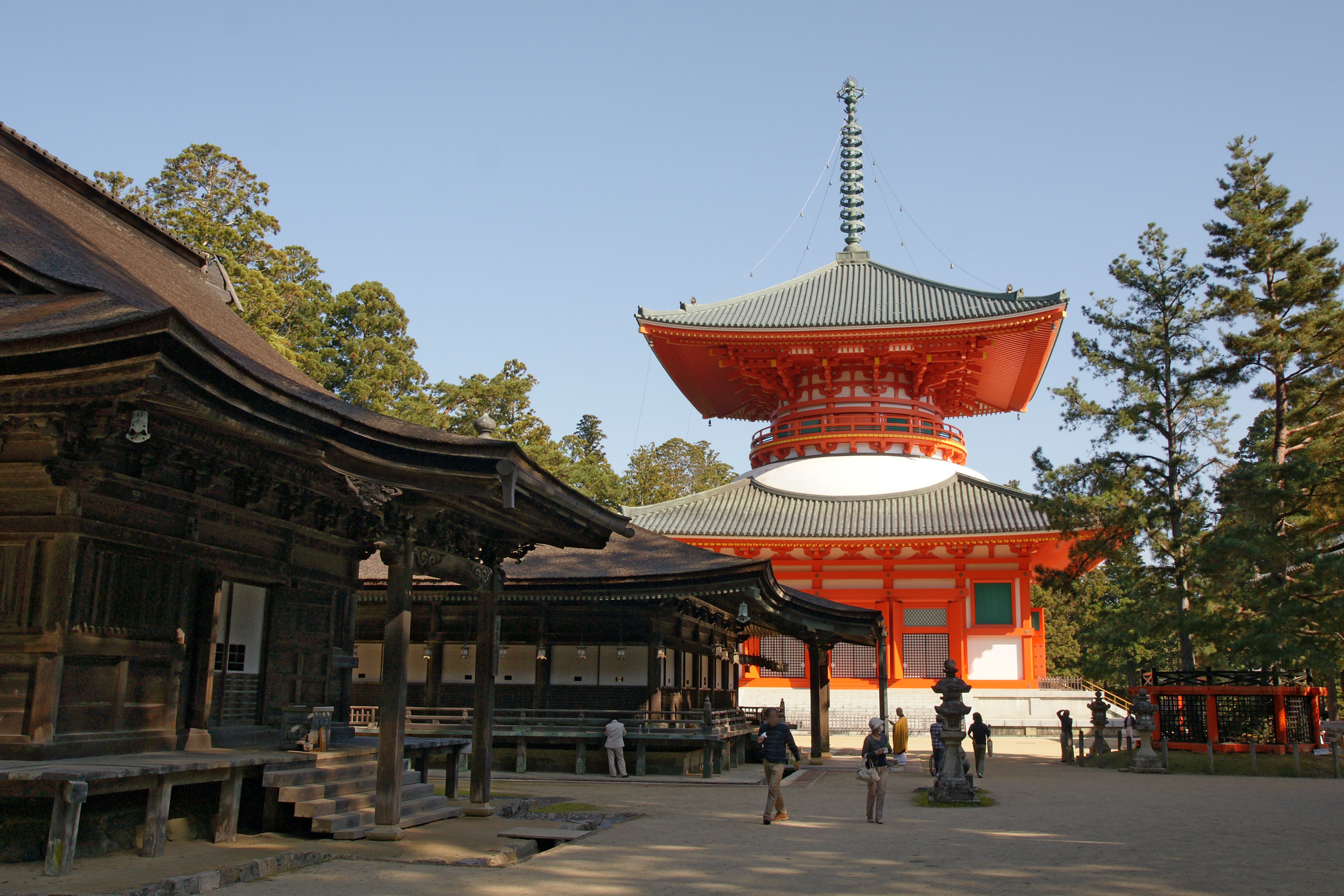
Shingon Buddhism has profoundly shaped Japanese culture, art, and architecture. Its intricate mandalas, such as the Vajradhatu Mandala, are masterpieces of religious art, influencing painting and sculpture for centuries. Temple architecture, exemplified by the structures at Mount Kōya, often incorporates elements designed to facilitate esoteric rituals. The practice of calligraphy, particularly Kūkai's own elegant style, is highly revered. Shingon's philosophical underpinnings have also permeated Japanese aesthetics, emphasizing the interconnectedness of all things and the potential for enlightenment in everyday life. Its influence can be seen in various martial arts and traditional crafts, demonstrating a pervasive cultural resonance that extends far beyond formal religious practice.
⚡ Current State & Latest Developments
In the 21st century, Shingon Buddhism continues to navigate the complexities of a globalized world while preserving its ancient traditions. Mount Kōya remains a vibrant center for both monastic training and lay pilgrimage, with increasing numbers of international visitors seeking spiritual engagement. Modern Shingon temples are adapting to contemporary needs, offering services and outreach programs that resonate with younger generations and urban populations. The school is actively involved in interfaith dialogue, engaging with other Buddhist traditions and religions to promote peace and understanding. Efforts are underway to digitize and make accessible its vast collection of scriptures and artifacts, ensuring their preservation for future study and practice.
🤔 Controversies & Debates
One of the primary debates surrounding Shingon Buddhism centers on the interpretation and practice of its esoteric elements. Critics sometimes question the exclusivity of the teachings, arguing that the emphasis on secret transmissions can lead to elitism or misunderstanding among lay practitioners. The historical development of the school, particularly its relationship with imperial court patronage during the Heian period, has also been a subject of scholarly discussion, with some examining the potential for political entanglement. Furthermore, the integration of Shingon practices into modern life raises questions about maintaining the integrity of ancient rituals while adapting them to contemporary contexts, a tension that is actively managed by contemporary leaders like the abbots of major temples.
🔮 Future Outlook & Predictions
The future of Shingon Buddhism appears poised for continued adaptation and global outreach. As interest in mindfulness and contemplative practices grows worldwide, the unique methods of Shingon, such as mantra recitation and mandala visualization, are likely to attract a broader audience. The ongoing digitization of its vast textual and artistic heritage will facilitate wider academic and popular engagement. There is also potential for increased collaboration with other Vajrayana schools, fostering a more unified global Buddhist presence. However, the challenge of maintaining rigorous monastic training and ensuring the authentic transmission of esoteric knowledge in an increasingly secularized world will remain a critical focus for Shingon leadership.
💡 Practical Applications
Shingon Buddhism offers a rich array of practical applications for spiritual seekers and practitioners. Its emphasis on mantra recitation provides a powerful tool for concentration and mental purification, often used in stress reduction and mindfulness exercises. The visualization of mandalas serves as a profound meditative aid, fostering a sense of interconnectedness and cosmic order. Temple rituals, while complex, offer a structured path for cultivating devotion and understanding Buddhist cosmology. For those interested in Japanese culture, Shingon temples provide immersive experiences in traditional art, architecture, and philosophy. Furthermore, the school's teachings on inherent Buddhahood offer a framework for personal transformation and ethical living, applicable in any context.
Key Facts
- Category
- culture
- Type
- topic