
Contents
Overview
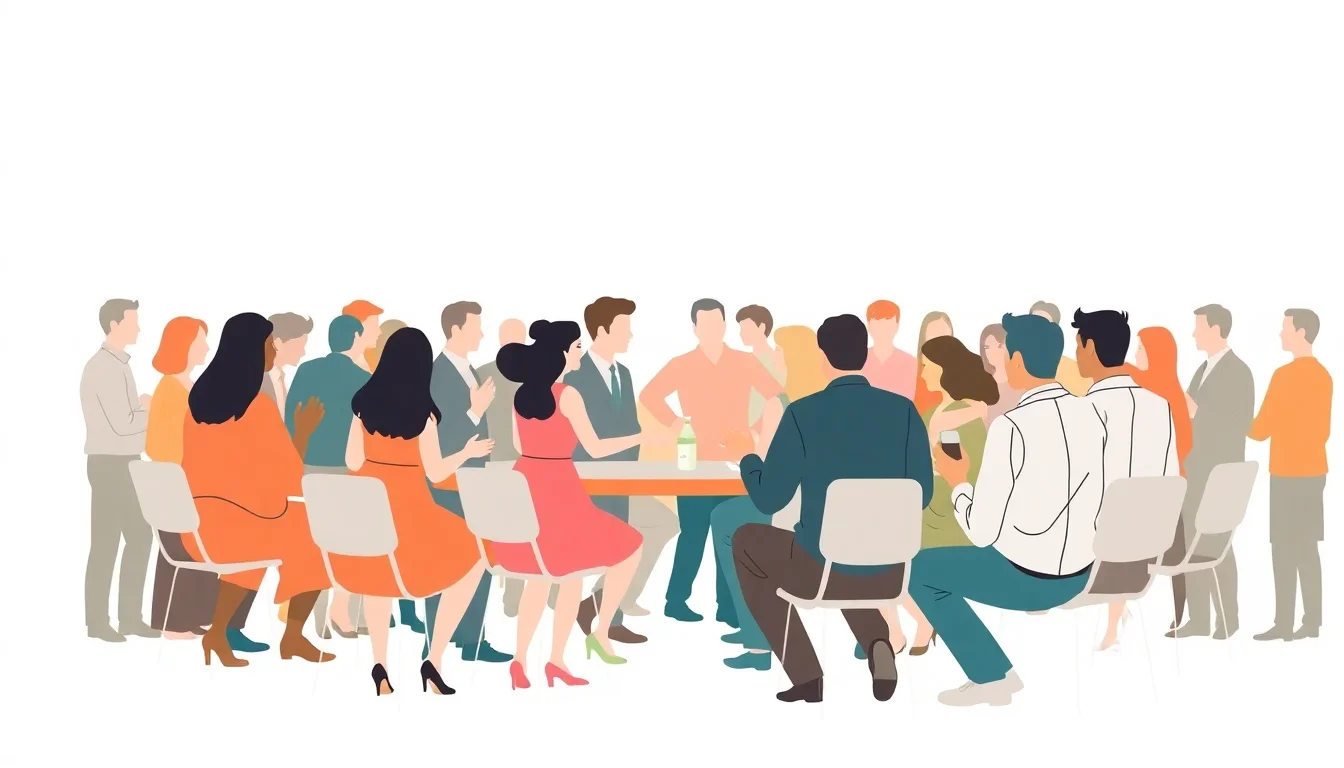
The impulse to gather is as old as humanity itself. Early humans convened around communal fires for warmth, safety, and storytelling, laying the groundwork for ritualistic gatherings and shared meals that reinforced tribal bonds. Ancient civilizations formalized these events: the Greeks held symposia for intellectual discourse and revelry, while Roman banquets were elaborate affairs of feasting and entertainment. Religious festivals, harvest celebrations, and rites of passage across cultures—from Diwali in India to Day of the Dead in Mexico—demonstrate the enduring human need for collective experience. The concept of the 'salon' in 17th and 18th century France, hosted by figures like Madame de Staël, further refined the idea of curated social gatherings for intellectual and artistic exchange, influencing the development of modern social events. Even the seemingly simple act of a 'kiki,' originating in ballroom culture and popularized by the Scissor Sisters' 2012 song, represents a contemporary evolution of friends convening for shared conversation and camaraderie, particularly within LGBTQ+ communities.
⚙️ How It Works
At its core, a social gathering functions through a confluence of intentionality and emergent dynamics. The host(s) typically set the parameters: the occasion (birthday, holiday, casual meetup), the guest list, the venue (a bar, a private home, or a park), and often the theme or activities. Participants, in turn, bring their own social capital, personalities, and expectations, contributing to the overall 'vibe.' Effective gatherings often balance structure with spontaneity, allowing for planned interactions like toasts or games alongside organic conversations. The flow of energy, the ebb and flow of conversation, and the collective mood are all critical components. Factors like music selection, food and drink availability, and the physical layout of the space—as explored in event planning—significantly influence how attendees interact and experience the event. The success is often measured by the degree of positive social connection and shared enjoyment achieved.
📊 Key Facts & Numbers
The sheer scale of social gatherings is staggering. Globally, the events industry was valued at over $1.1 trillion USD in 2019, according to Statista reports. A single major music festival like Coachella can generate upwards of $70 million in revenue. Even smaller gatherings have economic impact; the average American spends approximately $1,000 per year on social events and entertainment. In the United States alone, there are over 1.5 million weddings annually, each involving numerous guests. The rise of the gig economy has also fueled a surge in freelance event planners, with an estimated 100,000 such professionals in the US. The digital realm adds another layer: platforms like Meetup facilitate over 300,000 groups globally, coordinating millions of individual meetups each month.
👥 Key People & Organizations
While no single individual 'invented' social gatherings, key figures have shaped their evolution. Dale Carnegie, through his 1936 book How to Win Friends and Influence People, provided foundational principles for interpersonal interaction that remain relevant to hosting and attending events. Event pioneers like P.T. Barnum revolutionized large-scale public spectacles and entertainment. In the digital age, figures like Mark Zuckerberg with Facebook and Jack Dorsey with Twitter have fundamentally altered how people organize and participate in virtual gatherings. Organizations like the International Live Events Industry Council (ILEIC) work to professionalize and standardize event management. More recently, platforms like Eventbrite have democratized event organization, empowering millions of individuals and small businesses to host their own gatherings.
🌍 Cultural Impact & Influence
Social gatherings are potent crucibles for cultural transmission and social cohesion. They are the primary arenas where traditions are passed down, social norms are reinforced, and collective identities are forged. Think of the impact of Rio Carnival on Brazilian culture or the role of religious gatherings in shaping societal values throughout history. Gatherings also serve as catalysts for social movements, from the Civil Rights Movement marches organized through church meetings to the global protests coordinated via social media. The 'vibe' of a gathering can influence everything from individual mood to political discourse. The popularity of themed parties, from Halloween costume events to Oktoberfest celebrations, demonstrates how shared experiences create cultural touchstones. Even informal gatherings, like the weekly pub quiz, foster a sense of community and shared ritual.
⚡ Current State & Latest Developments
The landscape of social gatherings is in constant flux, accelerated by digital integration and evolving social norms. The COVID-19 pandemic (2020-2022) dramatically shifted focus to virtual gatherings, with platforms like Zoom and Microsoft Teams becoming ubiquitous for everything from family reunions to professional conferences. While in-person events have largely rebounded, hybrid models are now common, blending physical and virtual attendance. There's a growing trend towards 'experiential' gatherings, emphasizing unique activities, personalized touches, and immersive environments over traditional formats. Sustainability is also becoming a key consideration, with hosts increasingly focusing on eco-friendly venues, catering, and waste reduction. The rise of niche communities and interest-based groups, facilitated by online platforms, is leading to more specialized and targeted gatherings.
🤔 Controversies & Debates
The very nature of social gatherings is subject to ongoing debate. Critics argue that the emphasis on curated perfection, particularly on platforms like Instagram, can lead to performative social interactions and feelings of inadequacy. The commercialization of events, turning personal milestones into profit-driven spectacles, is another point of contention. Questions also arise about inclusivity and accessibility; who is invited, and who is excluded? The 'vibe' itself can be weaponized, with exclusive gatherings creating social hierarchies. Furthermore, the environmental impact of large-scale events, from travel emissions to waste generation, is a significant concern. The debate over the authenticity of virtual versus in-person interactions continues, with some arguing that digital gatherings lack the depth and nuance of face-to-face encounters, while others champion their accessibility and convenience.
🔮 Future Outlook & Predictions
The future of social gatherings will likely be characterized by increased personalization, technological integration, and a greater emphasis on meaningful connection. Expect more AI-driven event planning tools that can optimize guest lists, suggest activities based on attendee profiles, and even manage real-time social dynamics. Augmented reality (AR) and virtual reality (VR) will play a more significant role, creating immersive hybrid experiences that bridge physical and digital spaces. The demand for 'micro-gatherings'—smaller, more intimate events focused on specific interests or deep connection—is expected to grow, counterbalancing the trend towards mega-events. Sustainability will move from a niche concern to a core requirement, with circular economy principles influencing event design. Ultimately, the enduring human need for connection will drive innovation, ensuring that gatherings, in whatever form they take, remain central to our social fabric.
💡 Practical Applications
Social gatherings have myriad practical applications across personal, professional, and community spheres. For individuals, they are essential for maintaining friendships, celebrating milestones like birthdays and anniversaries, and building romantic relationships. Professionally, gatherings like [[confer
Key Facts
- Category
- culture
- Type
- topic