
Contents
Overview
Stereolithography (SLA) operates by precisely curing liquid photopolymer resin layer by layer using a light source, typically a UV laser or a DLP projector. This process transforms liquid monomers and oligomers into solid polymers, enabling the creation of highly detailed prototypes, patterns, and end-use parts. While SLA offers exceptional accuracy and surface finish, its reliance on specialized resins and post-curing processes can contribute to higher material costs compared to some other additive manufacturing methods. Despite these considerations, SLA remains a cornerstone technology in fields ranging from product design and medical modeling to jewelry making and aerospace engineering.
🎵 Origins & History
The genesis of stereolithography can be traced back to the early 1970s with exploratory research into light-induced polymerization. Early SLA machines were large, expensive, and primarily used for rapid prototyping by large corporations. The foundational concept involved using a UV laser to trace a cross-section of a design onto the surface of a vat of liquid photopolymer resin, solidifying it layer by layer. This marked a significant departure from traditional subtractive manufacturing methods, ushering in an era of digital fabrication.
⚙️ How It Works
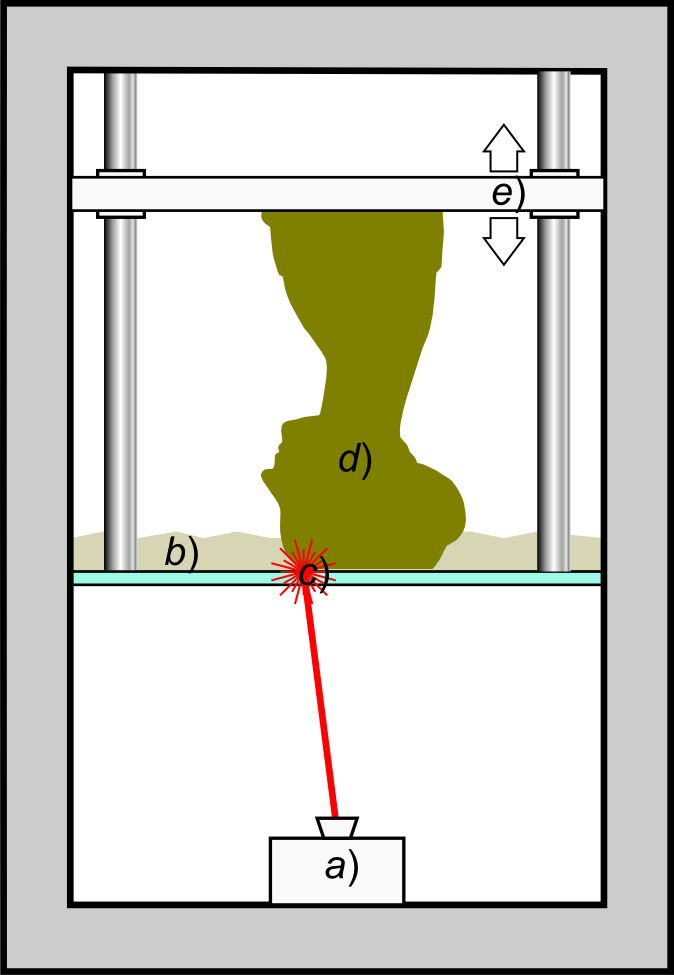
Stereolithography functions by selectively curing a liquid photopolymer resin using a light source. In laser-based SLA, a galvanometer-controlled mirror directs a UV laser beam to trace the shape of each layer onto the surface of the resin, solidifying it. In DLP SLA, a digital projector flashes an image of an entire layer at once, curing a larger area simultaneously. The build platform is submerged in the resin vat and moves incrementally (typically downwards for top-down printing, or upwards for bottom-up printing) after each layer is cured, allowing the next layer to be formed. This meticulous, layer-by-layer solidification process is what enables the creation of intricate geometries and smooth surface finishes, a hallmark of SLA prints. Post-processing typically involves washing the part to remove excess resin and a final UV cure to achieve optimal material properties.
📊 Key Facts & Numbers
The global stereolithography market was valued at approximately $1.5 billion in 2023 and is projected to reach over $3.5 billion by 2030, exhibiting a compound annual growth rate (CAGR) of around 12%. SLA printers can achieve layer resolutions as fine as 25 microns (0.001 inches), enabling exceptional detail. The tensile strength of typical SLA resins can range from 30 MPa to over 70 MPa, depending on the specific material formulation. Build volumes for professional SLA machines can range from small desktop units with build areas of 150 x 150 x 150 mm to large industrial systems exceeding 1000 x 800 x 600 mm. The cost of SLA resins can range from $50 to over $200 per liter, significantly impacting the overall cost per part. It is estimated that over 50,000 SLA machines were in operation globally by the end of 2023.
👥 Key People & Organizations
The undisputed pioneer of stereolithography is Chuck Hull, who invented and patented the technology and co-founded 3D Systems in 1986 to commercialize it. 3D Systems remains a dominant force in the SLA market, offering a wide range of professional and industrial machines. Other key players in the SLA ecosystem include Formlabs, which democratized desktop SLA with its Form 1 printer in 2012, and Stratasys, a major competitor in the broader 3D printing landscape. Companies like Anycubic and Elegoo have also made significant inroads into the consumer-grade SLA market, driving accessibility and adoption. Researchers at institutions like MIT and Stanford University continue to push the boundaries of photopolymerization science.
🌍 Cultural Impact & Influence
Stereolithography's impact extends far beyond its technical specifications. It was instrumental in popularizing the concept of rapid prototyping, fundamentally changing product development cycles for countless industries. The ability to quickly iterate on designs without expensive tooling, a direct benefit of SLA, accelerated innovation in sectors from automotive to consumer electronics. Its high-resolution capabilities also made it indispensable for creating intricate masters for investment casting in jewelry and dental applications. The aesthetic quality of SLA prints, often exhibiting smooth surfaces and fine details, has also influenced perceptions of what 3D printing is capable of, moving it from a niche industrial tool to a more widely recognized manufacturing technology.
⚡ Current State & Latest Developments
The SLA market is currently experiencing a surge in innovation, particularly in material science and printer speed. New photopolymer resins are being developed with enhanced properties, including greater flexibility, higher temperature resistance, and biocompatibility for medical applications. DLP and MSLA (Masked Stereolithography) technologies, which use screens to cure entire layers at once, are becoming increasingly prevalent, offering faster print times than traditional laser-based SLA. Companies are also focusing on larger build volumes and more automated post-processing solutions to cater to industrial production needs. The integration of AI for print optimization and error detection is another emerging trend in 2024-2025.
🤔 Controversies & Debates
One persistent debate in the SLA community revolves around the cost of materials and equipment. While desktop SLA printers have become more affordable, the specialized photopolymer resins can still be a significant expense, especially for high-volume production. Another point of contention is the environmental impact of resin-based printing, with discussions around the disposal of uncured resin and the energy consumption of post-curing processes. Furthermore, the debate over whether SLA is suitable for true end-use part production versus its traditional role in prototyping continues, with advancements in materials and processes increasingly blurring these lines. The long-term material stability and degradation of SLA prints under various environmental conditions also remain a subject of ongoing research and discussion.
🔮 Future Outlook & Predictions
The future of stereolithography appears poised for continued growth and diversification. Expect to see further advancements in high-speed SLA technologies, potentially rivaling the speed of FDM printing for certain applications. The development of novel photopolymer resins with unprecedented material properties, including conductive, self-healing, or even programmable materials, is a strong possibility. As SLA becomes more integrated into automated manufacturing workflows, its role in mass customization and on-demand production will likely expand. Furthermore, the convergence of SLA with other additive manufacturing techniques, or its use in hybrid manufacturing processes, could unlock entirely new design and production paradigms. The increasing accessibility of advanced SLA technology suggests a future where highly customized, complex parts are manufactured closer to the point of need.
💡 Practical Applications
Stereolithography finds extensive application across numerous sectors. In product design and engineering, it's used for creating highly detailed visual prototypes, functional prototypes, and form-fitting models. The dental industry relies heavily on SLA for producing precise dental models, surgical guides, and even clear aligners. In the hearing aid industry, custom earmolds are routinely manufactured using SLA due to its ability to capture intricate internal geometries. Jewelers use SLA to create intricate patterns for investment casting, allowing for complex designs that would be difficult or impossible to achieve with traditional methods. Furthermore, SLA is employed in creating anatomical models for pre-surgical planning in medicine and for producing specialized components in the aerospace and automotive sectors where high detail and surface finish are critical.
Key Facts
- Category
- technology
- Type
- topic