
Contents
- 🎵 Origins & History
- ⚙️ How It Works
- 📊 Key Facts & Numbers
- 👥 Key People & Organizations
- 🌍 Cultural Impact & Influence
- ⚡ Current State & Latest Developments
- 🤔 Controversies & Debates
- 🔮 Future Outlook & Predictions
- 💡 Practical Applications
- 📚 Related Topics & Deeper Reading
- Frequently Asked Questions
- References
- Related Topics
Overview
The genesis of the telephone traces back to the mid-19th century, a period buzzing with innovation in telegraphy. While several inventors tinkered with transmitting voice electrically, Alexander Graham Bell secured the crucial U.S. patent (No. 174,465) on March 7, 1876, for his device. Bell's breakthrough, achieved with assistance from Thomas A. Watson, involved a liquid transmitter and an electromagnetic receiver. Bell's initial experiments were driven by a desire to improve telegraphy and assist the deaf, a passion stemming from his family's work in elocution and his mother's hearing impairment. Precursors like Elisha Gray's work on a similar device, filed on the same day as Bell's patent application, fueled decades of legal battles, though Bell's patent ultimately prevailed, establishing the Bell Telephone Company in 1877.
⚙️ How It Works
At its core, a telephone operates by converting sound waves into electrical signals and vice versa. The user speaks into a microphone (transmitter), which typically uses a diaphragm that vibrates in response to sound. These vibrations are converted into varying electrical currents. These currents travel through a transmission medium—originally copper wires, now often fiber optics or radio waves for mobile devices—to the receiving telephone. There, an earphone (receiver), often an electromagnet acting on a diaphragm, converts the electrical signals back into sound waves, reproducing the original voice. Early systems required manual connection via telephone exchanges, where operators physically connected calls using plugs and jacks.
📊 Key Facts & Numbers
The telephone's impact is staggering: by 1920, over 12 million telephones were in use in the United States alone, a number that ballooned to over 100 million by 1970. Globally, there were approximately 1.3 billion mobile-cellular subscriptions by the year 2000, a figure that has since surpassed 8 billion by 2023, according to the International Telecommunication Union. The average household in developed nations now possesses multiple devices capable of voice communication. The global telecommunications market was valued at over $1.3 trillion USD in 2022, underscoring the immense economic scale of this technology.
👥 Key People & Organizations
Alexander Graham Bell, the patent holder, is the most prominent figure, but Thomas Watson, his assistant, played a critical role in the device's development and construction. Elisha Gray is often cited as a near-contemporaneous inventor whose work sparked significant controversy. Guglielmo Marconi's later work on wireless telegraphy laid groundwork for mobile telephony. Key organizations include the Bell Telephone Company (later AT&T), which dominated the U.S. market for decades, and later, companies like Motorola, Nokia, and Apple Inc. that pioneered mobile and smartphone technologies.
🌍 Cultural Impact & Influence
The telephone fundamentally altered social structures and business practices. It enabled the rapid dissemination of news, facilitated remote business operations, and fostered personal connections across vast distances, diminishing the isolation of rural life. The iconic sound of a ringing telephone became a cultural touchstone, signifying connection and urgency. Its influence is evident in literature, film, and art, often symbolizing modernity, communication, or intrusion. The development of the smartphone has further integrated the telephone into nearly every facet of modern life, from banking and navigation to entertainment and social networking.
⚡ Current State & Latest Developments
The current landscape is dominated by smartphones, which are essentially pocket-sized computers with advanced telephony capabilities. 5G networks are rapidly expanding, promising higher speeds and lower latency for mobile communication and enabling new applications like IoT devices. The rise of VoIP services like Skype and WhatsApp has further blurred the lines between traditional telephony and internet-based communication. Companies like Google and Apple continue to innovate with AI-powered features and integrated ecosystems, pushing the boundaries of what a 'phone' can do.
🤔 Controversies & Debates
Debates surrounding the telephone have evolved from patent disputes to concerns about privacy and accessibility. Early controversies focused on Bell's patent and the monopolistic practices of the Bell Telephone Company. More recently, discussions revolve around data privacy, surveillance capabilities of modern smartphones, the digital divide that leaves some populations without access, and the societal impact of constant connectivity, sometimes termed technostress. The ethics of automated calls and robocalling also remain a persistent issue.
🔮 Future Outlook & Predictions
The future of the telephone points towards even deeper integration with artificial intelligence and augmented reality. We can anticipate devices becoming more context-aware, anticipating user needs and proactively managing communications. Augmented reality overlays could provide real-time information during calls, transforming how we interact with both people and our environment. The distinction between a 'phone' and other computing devices will likely continue to blur, leading to more specialized and perhaps even wearable communication interfaces that move beyond the handheld form factor.
💡 Practical Applications
Telephones are indispensable in countless practical applications. They are the backbone of emergency services (like 911), enabling rapid response. Businesses rely on them for sales, customer service, and internal coordination. In healthcare, they facilitate remote consultations and patient monitoring. For individuals, they provide essential links for family, friends, and access to information and services. The smartphone, as the modern telephone, is now a primary tool for navigation, photography, education, and entertainment.
Key Facts
- Year
- 1876
- Origin
- United States
- Category
- technology
- Type
- product
Frequently Asked Questions
Who is credited with inventing the telephone?
Alexander Graham Bell is widely credited with inventing the first practical telephone, receiving a U.S. patent for his device in 1876. His assistant, Thomas Watson, played a crucial role in its development and construction. However, there were other inventors, such as Elisha Gray, working on similar concepts concurrently, which led to significant patent disputes and historical debate over the true origin.
How did the early telephone system work?
Early telephone systems relied on manual telephone exchanges. Users would pick up the receiver, which would signal an operator at the exchange. The operator would then manually connect the caller to the desired recipient using a patch cord on a switchboard. This system was labor-intensive and limited the speed and efficiency of communication, especially as the number of subscribers grew.
What was the significance of the breakup of AT&T?
The breakup of AT&T in 1984, often referred to as the 'Ma Bell divestiture,' was a landmark event in telecommunications history. It ended the near-monopoly held by the Bell System in the United States and ushered in an era of increased competition in local and long-distance services. This led to lower prices for consumers and spurred innovation in telephone technology and services.
How has the telephone evolved from Bell's invention to today's smartphones?
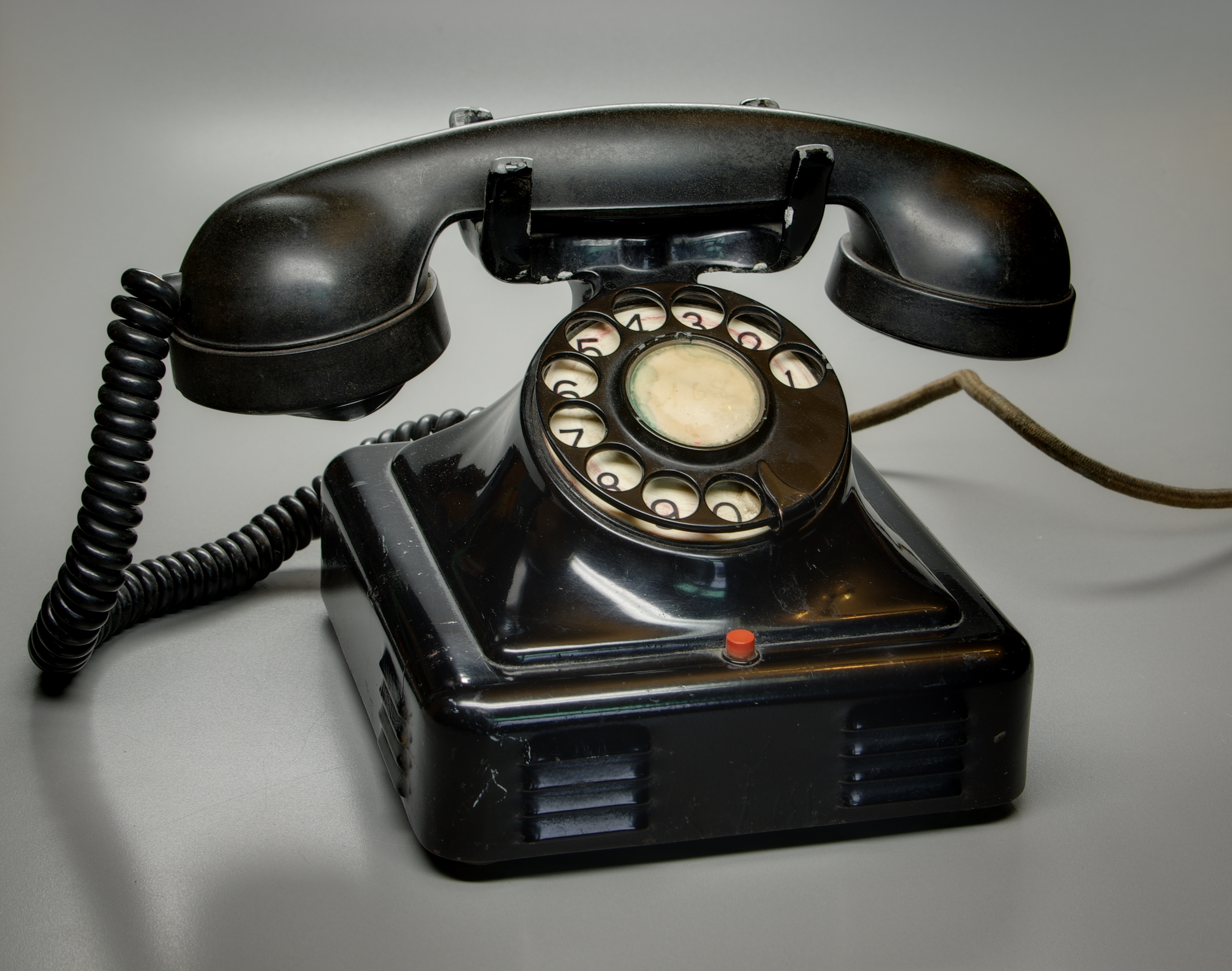
Bell's original telephone was a rudimentary device for transmitting voice over wires. It evolved through rotary dial phones, push-button phones, cordless phones, and eventually the mobile phone. The modern smartphone represents a quantum leap, integrating advanced computing, internet connectivity, high-resolution cameras, GPS, and a vast array of applications, transforming the device from a mere communication tool into a personal digital assistant.
Are there privacy concerns associated with modern telephones?
Yes, significant privacy concerns exist with modern telephones, particularly smartphones. These devices collect vast amounts of user data, including location, browsing history, contacts, and communication content, often shared with app developers and advertisers. Furthermore, the potential for surveillance by governments and the risk of data breaches by malicious actors are ongoing issues that raise questions about personal privacy in the digital age.
How can I make international calls using my telephone?
Making international calls typically involves dialing an international access code (e.g., '011' from the U.S. or '00' from many European countries), followed by the country code, the area code (if applicable), and the local phone number. Many modern smartphones also allow for free or low-cost international calls via VoIP services like WhatsApp or Skype when connected to the internet.
What are the predictions for the future of telephone technology?
Future telephone technology is expected to become more integrated with AI, augmented reality, and the IoT. Devices may become more predictive and context-aware, offering proactive assistance. We might see advancements in holographic communication, seamless integration with wearable tech, and further blurring of lines between physical and digital interactions, potentially moving beyond the traditional handheld form factor.