
Contents
Overview
The genesis of Trinidad Carnival is a complex weave of European masquerade traditions and enslaved African resistance. French planters, fleeing the French Revolution, brought their pre-Lenten masquerades to Trinidad in the late 18th century. Simultaneously, enslaved Africans, denied participation in their masters' festivities, developed their own parallel celebrations, incorporating African drumming, dance, and ritual. The abolition of slavery in 1838 marked a turning point, as newly freed people increasingly asserted their cultural expressions, leading to more public and boisterous celebrations. Early forms of 'mas' (masquerade) and stick-fighting, alongside the development of calypso music by Afro-Trinidadians, laid the groundwork for the festival as we know it. The 20th century saw the formalization of competitions and the rise of soca music, further shaping its modern identity.
⚙️ How It Works
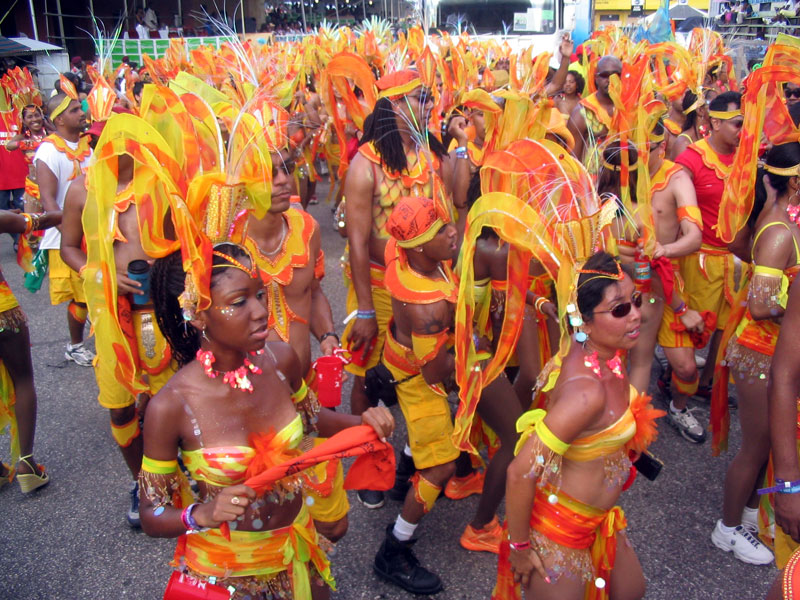
Trinidad Carnival operates on a multi-layered structure, beginning months in advance with 'band launches' where designers unveil their elaborate costume themes for the upcoming year. These bands, often sponsored by major corporations, are essentially large groups of masqueraders who purchase costumes and parade together. The musical backbone is provided by soca artists, whose new releases dominate radio waves and fetes, culminating in major competitions like the Road March and the Soca Monarch competitions. Steelpan orchestras also vie for supremacy in the Panorama competition, showcasing intricate arrangements on their unique instruments. The climax arrives on Carnival Monday and Tuesday with the 'J'ouvert' (French for 'daybreak') celebration, where participants cover themselves in mud, oil, and paint, followed by the main street parade of the costumed bands.
📊 Key Facts & Numbers
Trinidad Carnival is a massive economic engine, generating an estimated $100 million USD annually for the nation, according to the Ministry of Tourism. Over 40,000 international visitors flock to the island each year specifically for the event, contributing significantly to the hospitality sector. The 'mas' bands themselves can cost anywhere from $500 to $2,000 USD per costume, with some of the larger bands like TRIBE Mas or YUMA VIBES accommodating over 5,000 participants. The steelpan competition, Panorama, involves over 100 bands and thousands of musicians. The global reach is substantial, with affiliated carnivals like Toronto Caribana attracting over 1 million attendees, and Notting Hill Carnival in London drawing an estimated 2 million people.
👥 Key People & Organizations
Key figures in Trinidad Carnival are numerous, spanning musicians, bandleaders, and cultural innovators. Early calypsonians like Lord Invader and King Radio were foundational. In the soca era, artists such as Superblue, Kitchener, and later Machel Montano have become global ambassadors. Bandleaders like Peter Minshall, renowned for his avant-garde costume designs, and current major players like Dean Arlen of TRIBE Mas are pivotal. Pan Trinbago oversees the steelpan fraternity, while the National Carnival Commission of Trinidad and Tobago (NCC) is the government body responsible for organizing and regulating the official festivities.
🌍 Cultural Impact & Influence
The influence of Trinidad Carnival extends far beyond its shores, serving as a cultural blueprint for Caribbean diaspora celebrations worldwide. Toronto's Caribana festival, arguably the largest Caribbean carnival outside the Caribbean, was directly inspired by Trinidad's model. Similarly, carnivals in Miami, New York City, and London's Notting Hill Carnival owe a significant debt to the traditions established in Trinidad. The music genres born from or popularized by Carnival, particularly soca and its subgenres like chutney soca and soca-parang, have gained international traction, influencing global music scenes and finding audiences through platforms like Spotify and Apple Music. The visual aesthetic of Carnival costumes has also inspired fashion designers and artists globally.
⚡ Current State & Latest Developments
In the immediate aftermath of the COVID-19 pandemic, Trinidad Carnival saw a cautious return to in-person events in 2023, with a full-scale festival in 2024. The focus remains on rebuilding momentum and adapting to new realities, including leveraging digital platforms for wider reach and engagement. There's a growing emphasis on sustainability within the festival, with discussions around reducing waste and promoting eco-friendly materials in costumes. The ongoing evolution of soca music, with artists experimenting with fusions like afrobeat and dancehall, continues to shape the soundscape of the modern Carnival. Furthermore, discussions around inclusivity and accessibility are gaining traction, aiming to broaden participation beyond traditional demographics.
🤔 Controversies & Debates
The commercialization of Trinidad Carnival is a persistent point of contention. Critics argue that the increasing corporate sponsorship and the high cost of costumes alienate some of the traditional participants and dilute the cultural authenticity. The debate over the dominance of soca music versus calypso also continues, with some lamenting the perceived decline of calypso's prominence. Issues of safety and crowd management during the massive street parades are perennial concerns, especially following incidents at past events. The economic benefits are undeniable, but questions persist about equitable distribution of wealth generated by the festival and its impact on local communities versus large international promoters.
🔮 Future Outlook & Predictions
The future of Trinidad Carnival likely involves a continued push for global digital integration, potentially incorporating augmented reality or virtual reality elements into the experience. Expect further musical innovation as soca artists continue to blend with global genres, potentially leading to new sub-subgenres. The push for greater sustainability and ethical production practices in costume design and event management will likely intensify, driven by both consumer demand and regulatory pressures. There's also potential for increased focus on heritage preservation, ensuring that older traditions like stick-fighting and traditional mas are not overshadowed by the spectacle of modern bands. The economic impact will remain a key focus, with efforts to maximize tourism revenue and local economic participation.
💡 Practical Applications
Trinidad Carnival's influence is primarily cultural, serving as a model for diaspora celebrations and a global showcase for Caribbean music and artistry. The music produced for Carnival, particularly soca, is widely consumed internationally, driving demand for artists and related events. The visual spectacle of 'mas' costumes has inspired fashion and art globally. Economically, it functions as a major tourism driver for Trinidad and Tobago, supporting the hospitality, transportation, and retail sectors. The festival also serves as a platform for social commentary through calypso, a tradition that continues to resonate, albeit with less mainstream focus than soca.
Key Facts
- Category
- culture
- Type
- event