
Contents
Overview
Troy, also known as Ilion, was an ancient city situated in northwestern Anatolia, present-day Turkey, famously immortalized as the setting for Homer's epic Iliad and the Trojan War. With a history spanning over 4,000 years, the site reveals at least nine distinct settlement layers, identified by archaeologists as Troy I through Troy IX, each representing a city built upon the ruins of its predecessor. Troy evolved into a significant Bronze Age center, its strategic location controlling access between the Aegean Sea and the Dardanelles strait. The archaeological site, a UNESCO World Heritage site since 1998, continues to captivate scholars and visitors alike, offering tangible evidence of a civilization that has profoundly shaped Western literature and historical imagination.
🎵 Origins & History
The legend of Troy echoes through millennia, a city whose very name is synonymous with epic conflict and heroic struggle. Situated near the mouth of the Dardanelles strait in modern-day Turkey, its strategic importance was recognized as early as the Late Bronze Age. The earliest settlements date back to approximately 3600 BC, with the city growing into a fortified center by 3000 BC. Its historical trajectory is marked by repeated destruction and rebuilding, a testament to its enduring strategic value and the cyclical nature of conflict and recovery in the ancient world. The Hittite name for the city, Taruiša, appears in cuneiform texts, linking the archaeological site to known Bronze Age powers and suggesting a complex geopolitical landscape.
⚙️ Archaeological Layers
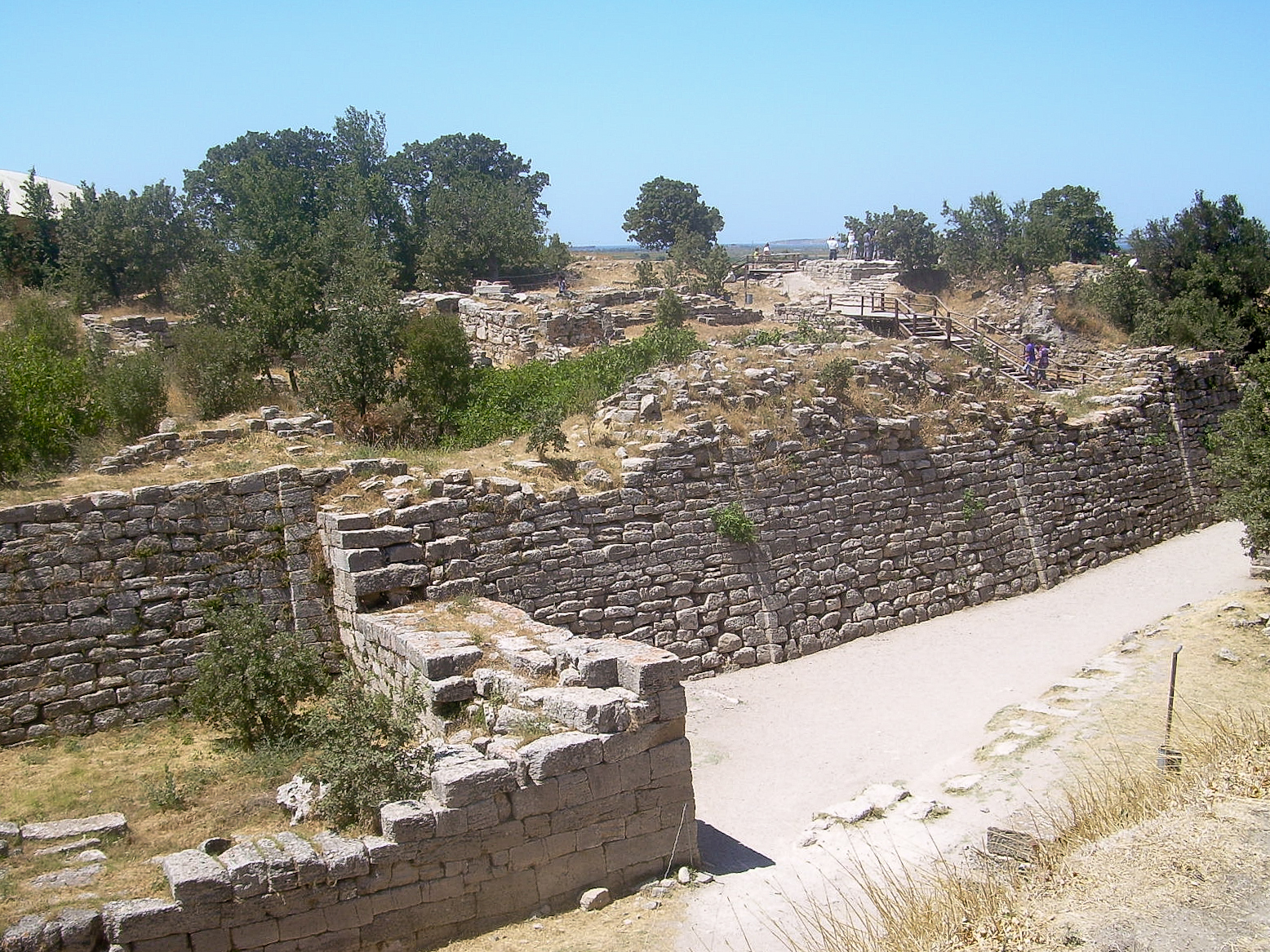
Archaeologists have meticulously identified nine distinct settlement layers at the site, each designated by Roman numerals from Troy I (earliest) to Troy IX (latest). Troy I, dating to the Early Bronze Age (c. 3600–2600 BC), was a modest fortified settlement. Troy II is particularly noted for its impressive architecture and the discovery of a vast treasure trove, often referred to as 'Priam's Treasure,' though its attribution to the legendary king is debated. The Late Bronze Age layers, particularly Troy VI and VII (c. 1750–1180 BC), are often associated with the Homeric city, characterized by its imposing citadel walls and evidence of significant destruction, potentially aligning with the timeframe of the legendary Trojan War. Troy IX, also known as Ilium Novum, represents the Roman period, showcasing the city's continued significance as a pilgrimage site.
📊 Key Facts & Numbers
The archaeological site of Troy spans an estimated 250 acres, with its citadel mound rising approximately 20 meters above the surrounding plain. Excavations have revealed at least nine major settlement layers, indicating continuous habitation for over 4,000 years. The earliest fortifications date back to Troy I, around 3000 BC. The citadel walls of Troy VI, often considered the most likely candidate for Homer's Troy, were constructed with massive limestone blocks and stood up to 5 meters thick. The site has yielded an estimated 10,000 artifacts, including pottery, tools, and jewelry, with the 'Priam's Treasure' alone containing over 8,000 gold and silver items. In 1998, Troy was inscribed on the UNESCO World Heritage List, recognizing its global historical and cultural significance.
👥 Key Figures & Discoveries
The modern understanding of Troy is largely indebted to the pioneering work of archaeologist Heinrich Schliemann, who conducted extensive excavations from 1870 to 1890. Schliemann's controversial methods, while groundbreaking for their time, led to the discovery of multiple settlement layers and the sensational find of 'Priam's Treasure.' His successor, Wilhelm Dörpfeld, refined the stratigraphy, identifying Troy VI as the likely Homeric city. Later excavations by Carl Blegen and his team from the University of Cincinnati in the 1930s further clarified the site's chronology, distinguishing between Troy VI and VII. More recent work by German archaeologists, led by Müslüm Demirel and later Ernst Pernicka, has continued to refine our understanding of Troy's history and its connections to the wider Bronze Age world, employing advanced scientific techniques.
🌍 Cultural Impact & Influence
Troy's most profound cultural impact stems from its central role in Homer's Iliad, a foundational text of Western literature. The epic poem, detailing the final year of the Trojan War, has shaped perceptions of heroism, fate, and the consequences of conflict for over two millennia. The story of Helen of Troy, Paris, Achilles, and Hector has been retold and reinterpreted across countless artistic mediums, from ancient Greek pottery and Roman mosaics to Renaissance paintings and modern films like Wolfgang Petersen's 'Troy' (2004). The very concept of a 'Trojan Horse' has entered the lexicon as a metaphor for deception and infiltration, influencing military strategy and computer security alike. The archaeological discovery of Troy validated the existence of a city that many had dismissed as pure myth, bridging the gap between legend and history.
⚡ Current State & Latest Developments
The archaeological site of Troy remains an active area of research and a significant tourist destination. In recent years, efforts have focused on more precise dating of the layers using advanced radiocarbon analysis and on understanding Troy's economic and social structures through detailed artifact analysis. The Turkish Ministry of Culture and Tourism has invested in improving visitor infrastructure, including interpretive signage and pathways, to enhance the visitor experience. Ongoing archaeological projects aim to explore areas beyond the citadel, potentially revealing more about the lower city and its inhabitants. The site continues to draw tens of thousands of visitors annually, eager to walk the grounds where legendary heroes once stood.
🤔 Controversies & Debates
The primary controversy surrounding Troy centers on the identification of the Homeric city. Heinrich Schliemann initially believed Troy II, with its rich treasure, was the city of Priam, a claim largely discredited by later archaeologists. Wilhelm Dörpfeld favored Troy VI, while Carl Blegen argued for Troy VIIa, citing evidence of destruction by fire and earthquake, potentially aligning with the war's narrative. The debate over which layer most accurately represents the Troy of the Iliad persists, with some scholars suggesting the epic poem may be a composite memory of various periods of destruction. Furthermore, Schliemann's excavation methods, which involved significant destruction of earlier layers, remain a point of contention regarding ethical archaeological practice.
🔮 Future Outlook & Predictions
Future research at Troy is likely to focus on leveraging advanced non-invasive survey techniques, such as ground-penetrating radar and magnetometry, to map potential structures in the lower city and surrounding areas without further excavation. Genetic analysis of human remains, if found, could offer insights into the population's origins and relationships. Comparative studies with other Bronze Age sites in the Aegean and Anatolia will continue to contextualize Troy's role in regional trade networks and political alliances. The ongoing challenge will be to reconcile the archaeological evidence with the rich tapestry of myth, potentially revealing new layers of understanding about this legendary city and its place in ancient history.
💡 Practical Applications
The most significant practical application of studying Troy lies in its contribution to our understanding of Bronze Age civilizations, urban development, and the interplay between myth and history. The archaeological site serves as a vital educational resource, offering tangible evidence of ancient life, architecture, and warfare. The 'Trojan Horse' concept, originating from the legendary siege, has found enduring application in cybersecurity as a metaphor for malicious software designed to infiltrate systems undetected. Furthermore, the ongoing tourism to the site provides economic benefits to the local region of Çanakkale, Turkey, underscoring the enduring economic value of historical and cultural heritage.
Key Facts
- Category
- history
- Type
- place