
Contents
Overview
The genesis of Union Square Park lies in the early 19th-century urban planning of New York City, specifically the intersection where Broadway, a principal north-south artery, met the burgeoning Bowery Road. The name 'Union Square' itself, first appearing on city plans around 1815, denoted this very confluence, a 'union' of major thoroughfares. By 1839, the area was officially designated as a public square, and by the 1850s, it had been landscaped into a formal park, becoming a fashionable promenade for the city's elite. The park's transformation was overseen by landscape architect Alexander Jackson Davis, who envisioned a more ornamental space. The park's early decades saw it become a focal point for civic life, hosting parades and public celebrations, laying the groundwork for its future as a significant public gathering space. This initial development was part of a broader expansion of public parks in New York City, following precedents set by Central Park and Battery Park.
⚙️ Urban Design & Features
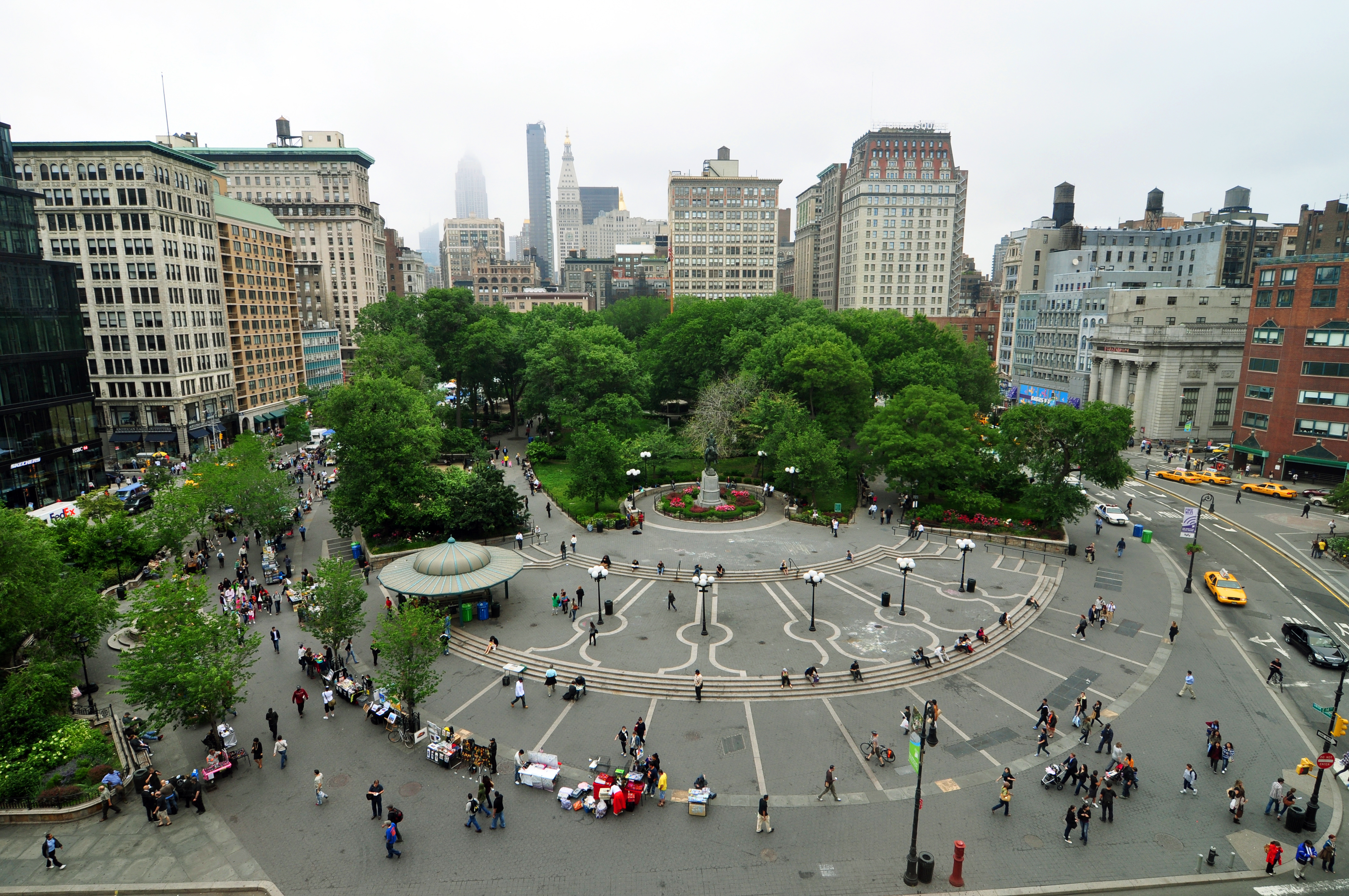
Union Square Park is not merely a patch of green; it's a meticulously designed urban space that has evolved over time. Its current layout, largely shaped by a significant renovation in the 1980s, features distinct zones catering to various activities. The central plaza, dominated by the iconic George Washington statue, serves as a focal point for public events and protests. Surrounding this are manicured lawns, flower beds, and a prominent fountain, offering respite and aesthetic appeal. The park is also home to several notable sculptures, including the Chandler Child statue and the Abraham Lincoln statue, each contributing to its historical narrative. The pedestrian pathways are designed for both circulation and passive enjoyment, connecting the park's various elements and offering views of the surrounding cityscape. The presence of the Union Square Greenmarket on its eastern edge further integrates the park into the daily life of the city, bringing fresh produce and a lively atmosphere.
📊 Key Facts & Numbers
Union Square Park spans approximately 2.5 acres (1 hectare) and is situated at an elevation of about 10 feet (3 meters) above sea level. The park is bordered by 14th Street to the south and 17th Street to the north, with Union Square West and Union Square East defining its western and eastern boundaries, respectively. The Union Square Greenmarket operates four days a week (Monday, Wednesday, Friday, and Saturday). The Union Square Greenmarket hosts over 100 vendors, drawing an estimated 60,000 shoppers weekly during peak season. The park sees millions of visitors annually, making it one of Manhattan's most frequented public spaces. The surrounding Union Square neighborhood boasts a significant residential and commercial population, with rents in the area averaging over $5,000 per month for a one-bedroom apartment. The park's subway station, served by the New York City Subway's L, N, Q, R, 4, 5, and 6 lines, handles over 40 million passenger entries and exits annually, underscoring its connectivity.
👥 Key Figures & Organizations
While Union Square Park is a public space, its history and character are intertwined with several key figures and organizations. The initial design is attributed to Alexander Jackson Davis, who envisioned its transformation into a formal park. The New York City Department of Parks and Recreation is the primary steward of the park, responsible for its maintenance and programming. The Union Square Partnership, a Business Improvement District, plays a crucial role in the park's revitalization and ongoing management, working in collaboration with the city. Throughout its history, the park has been a stage for countless public figures, from suffragettes to presidential candidates, though no single individual can claim sole ownership of its legacy. The vendors of the Union Square Greenmarket are also integral to the park's identity, representing a vital link to regional agriculture and local commerce.
🌍 Cultural Impact & Influence
Union Square Park's cultural resonance is profound and multifaceted. Historically, it has been a primary venue for political rallies and protests, earning it the moniker 'the Hyde Park of New York.' The park was a venue for the women's suffrage movement in the early 20th century and the Occupy Wall Street protests in 2011, providing a platform for dissent and civic engagement. Culturally, it has inspired artists, writers, and musicians, appearing in countless films, novels, and songs that capture the essence of New York City. The park's role as a gathering place extends to its vibrant Greenmarket, which has become a beloved institution, fostering community and promoting sustainable agriculture. Its status as a central hub for public life has cemented its place in the American consciousness as a symbol of democratic expression and urban vitality. The park's influence can be seen in the design and function of public spaces worldwide, demonstrating its enduring impact on urban planning and civic life.
⚡ Current State & Latest Developments
In 2024, Union Square Park continues to be a dynamic urban hub. The Greenmarket remains a cornerstone, with ongoing efforts to expand its offerings and support local farmers. The park frequently hosts a variety of events, from concerts and festivals to public art installations and political demonstrations, reflecting its enduring role as a civic stage. Recent years have seen increased attention to park safety and maintenance, with the Union Square Partnership actively involved in initiatives to enhance the visitor experience. Discussions around the park's programming and accessibility are ongoing, as city officials and community groups strive to balance diverse public needs. The park's resilience is evident in its continued ability to adapt to changing urban dynamics and serve as a vital gathering space for New Yorkers and visitors alike.
🤔 Controversies & Debates
The history of Union Square Park is punctuated by debates over its use and management. For decades, concerns have been raised regarding public safety, homelessness, and the impact of large-scale events on the park's infrastructure and surrounding community. The balance between providing a space for free expression and ensuring a safe, accessible environment for all park-goers is a perennial challenge. Disagreements have also arisen over the allocation of park space for commercial activities, such as the Greenmarket, versus its use for passive recreation or political assembly. The presence of street vendors and performers, while adding to the park's vibrancy, has also been a source of contention. These ongoing discussions highlight the complex social and political dynamics inherent in managing a high-profile urban public space like Union Square.
🔮 Future Outlook & Predictions
The future of Union Square Park is likely to involve continued adaptation to the evolving needs of New York City. Potential developments could include further enhancements to sustainability features, such as improved green infrastructure and water management systems. There may also be ongoing efforts to integrate more technology for visitor information and park management, while carefully preserving the park's historic character. As urban populations grow and public spaces become increasingly valuable, Union Square Park will likely remain a focal point for civic engagement, cultural events, and community gathering. The ongoing dialogue about its role and management suggests a commitment to ensuring its relevance for generations to come, potentially involving new programming initiatives and design considerations to meet future urban challenges. The park's ability to host diverse events, from the Greenmarket to major protests, indicates its capacity for continued evolution.
💡 Practical Applications
Union Square Park serves multiple practi
Key Facts
- Category
- places
- Type
- topic