
Contents
Overview
The intellectual lineage of utopian socialism traces back to Enlightenment ideals of reason and progress, but it truly coalesced in the tumultuous post-French Revolution era. Figures like Henri de Saint-Simon in France, with his vision of a society led by scientists and industrialists focused on collective well-being, and Charles Fourier, who meticulously designed self-sufficient communities called phalanstères, were instrumental. Across the English Channel, Robert Owen, a Welsh textile manufacturer, implemented his ideas at New Lanark in Scotland, demonstrating that improved working conditions and education could lead to both social harmony and economic success. Étienne Cabet’s novel "Voyage en Icarie" further popularized the concept of a communal, egalitarian society. These thinkers, often operating independently, shared a conviction that society could be rationally reorganized to eliminate poverty, inequality, and social conflict, moving beyond mere critique to offer concrete models for a better future.
⚙️ How It Works
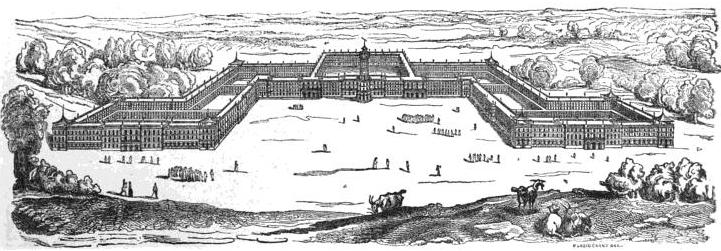
Charles Fourier's phalanstères, for instance, were designed as self-contained agricultural and industrial communes where individuals could pursue their passions, with work organized into attractive 'series' and rewards distributed based on a combination of labor, capital, and talent. Robert Owen's model at New Lanark focused on providing excellent housing, education for children, and a cooperative store, proving that humane treatment of workers was not antithetical to profitability. Étienne Cabet's 'Icaria' envisioned a highly organized, democratic society where all property was communal and citizens contributed labor according to their ability and received according to their need. These models, while varied in specifics, shared a common thread: the belief that a well-designed social structure could foster altruism, eliminate vice, and create a harmonious collective.
📊 Key Facts & Numbers
While precise numbers are difficult to aggregate across disparate experiments, the scale of utopian socialist endeavors was significant for their time. Fourier's ideas inspired numerous attempts at establishing phalanstères, with estimates suggesting over 40 such communities were founded in France, the United States, and elsewhere between the 1830s and 1850s, though most struggled to survive beyond a few years. The Icarian communities, inspired by Étienne Cabet, also saw several attempts in the United States, with the largest settlement in Nauvoo, Illinois, reaching a population of around 500-600 people in the 1850s. These experiments, though often short-lived, represented a substantial investment of human capital and idealism.
👥 Key People & Organizations
The pantheon of utopian socialism is dominated by a few key figures. Robert Owen, a British industrialist and philanthropist, is perhaps the most influential, translating his success at New Lanark into broader advocacy for cooperative societies and educational reform. Charles Fourier, a French theorist, developed intricate plans for 'phalanstères' and championed 'attractive labor.' Henri de Saint-Simon, a French nobleman, laid groundwork for industrialist and technocratic visions of society. Étienne Cabet, another Frenchman, authored the influential novel "Voyage en Icarie" and attempted to establish a community based on its principles. Beyond these central figures, organizations like the Cooperative Movement in Britain, heavily influenced by Owen, and various short-lived communal experiments across Europe and North America, embodied the practical application of these ideas.
🌍 Cultural Impact & Influence
The cultural resonance of utopian socialism is profound, acting as a persistent counter-narrative to capitalist individualism. It fueled the Cooperative Movement, which continues to thrive globally, with organizations like The Co-operative Group in the UK demonstrating enduring success. Utopian visions inspired numerous literary works, from Étienne Cabet's "Voyage en Icarie" to later science fiction exploring ideal societies. The emphasis on community, shared resources, and humanistic values has seeped into various social reform movements, environmentalism, and alternative living experiments. While often dismissed as naive, the core impulse of utopian socialism—the belief that a better, more equitable world is not only possible but achievable through deliberate social design—remains a powerful undercurrent in cultural discourse.
⚡ Current State & Latest Developments
While the era of large-scale utopian community experiments has largely passed, the spirit of utopian socialism continues to manifest in various forms. Contemporary movements advocating for degrowth, circular economies, and universal basic income echo the utopian concern for equitable distribution and sustainable living. The rise of cohousing and intentional communities in the late 20th and early 21st centuries represents a modern iteration of communal living experiments, often incorporating principles of shared resources and decision-making. Furthermore, online platforms and decentralized autonomous organizations (DAOs) are being explored as potential frameworks for new forms of collective governance and resource management, albeit with vastly different technological underpinnings than their 19th-century predecessors. The ongoing debate about wealth inequality and the future of work ensures that the fundamental questions posed by utopian socialists remain relevant.
🤔 Controversies & Debates
The primary controversy surrounding utopian socialism is its perceived impracticality and lack of scientific rigor, particularly when contrasted with Marxism. Critics, most notably Karl Marx and Friedrich Engels, derided these early socialists as 'utopian' precisely because their visions were seen as idealistic fantasies, detached from the material realities of class struggle and historical development. Marxists argued that socialism could only arise from the contradictions inherent in capitalism, through revolution, rather than from the moral persuasion or the establishment of small-scale model communities. Another debate centers on the degree of individual freedom versus collective control in utopian models; critics question whether the pursuit of perfect social harmony might necessitate an unacceptable level of conformity or suppression of individuality, a tension evident in the varying degrees of authoritarianism or democratic participation proposed by different utopian thinkers.
🔮 Future Outlook & Predictions
The future of utopian socialist thought likely lies not in replicating 19th-century communes, but in adapting its core principles to contemporary challenges. As concerns about climate change and resource depletion intensify, the utopian emphasis on sustainable, cooperative living could gain renewed traction. The development of blockchain technology and decentralized networks offers new avenues for exploring communal ownership and governance models that were unimaginable to early utopian socialists. We might see a resurgence of interest in localized, resilient economies and community-based initiatives that prioritize well-being over endless growth. The challenge will be to integrate these ideals with practical, scalable solu
Key Facts
- Category
- movements
- Type
- topic