
Contents
Overview
Virtual Reality (VR) in medicine leverages immersive, computer-generated environments to simulate real-world scenarios for medical professionals and patients. Its applications span surgical training, pain management, rehabilitation, mental health therapy, and medical education, offering a safe, repeatable, and cost-effective alternative to traditional methods. Early explorations in the 1990s laid the groundwork for today's sophisticated VR systems. Despite its potential, challenges remain regarding cost, accessibility, and regulatory approval, though its transformative impact on patient care and medical training is undeniable.
🎵 Origins & History
The genesis of virtual reality in medicine can be traced back to the nascent stages of VR technology itself in the late 20th century. Early pioneers, recognizing the potential for simulation, began exploring its use in medical contexts. These initial forays were often limited by the computational power and graphical fidelity of the era, yet they demonstrated the fundamental concept of using immersive environments for training and visualization.
⚙️ How It Works
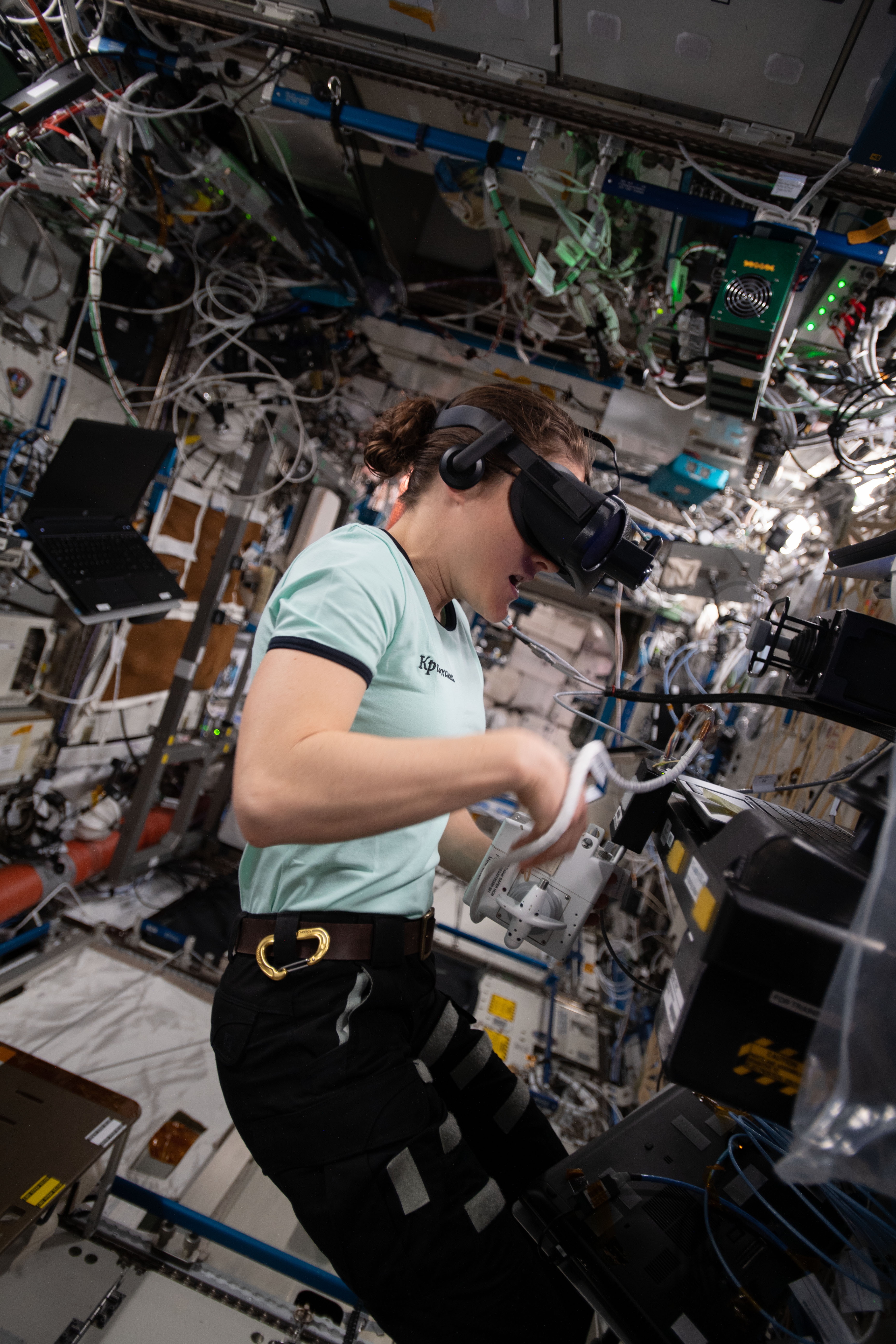
Medical VR systems typically consist of a head-mounted display (HMD) that immerses the user in a 3D environment, coupled with hand controllers or haptic feedback devices for interaction. These systems generate realistic visual and auditory stimuli, allowing users to perform virtual procedures, navigate anatomical models, or engage in therapeutic scenarios. In pain management, VR can distract patients from discomfort by immersing them in calming or engaging virtual worlds. The underlying technology relies on powerful graphics processing units (GPUs) and sophisticated software algorithms to render environments in real-time, ensuring a seamless and believable user experience.
📊 Key Facts & Numbers
The global VR in healthcare market is experiencing explosive growth. VR therapy has shown efficacy in treating PTSD. The cost savings associated with VR training are substantial.
👥 Key People & Organizations
Several key individuals and organizations have been instrumental in advancing VR in medicine. Academic institutions such as Stanford University and Johns Hopkins University have established dedicated VR research labs, fostering innovation and clinical validation. The FDA has also begun to clear VR-based medical devices, signaling growing acceptance and regulatory support for these technologies.
🌍 Cultural Impact & Influence
VR's integration into medicine is fostering a cultural shift towards more experiential and personalized healthcare. It's moving the needle from passive learning to active engagement, both for medical professionals and patients. For patients, VR offers novel ways to cope with chronic pain, manage anxiety before procedures, and even undergo physical therapy in more engaging environments. This can lead to improved patient satisfaction and adherence to treatment plans. For clinicians, it's creating a new paradigm for skill acquisition and continuous professional development, emphasizing competency-based training over time-based learning. The widespread adoption of VR in medical schools and hospitals is slowly but surely embedding these immersive technologies into the fabric of medical education and practice, akin to how digital imaging transformed radiology decades prior.
⚡ Current State & Latest Developments
The current landscape of VR in medicine is characterized by rapid technological advancement and increasing clinical validation. AI-powered VR training modules adapt to individual learner performance, offering personalized feedback and customized learning paths. Furthermore, the development of more affordable and accessible VR hardware is democratizing access to these powerful tools, allowing smaller clinics and individual practitioners to adopt VR solutions. Regulatory bodies, including the FDA, are actively developing frameworks for approving VR as a medical device, with several VR-based therapeutic applications already receiving clearance.
🤔 Controversies & Debates
Despite its immense promise, VR in medicine faces significant controversies and debates. A primary concern revolves around the high initial cost of sophisticated VR hardware and software, which can be a barrier to adoption for many healthcare institutions, particularly in resource-limited settings. Concerns also persist regarding the long-term efficacy and potential side effects of prolonged VR use, such as cybersickness or dissociation. Ethical implications of using VR for mental health treatment, especially concerning patient data privacy and the potential for therapeutic over-reliance, are also subjects of ongoing discussion. Furthermore, the lack of standardized training protocols and robust clinical outcome data for many VR applications creates uncertainty for clinicians and payers, leading to a slower-than-anticipated integration into mainstream clinical practice.
🔮 Future Outlook & Predictions
The future of VR in medicine is poised for exponential growth and deeper integration. Experts predict that by 2030, VR will become a standard component of medical education and surgical training curricula worldwide. We can anticipate the development of highly realistic haptic feedback systems that allow surgeons to 'feel' virtual tissues, enhancing surgical simulation fidelity. AI will play an even larger role, creating dynamic VR environments that respond intelligently to user actions and provide real-time diagnostic insights. Extended Reality (XR), which merges VR and AR, will enable surgeons to overlay virtual anatomical models and real-time patient data onto their view of the operating room. The therapeutic applications will likely expand beyond pain and PTSD to encompass a wider range of neurological and psychological conditions, potentially leading to new forms of remote patient care and personalized medicine.
💡 Practical Applications
The practical applications of VR in medicine are diverse and rapidly expanding. In surgical training, it allows for risk-free practice of complex procedures, from laparoscopic surgery to neurosurgery. For pain management, VR environments are used to distract patients during painful procedures like burn wound care or chemotherapy, reducing the need for opioid painkillers. In physical therapy and rehabilitation, VR gamifies exercises, making them more engaging for patients recovering from strokes, spinal cord injuries, or orthopedic surgeries. Mental health professionals utilize VR to treat phobias, anxiety disorders, and PTSD through exposure therapy in controlled virtual settings. Medical students benefit from immersive anatomical exploration and virtual dissection labs, gaining a deeper understanding of human physiology than traditional textbooks can offer. Furthermore, VR is being explored for patient education, helping individuals understand their conditions and treatment plans more effectively.
Key Facts
- Category
- technology
- Type
- topic