
Contents
Overview
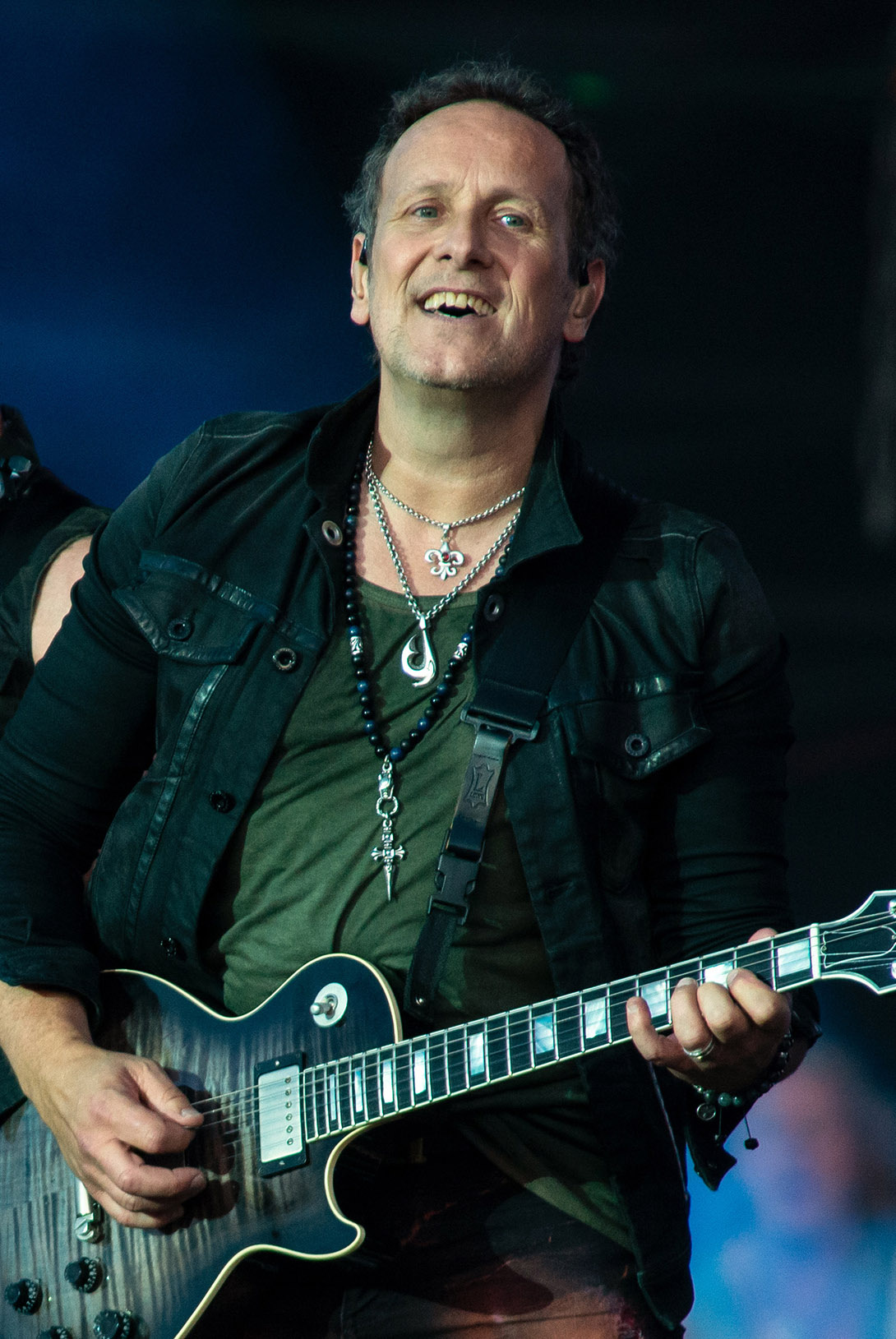
Vivian Campbell is a guitarist whose distinctive riff-heavy style has powered some of rock's most enduring bands, from the NWOBHM origins of Def Leppard to the blues-infused hard rock of Last in Line. His career, spanning over four decades, is a testament to a relentless drive to create powerful, guitar-driven music, often navigating the turbulent waters of band dynamics and shifting industry trends. Campbell's ability to adapt his signature sound across diverse musical landscapes, while consistently delivering memorable guitar hooks, has cemented his status as a formidable presence in hard rock and heavy metal.
From his early days in Sweet Savage and Dio, Campbell has consistently proven his mettle as a lead guitarist capable of both blistering solos and thunderous rhythm work. His contributions to albums like Holy Diver and Hysteria are not merely decorative; they are foundational to the sonic identity of these landmark records. Despite periods of lineup changes and creative reconfigurations within the bands he's joined, Campbell's guitar playing remains a constant, a beacon of raw energy and technical proficiency. His journey reflects the evolution of hard rock itself, from the underground fury of the early 80s to the stadium-filling anthems of the late 80s and beyond.
Early Life & Influences
Born August 25, 1962, in Belfast, Northern Ireland, Vivian Campbell's musical journey began with a fascination for the guitar, inspired by blues and rock legends like Gary Moore, Jimi Hendrix, and Jeff Beck. His early forays into music were with local bands, but it was the formation of Sweet Savage in 1978 that marked his emergence onto the burgeoning New Wave of British Heavy Metal (NWOBHM) scene. Though their time was brief and commercially limited, Sweet Savage showcased Campbell's aggressive riffing and raw talent, catching the ear of those who would soon shape the future of heavy music. This foundational period instilled in him a fierce independence and a commitment to authentic guitar expression, setting the stage for the more prominent roles that would soon follow.
Career & Discography
Campbell's career took a significant leap in 1982 when he joined Ronnie James Dio's band, Dio. His contributions to the albums Holy Diver (1983) and The Last in Line (1984) are iconic, defined by powerful, memorable riffs and searing solos that became hallmarks of 80s hard rock. The chemistry between Campbell and Dio was electric, producing some of the genre's most beloved anthems. Following his departure from Dio in 1986, Campbell joined Def Leppard, replacing Pete Willis. His tenure with the Sheffield rockers saw him contribute to the monumental Hysteria (1987) and its follow-up Adrenalize (1992), navigating a more polished, pop-infused sound while retaining his signature guitar prowess. He later reunited with former Dio bandmates to form Last in Line, returning to the classic heavy metal sound that first brought him acclaim.
Legacy & Influence
Vivian Campbell's legacy is intrinsically linked to his ability to deliver potent guitar performances across disparate musical contexts. He has influenced a generation of guitarists who value strong melodic hooks and powerful rhythm work as much as flashy solos. His work with Dio remains a benchmark for classic heavy metal guitar, while his contributions to Def Leppard underscore his versatility in adapting to arena-rock sensibilities. The formation of Last in Line demonstrates a conscious effort to revisit and celebrate the sound that defined his early career, proving that the raw energy of 80s metal still resonates. Campbell's enduring presence in the music industry is a testament to his dedication to the guitar and his unique ability to craft indelible riffs that stand the test of time.
Cultural Impact
Culturally, Vivian Campbell represents the evolution of the hard rock guitarist from the underground to global superstardom. His journey mirrors the rise and evolution of the genre itself, from the raw energy of the NWOBHM to the polished sheen of stadium rock. He is a key figure in the visual and sonic landscape of 80s rock, a period where the guitar hero was a central cultural icon. Campbell's ability to maintain relevance and continue producing compelling music through multiple decades, including his consistent presence in Def Leppard's live shows and recordings, showcases a resilience that is rare in the music business. He stands as a symbol of dedication to craft, a guitarist whose identity is inseparable from the thunderous riffs and soaring solos he has delivered for over forty years.
Key Facts
- Year
- 1962
- Origin
- Belfast, Northern Ireland
- Category
- music
- Type
- artist
Frequently Asked Questions
What are Vivian Campbell's most famous bands?
Vivian Campbell is most widely recognized for his work with Dio, Def Leppard, and Whitesnake. He also fronts Last in Line, a band featuring former Dio members, and has released solo material.
What is Vivian Campbell's signature guitar sound?
His signature sound is often described as powerful and melodic, characterized by a thick, cutting tone, often achieved with humbucker pickups. He blends bluesy phrasing with aggressive rock attack, delivering memorable riffs and precise solos.
When did Vivian Campbell join Def Leppard?
Vivian Campbell joined Def Leppard in 1992, replacing guitarist Phil Collen. He has been a consistent member of the band since then, contributing to their albums and extensive touring.
What are some essential Vivian Campbell guitar solos to listen to?
Essential solos include 'Holy Diver' from Dio, 'Don't Shoot the Messenger' from Def Leppard's X, and 'Evil Eye' from Last in Line. His work on 'Rainbow in the Dark' is also iconic.
Does Vivian Campbell play other instruments?
While primarily known as a guitarist, Vivian Campbell has been credited with bass guitar and keyboards on some recordings. His main focus and expertise, however, remain firmly with the electric guitar.
Where can I find Vivian Campbell's solo music?
His solo albums, such as In the Name of the Blues and Two Sides of the Moon, are available on major music streaming platforms and for purchase through online retailers. These offer a different, more blues-oriented perspective on his playing.