
Contents
Overview
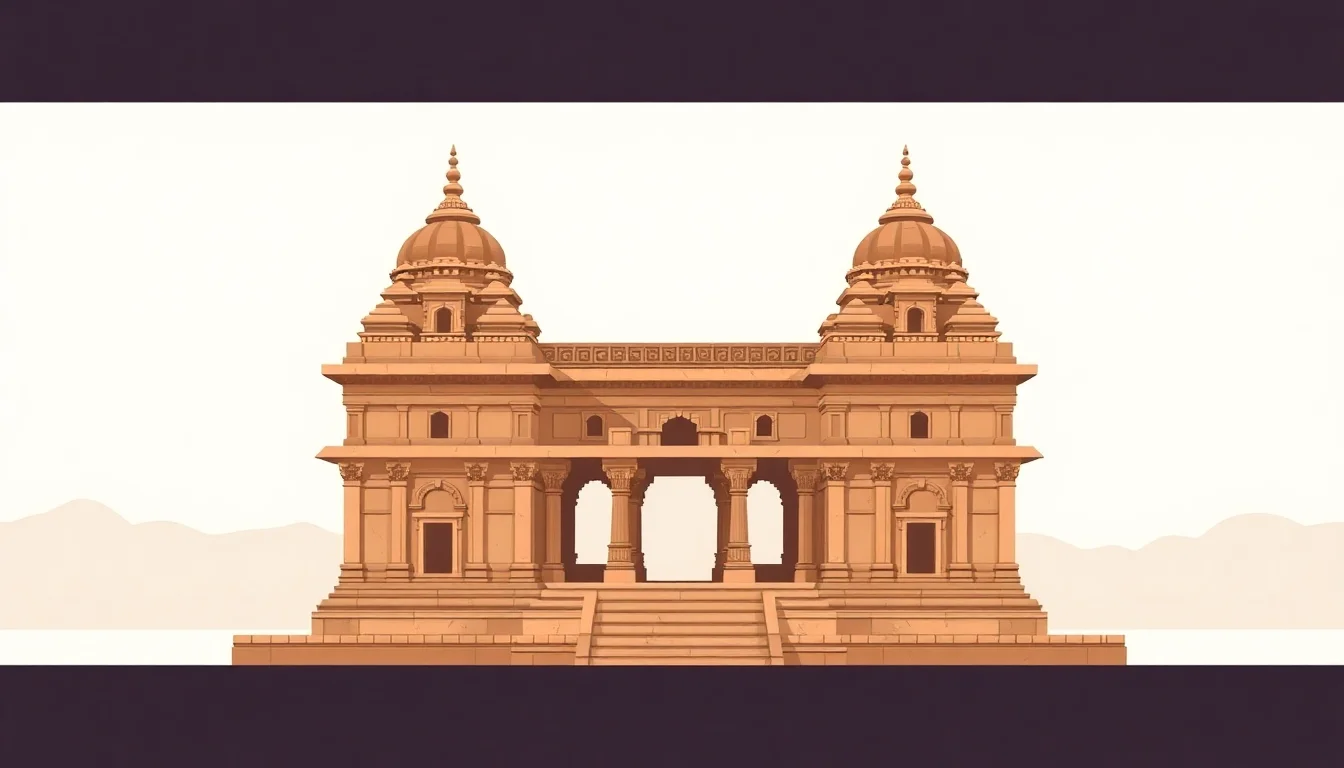
The architectural lineage of Gandhara Nagara is a complex weave, tracing its roots back to the rich artistic traditions of ancient Gandhāra, a region historically spanning parts of modern-day Pakistan and Afghanistan. While the broader Nagara style flourished across North India, the Gandhara Nagara variant emerged as a distinct regional expression. Scholars like Michael W. Meister have been instrumental in identifying and categorizing this style, distinguishing it from its more widespread counterparts. This localized tradition absorbed and reinterpreted the characteristic curvilinear shikhara, the towering spire of North Indian temples, integrating it with constructional techniques and formal vocabularies inherited from the Gandharan architectural milieu, which itself had a long history influenced by Hellenistic, Persian, and indigenous Indian elements. The fusion created a hybrid form that speaks to the dynamic cultural exchanges occurring in the Indus region during the early medieval period.
⚙️ How It Works
The mechanics of Gandhara Nagara architecture involve a sophisticated synthesis of structural principles. At its core, it adopts the fundamental plan of the North Indian Nagara temple, typically featuring a sanctum (garbhagriha) surmounted by a curvilinear shikhara. However, the constructional methods and formal articulation often betray Gandharan influences. This can manifest in the use of specific building materials, local masonry techniques, and a distinct approach to decorative carving that differs from the more standardized motifs found in other Nagara sub-styles. The integration of Gandharan elements might include particular types of pilasters, decorative niches, or even the overall massing and proportions of the temple, creating a visual and structural language that is both familiar and uniquely regional. The adaptation of these forms speaks to a deep understanding of local building practices and aesthetic preferences.
📊 Key Facts & Numbers
While precise quantitative data for Gandhara Nagara architecture is still being compiled, available evidence points to a significant regional presence. These temples are primarily located in areas like Taxila, Swat, and Peshawar. The stylistic influence can be observed in structures that predate the full establishment of the classic Nagara forms elsewhere, suggesting an early experimentation with hybrid temple designs. For instance, the Malot Temple Complex in the Salt Range, dated to the 9th-10th centuries, showcases elements that align with this regional style, though its exact classification remains a subject of scholarly discussion.
👥 Key People & Organizations
The scholarly discourse surrounding Gandhara Nagara architecture is largely shaped by a few key figures and institutions. Michael W. Meister, a prominent architectural historian, is credited with coining and defining the term 'Gandhara Nagara' in his seminal works on Indian temple architecture, particularly his contributions to the Temple Architecture of India series. His research meticulously analyzed the stylistic nuances and regional variations that distinguished this style. Other significant contributions have come from archaeologists and art historians working in Pakistan and India, who have excavated and documented numerous sites. Institutions like the Archaeological Survey of India and its Pakistani counterpart have played crucial roles in preserving and studying these ancient structures, though dedicated research specifically on the Gandhara Nagara sub-style is often integrated into broader regional surveys.
🌍 Cultural Impact & Influence
The cultural impact of Gandhara Nagara architecture lies in its demonstration of regional artistic synthesis and the adaptability of broader architectural trends. It signifies a period where local traditions in the Indus region did not merely adopt North Indian styles but actively reinterpreted and integrated them with their own heritage, creating a distinct architectural identity. This fusion reflects the complex socio-political and religious landscape of the time, where influences from various cultures, including those with Hellenistic and Persian roots, continued to resonate. The Gandhara Nagara style, therefore, serves as a tangible testament to the creative dialogue between different cultural streams, enriching the overall narrative of Indian temple architecture and highlighting the diversity within the broader Nagara tradition. The style challenges monolithic interpretations of architectural history.
⚡ Current State & Latest Developments
The study and preservation of Gandhara Nagara architecture are ongoing, facing challenges inherent to the region. Many Gandhara Nagara sites are located in Pakistan, and their maintenance and accessibility can be subject to political stability and resource allocation. Recent archaeological work continues to uncover new sites and refine existing classifications, potentially expanding the known corpus of Gandhara Nagara temples. For instance, ongoing excavations in the Swat Valley have yielded further insights into early medieval temple construction that may align with or challenge current definitions of the style. The Inheritage Foundation, a non-profit organization focused on preserving Indian heritage, has also documented regional vernacular architecture, which, while distinct from Gandhara Nagara, highlights the broader context of local adaptation in architectural forms, including in regions like Haryana.
🤔 Controversies & Debates
A primary debate surrounding Gandhara Nagara architecture centers on its precise definition and its relationship to other Nagara sub-styles. Scholars sometimes disagree on the exact criteria for classifying a temple as Gandhara Nagara, leading to variations in the number and identity of attributed structures. The extent to which it represents a truly independent style versus a localized variation of a broader Nagara trend is also a point of discussion. Furthermore, the influence of Gandharan art on the sculptural decoration of these temples, and how this differs from the sculptural programs of temples in other Nagara regions, remains an area of active scholarly inquiry. The precise dating of many Gandhara Nagara sites also presents challenges, with different methodologies yielding slightly varied chronological frameworks.
🔮 Future Outlook & Predictions
The future of Gandhara Nagara architecture studies likely involves more advanced digital documentation and comparative analysis. Technologies like 3D scanning and photogrammetry can provide highly detailed records of existing structures, aiding in stylistic analysis and preservation efforts. Comparative studies with other regional Nagara sub-styles, such as Orissan or Khajuraho architecture, will continue to refine our understanding of Gandhara Nagara's unique contributions. There is also potential for further archaeological exploration in less-studied areas of the Indus region, which could uncover additional examples of this hybrid style. The ongoing work by organizations like the Inheritage Foundation in documenting regional vernacular traditions may also provide comparative data that sheds light on the broader context of Gandhara Nagara's development.
💡 Practical Applications
While Gandhara Nagara architecture is primarily of historical and academic interest, its principles of regional adaptation and material use can inform contemporary architectural practices. The style's success in integrating a dominant North Indian temple form with local Gandharan constructional and aesthetic sensibilities offers lessons in culturally sensitive design. Architects working in regions with distinct historical building traditions might draw inspiration from how Gandhara Nagara successfully blended external influences with indigenous knowledge. Furthermore, the study of its structural integrity and material choices, particularly in relation to the local climate and available resources, could offer in
Key Facts
- Category
- aesthetics
- Type
- topic