
Contents
Overview
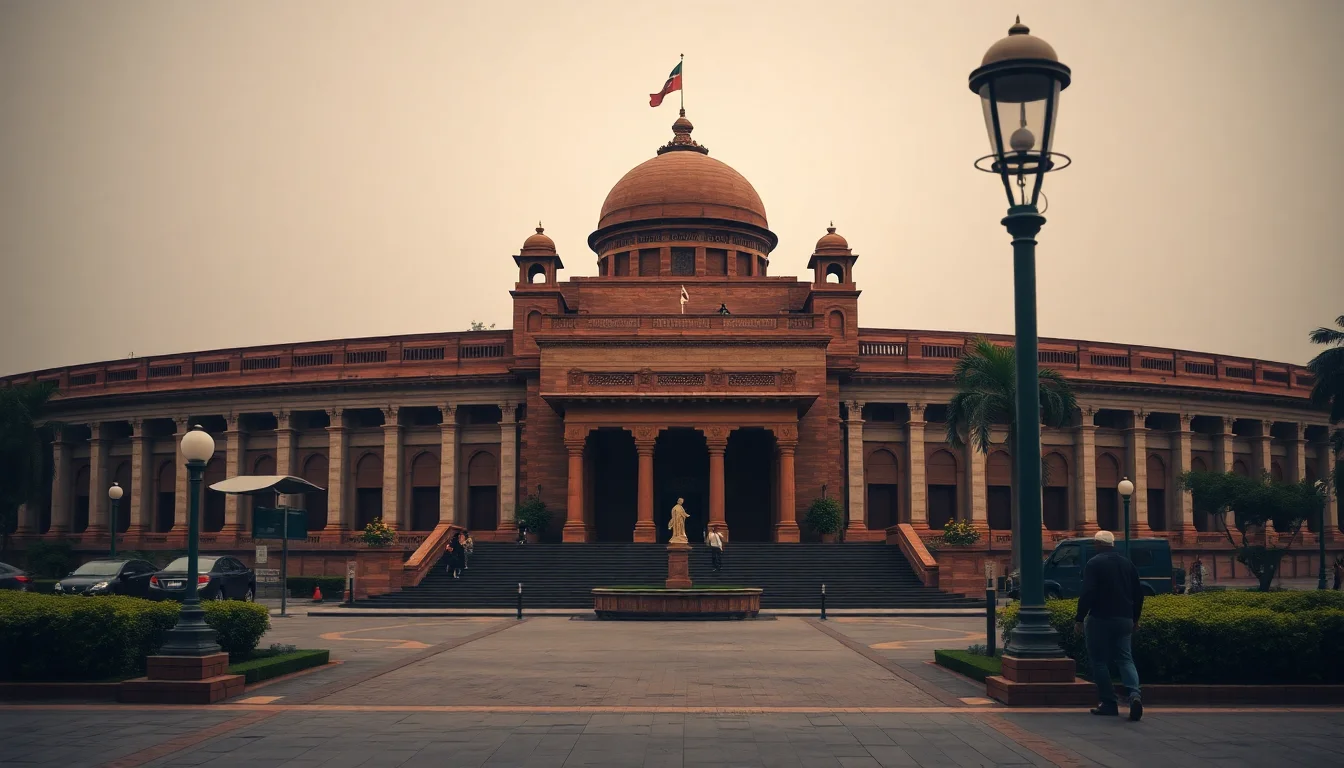
The story of Sansad Bhavan is intrinsically linked to India's journey from colonial rule to sovereign democracy. The original Parliament House, designed by Sir Edwin Lutyens and Herbert Baker, was inaugurated on January 18, 1927, as part of New Delhi's grand imperial design. It initially housed the Imperial Legislative Council and later, post-independence, the Constituent Assembly and India's first parliaments. As India's population and legislative needs expanded, the limitations of the old building became apparent, sparking discussions for a new, larger facility. This culminated in the construction of the new Parliament House, a project initiated under Prime Minister Narendra Modi and inaugurated on May 28, 2023, marking a significant transition in India's parliamentary infrastructure.
⚙️ How It Works
Sansad Bhavan, in its current iteration, is a sophisticated hub for legislative activity. The new building is designed with distinct chambers for the Lok Sabha and Rajya Sabha, each equipped with state-of-the-art audio-visual systems, digital voting, and interactive displays to facilitate debates and decision-making. The structure incorporates advanced security features and is designed for energy efficiency. The central administrative functions, committee rooms, and offices for parliamentarians are integrated within the complex, creating a self-contained ecosystem for governance. The architectural design emphasizes accessibility and inclusivity, aiming to reflect the diversity of the Indian populace it represents.
📊 Key Facts & Numbers
The original Sansad Bhavan, a Grade I heritage building, features a distinctive circular design. The new Parliament House, a stark contrast, covers an area of approximately 64,500 square meters, a staggering increase designed to accommodate a projected future strength of 888 members in the Lok Sabha and 384 in the Rajya Sabha. The construction cost of the new building was reportedly around ₹971 crore (approximately $118 million USD). The new structure boasts a triangular design, symbolizing the confluence of different aspects of governance, and features a central constitutional hall displaying India's democratic heritage.
👥 Key People & Organizations
The genesis of Sansad Bhavan involves numerous key figures. Lord Irwin, then Viceroy of India, inaugurated the original building. Post-independence, leaders like Jawaharlal Nehru and Sardar Vallabhbhai Patel shaped its early parliamentary functions. The vision for the new Parliament House was championed by Prime Minister Narendra Modi, with the architectural design led by Bimal Patel of HCP Design, Planning and Management. The construction was executed by Tata Projects, a subsidiary of the Tata Group. The Lok Sabha Secretariat and Rajya Sabha Secretariat are the administrative bodies overseeing parliamentary operations within the Bhavan.
🌍 Cultural Impact & Influence
Sansad Bhavan is more than just a building; it's a potent symbol of Indian democracy and national identity. The original structure, a remnant of the British Raj, has witnessed the birth and growth of a free India. The new Parliament House, with its modern design and enhanced capabilities, represents India's forward-looking aspirations and its commitment to democratic principles on a global stage. Its image is frequently used in media to signify governmental authority and legislative processes, embedding it deeply within the collective consciousness of the nation. The architectural styles themselves, from colonial grandeur to contemporary ambition, reflect the evolving narrative of India.
⚡ Current State & Latest Developments
The new Sansad Bhavan, inaugurated on May 28, 2023, is now the primary venue for parliamentary sessions. The transition from the old building to the new marks a significant shift in India's legislative landscape. Future sessions will be conducted within its advanced facilities, which include enhanced seating arrangements to accommodate a larger number of parliamentarians. The old Parliament House is slated to be repurposed, potentially for use by the Supreme Court of India or as a museum dedicated to parliamentary democracy, ensuring its historical significance is preserved while the new structure takes center stage for governance.
🤔 Controversies & Debates
The construction and inauguration of the new Sansad Bhavan have been met with considerable debate. Critics have questioned the substantial cost of the project, particularly during economic challenges, and the timing of its inauguration, which coincided with a boycott by several opposition parties. Concerns have also been raised about the demolition of parts of the existing complex and the potential impact on heritage. Proponents, however, argue that the new building is a necessary upgrade to accommodate India's growing democracy and to incorporate modern technological advancements required for efficient legislative functioning, viewing it as a symbol of national pride and progress.
🔮 Future Outlook & Predictions
The future of Sansad Bhavan points towards an increasingly technologically integrated legislative process. The new building is designed to be adaptable, with provisions for future upgrades in digital infrastructure and communication systems. As India's parliamentary strength potentially grows, the expanded capacity of the new structure will be crucial. Furthermore, the preservation and potential repurposing of the old Parliament House will continue to be a point of discussion, balancing historical preservation with the functional needs of a modern state. The Bhavan will likely remain a focal point for national discourse and democratic engagement for decades to come.
💡 Practical Applications
Sansad Bhavan's primary application is as the functional seat of India's Parliament, enabling the legislative process of law-making, debate, and oversight. Beyond this core function, it serves as a significant national monument and a symbol of democratic governance. Its architectural significance also makes it a point of interest for urban planners, architects, and historians studying the evolution of public buildings and national capitals. The building's design and infrastructure are intended to support a wide range of governmental activities, from parliamentary sessions to committee meetings and diplomatic engagements.
Key Facts
- Category
- place
- Type
- place