
Contents
- 🌞 Introduction to Solar Eclipses
- 🌕 The Science Behind Solar Eclipses
- 🌖 Types of Solar Eclipses
- 🌌 Viewing Solar Eclipses
- 📍 Frequency and Recurrence of Solar Eclipses
- 🌐 Solar Eclipses in History
- 📸 Capturing Solar Eclipses
- 🔭 Safety Precautions for Viewing Solar Eclipses
- 🌟 Cultural Significance of Solar Eclipses
- 🌐 Solar Eclipses in the Modern Era
- 📊 Statistics and Records of Solar Eclipses
- 🔜 Future Solar Eclipses
- Frequently Asked Questions
- Related Topics
Overview
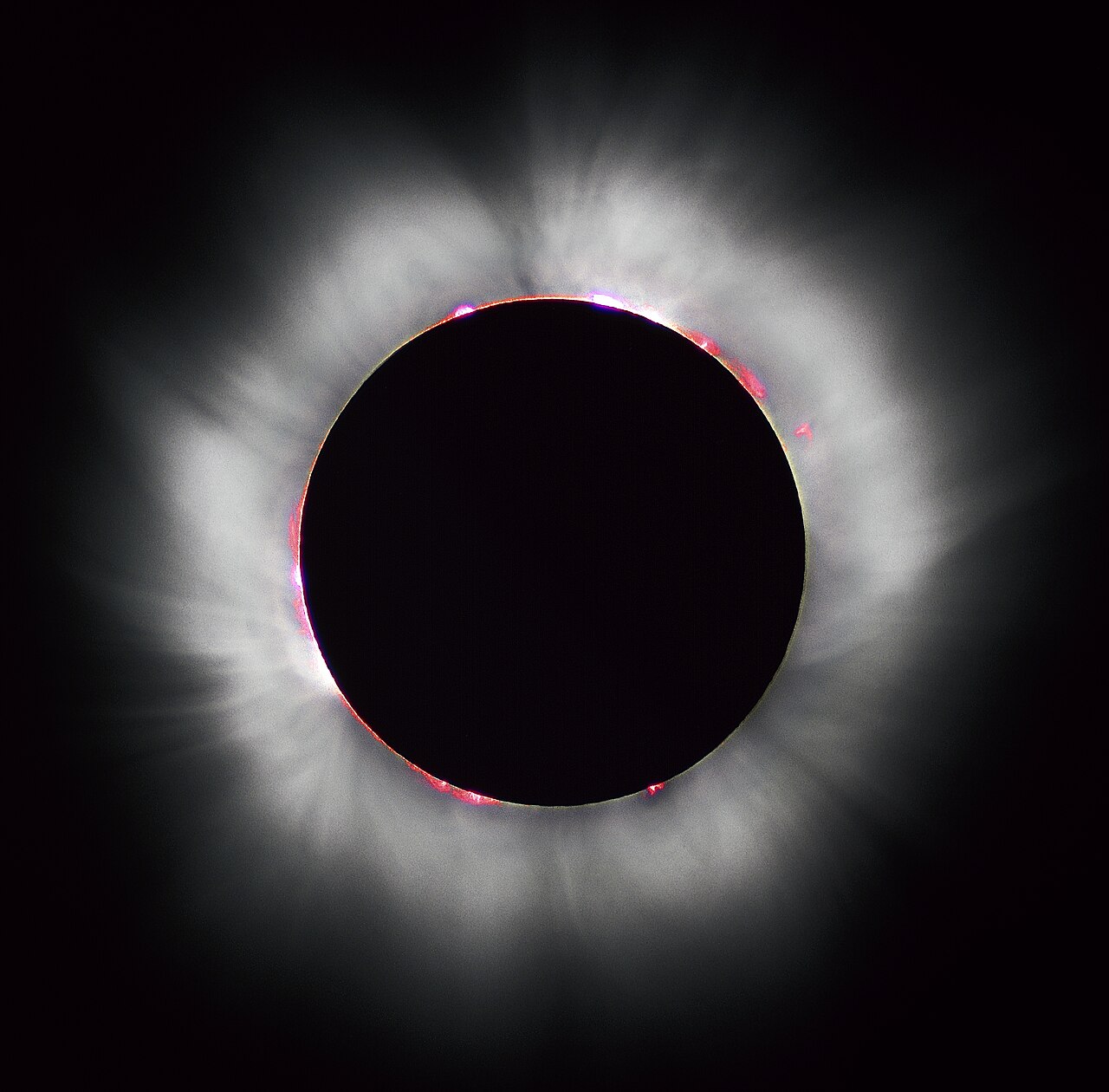
A solar eclipse occurs when the Moon passes directly between the Earth and the Sun, casting a shadow on the Earth's surface. This rare phenomenon has been a subject of fascination throughout history, with ancient civilizations often viewing it as a sign of impending doom or a divine message. The first recorded solar eclipse dates back to 2134 BCE in ancient China. With a vibe rating of 8, solar eclipses have a significant cultural energy measurement, attracting millions of observers worldwide. The most recent total solar eclipse visible from North America occurred on August 21, 2017, with an estimated 220 million people witnessing the event. As scientists continue to study solar eclipses, they provide valuable insights into the Sun's corona and the Earth's atmosphere, making them an essential area of research in the field of astronomy.
🌞 Introduction to Solar Eclipses
A solar eclipse is a rare and awe-inspiring celestial event that has captivated humans for centuries. It occurs when the Moon passes between Earth and the Sun, thereby obscuring the view of the Sun from a small part of Earth, totally or partially. This alignment occurs approximately every six months, during the eclipse season in its new moon phase, when the Moon's orbital plane is closest to the plane of Earth's orbit. As a result, the disk of the Sun is fully or partially obscured, creating an otherworldly atmosphere. The study of solar eclipses is a significant area of research in astronomy, with scientists using these events to study the Sun's corona and the Moon's orbit. For more information on the Sun, visit the Sun page.
🌕 The Science Behind Solar Eclipses
The science behind solar eclipses is rooted in the principles of celestial mechanics and astronomy. The Moon's orbit is tilted at an angle of about 5 degrees with respect to the plane of Earth's orbit, which is why solar eclipses do not occur every month. However, during the eclipse season, the Moon's orbital plane is closest to the plane of Earth's orbit, creating the perfect alignment for a solar eclipse. This alignment is crucial, as it allows scientists to study the Sun's corona and the Moon's orbit in unprecedented detail. The study of solar eclipses has also led to a greater understanding of the Earth's orbit and the Moon's phases. For more information on the Moon, visit the Moon page.
🌖 Types of Solar Eclipses
There are three main types of solar eclipses: total, partial, and annular. A total solar eclipse occurs when the disk of the Sun is fully obscured by the Moon, revealing the Sun's corona and creating an ethereal atmosphere. Partial and annular eclipses, on the other hand, occur when only part of the Sun is obscured, creating a partial or ring-like effect. The type of eclipse that occurs depends on the Moon's distance from Earth, as well as the angle of the Moon's orbit. The study of solar eclipses has also led to a greater understanding of the Sun's structure and the Moon's surface. For more information on the types of solar eclipses, visit the Solar Eclipse page.
🌌 Viewing Solar Eclipses
Viewing solar eclipses can be a thrilling experience, but it requires careful planning and preparation. Unlike a lunar eclipse, which may be viewed from anywhere on the night side of Earth, a solar eclipse can only be viewed from a relatively small area of the world. As such, although total solar eclipses occur somewhere on Earth every 18 months on average, they recur at any given place only once every 360 to 410 years. The path of totality, where the eclipse is total, is usually about 100 miles wide and covers a specific region of the Earth's surface. For more information on viewing solar eclipses, visit the Solar Eclipse Viewing page.
📍 Frequency and Recurrence of Solar Eclipses
The frequency and recurrence of solar eclipses are determined by the Moon's orbit and the tilt of its orbital plane. Solar eclipses occur approximately every six months, during the eclipse season, when the Moon's orbital plane is closest to the plane of Earth's orbit. However, the frequency of total solar eclipses is much lower, occurring about once every 18 months on average. The recurrence of solar eclipses at any given place is even lower, occurring only once every 360 to 410 years. The study of solar eclipses has also led to a greater understanding of the Earth's rotation and the Moon's rotation. For more information on the frequency and recurrence of solar eclipses, visit the Solar Eclipse Frequency page.
🌐 Solar Eclipses in History
Solar eclipses have been observed and recorded throughout history, with ancient civilizations often viewing them as omens or signs from the gods. The earliest recorded solar eclipse dates back to 2134 BCE in ancient China, and since then, solar eclipses have been observed and recorded by cultures around the world. The study of solar eclipses has also led to a greater understanding of the ancient astronomy and the history of astronomy. For more information on the history of solar eclipses, visit the History of Solar Eclipses page.
📸 Capturing Solar Eclipses
Capturing solar eclipses can be a challenging but rewarding experience, requiring specialized equipment and techniques. Photographers and scientists use a variety of methods to capture the beauty and complexity of solar eclipses, including telescopes, cameras, and solar filters. The use of technology has also enabled the capture of high-quality images and videos of solar eclipses, allowing scientists to study these events in unprecedented detail. The study of solar eclipses has also led to a greater understanding of the solar eclipse photography and the astronomy photography. For more information on capturing solar eclipses, visit the Solar Eclipse Photography page.
🔭 Safety Precautions for Viewing Solar Eclipses
Viewing solar eclipses requires careful safety precautions to avoid damaging one's eyes. Looking directly at the Sun during a solar eclipse can cause serious eye damage, including solar retinopathy. To safely view a solar eclipse, observers must use specialized solar filters or handheld solar viewers that meet international safety standards. The use of technology has also enabled the development of safe and affordable solar viewing equipment, making it possible for people to enjoy these events without risking their eye health. For more information on safety precautions, visit the Solar Eclipse Safety page.
🌟 Cultural Significance of Solar Eclipses
Solar eclipses have significant cultural and spiritual significance, with many ancient cultures viewing them as omens or signs from the gods. In modern times, solar eclipses continue to inspire awe and wonder, with many people traveling to witness these events. The cultural significance of solar eclipses is also reflected in the many myths and legends that surround these events, with stories of dragons and monsters often associated with solar eclipses. The study of solar eclipses has also led to a greater understanding of the cultural significance of solar eclipses and the spiritual significance of solar eclipses. For more information on the cultural significance of solar eclipses, visit the Cultural Significance of Solar Eclipses page.
🌐 Solar Eclipses in the Modern Era
In the modern era, solar eclipses continue to inspire scientific research and public interest. The use of technology has enabled scientists to study solar eclipses in unprecedented detail, with spacecraft and telescopes providing high-quality images and data. The study of solar eclipses has also led to a greater understanding of the Sun's corona and the Moon's orbit. For more information on the modern era of solar eclipses, visit the Modern Era of Solar Eclipses page.
📊 Statistics and Records of Solar Eclipses
Solar eclipses are relatively rare events, with a total solar eclipse occurring about once every 18 months on average. However, the recurrence of solar eclipses at any given place is much lower, occurring only once every 360 to 410 years. The longest total solar eclipse of the 20th century occurred on July 11, 1991, and lasted for 6 minutes and 53 seconds. The study of solar eclipses has also led to a greater understanding of the statistics of solar eclipses and the records of solar eclipses. For more information on the statistics and records of solar eclipses, visit the Statistics of Solar Eclipses page.
🔜 Future Solar Eclipses
Future solar eclipses will continue to inspire scientific research and public interest, with several total solar eclipses scheduled to occur in the coming years. The next total solar eclipse visible from North America will occur on April 8, 2024, and will be visible from parts of the United States, Mexico, and Canada. The study of solar eclipses has also led to a greater understanding of the future of solar eclipses and the upcoming solar eclipses. For more information on future solar eclipses, visit the Future of Solar Eclipses page.
Key Facts
- Year
- 2134
- Origin
- Ancient China
- Category
- Astronomy
- Type
- Natural Phenomenon
Frequently Asked Questions
What is a solar eclipse?
A solar eclipse is a rare and awe-inspiring celestial event that occurs when the Moon passes between Earth and the Sun, thereby obscuring the view of the Sun from a small part of Earth, totally or partially. The study of solar eclipses is a significant area of research in astronomy, with scientists using these events to study the Sun's corona and the Moon's orbit. For more information on solar eclipses, visit the Solar Eclipse page.
How often do solar eclipses occur?
Solar eclipses occur approximately every six months, during the eclipse season, when the Moon's orbital plane is closest to the plane of Earth's orbit. However, the frequency of total solar eclipses is much lower, occurring about once every 18 months on average. The recurrence of solar eclipses at any given place is even lower, occurring only once every 360 to 410 years. The study of solar eclipses has also led to a greater understanding of the Earth's rotation and the Moon's rotation. For more information on the frequency and recurrence of solar eclipses, visit the Solar Eclipse Frequency page.
What are the different types of solar eclipses?
There are three main types of solar eclipses: total, partial, and annular. A total solar eclipse occurs when the disk of the Sun is fully obscured by the Moon, revealing the Sun's corona and creating an ethereal atmosphere. Partial and annular eclipses, on the other hand, occur when only part of the Sun is obscured, creating a partial or ring-like effect. The study of solar eclipses has also led to a greater understanding of the Sun's structure and the Moon's surface. For more information on the types of solar eclipses, visit the Solar Eclipse page.
How can I safely view a solar eclipse?
Viewing solar eclipses requires careful safety precautions to avoid damaging one's eyes. Looking directly at the Sun during a solar eclipse can cause serious eye damage, including solar retinopathy. To safely view a solar eclipse, observers must use specialized solar filters or handheld solar viewers that meet international safety standards. The use of technology has also enabled the development of safe and affordable solar viewing equipment, making it possible for people to enjoy these events without risking their eye health. For more information on safety precautions, visit the Solar Eclipse Safety page.
What is the cultural significance of solar eclipses?
Solar eclipses have significant cultural and spiritual significance, with many ancient cultures viewing them as omens or signs from the gods. In modern times, solar eclipses continue to inspire awe and wonder, with many people traveling to witness these events. The cultural significance of solar eclipses is also reflected in the many myths and legends that surround these events, with stories of dragons and monsters often associated with solar eclipses. The study of solar eclipses has also led to a greater understanding of the cultural significance of solar eclipses and the spiritual significance of solar eclipses. For more information on the cultural significance of solar eclipses, visit the Cultural Significance of Solar Eclipses page.
What is the future of solar eclipses?
Future solar eclipses will continue to inspire scientific research and public interest, with several total solar eclipses scheduled to occur in the coming years. The next total solar eclipse visible from North America will occur on April 8, 2024, and will be visible from parts of the United States, Mexico, and Canada. The study of solar eclipses has also led to a greater understanding of the future of solar eclipses and the upcoming solar eclipses. For more information on future solar eclipses, visit the Future of Solar Eclipses page.
How can I learn more about solar eclipses?
There are many resources available to learn more about solar eclipses, including online articles, books, and documentaries. The National Aeronautics and Space Administration (NASA) and the European Space Agency (ESA) are excellent sources of information on solar eclipses, with detailed explanations of the science behind these events and stunning images and videos. For more information on learning about solar eclipses, visit the Solar Eclipse page.